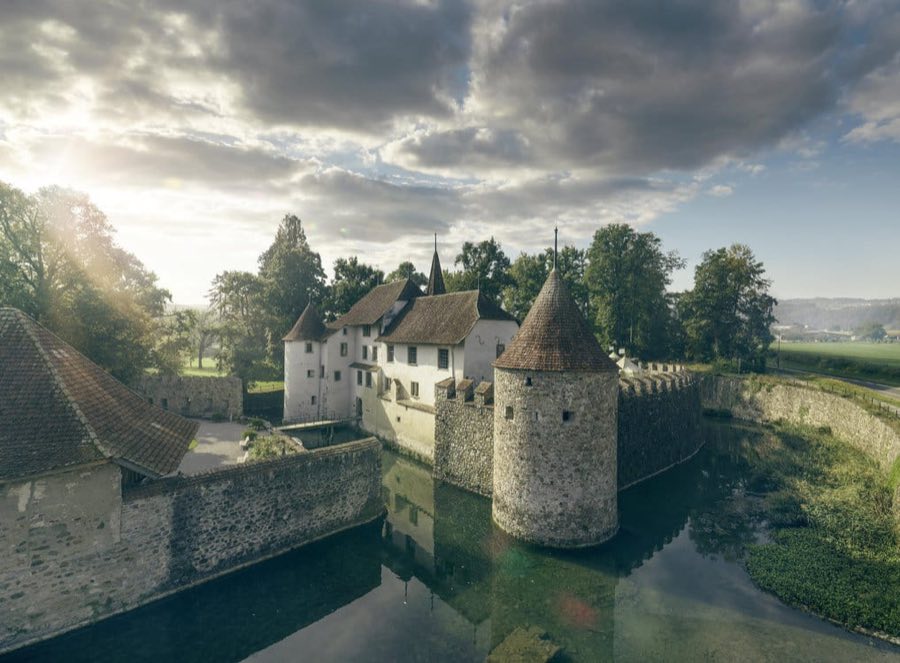
No. 64777
Hallwyl Castle
Switzerland
CastleRestored12th century
No. 36426
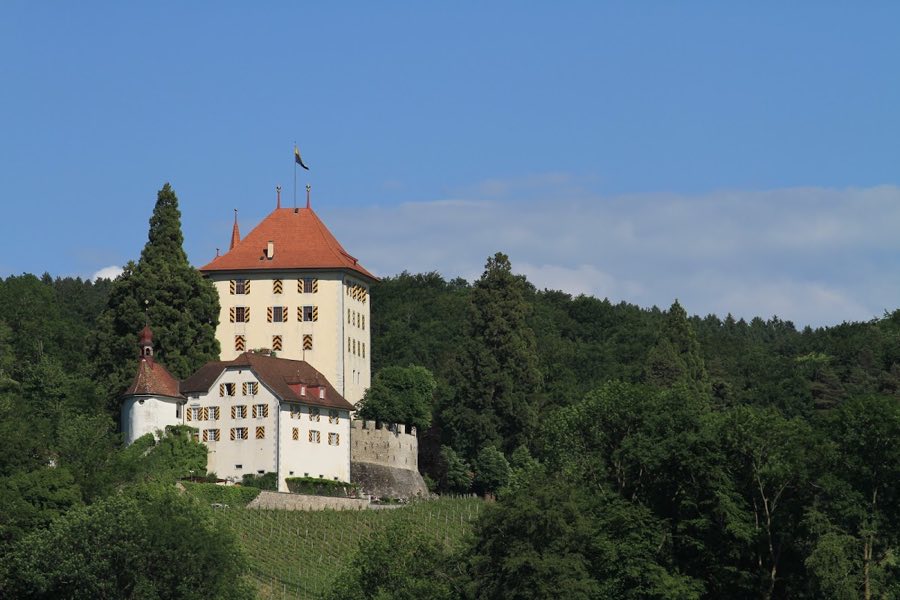
Castle · Switzerland
No. 36426 · 47.217 N, 8.273 E
Quick summary
Heidegg Castle is a castle in Switzerland with origins associated with the 19th century.
See all castles in SwitzerlandHeidegg Castle in Gelfingen, Switzerland, is a medieval hilltop stronghold begun by ministeriales of the regional lords in the Seetal during the 12th and early 13th centuries, with a core that reflects Romanesque building traditions and later Baroque remodelling. The site grew as part of a wider wave of castle and town foundations in that period, and it came to anchor a local lordship that exercised legal and economic authority over neighbouring villages, shore rights on the Baldeggersee, vineyards and woodlands. In the 1200s the Seetal briefly served as the main overland link between the Gotthard Pass, Lucerne and Basel, which increased the lordship’s regional importance.
The castle’s name appears in documents from 1185 tied to the family that took its name from the place. Those lords acted as ministeriales, unfree officials serving the Counts of Lenzburg and later the Kyburgs and Habsburgs. In the later medieval period the lordship held lower court rights over Gelfingen and Altwis and controlled waterways and agricultural resources. In the early fifteenth century the Büsinger family expanded holdings by acquiring the nearby Lieli lordship, including associated jurisdictions at Sulz and Mosen.
By the late fifteenth century ownership shifted to prominent Lucerne council families. From 1678 Johann Heinrich Franz Pfyffer of Altishofen began transforming the medieval tower into a Baroque residence, and his branch adopted the name Pfyffer von Heidegg. The city of Lucerne bought castle and lordship in 1700 and completed interior works. The old judicial authorities ended in 1798 and the estate became state property under Canton Baden, then under the Canton of Lucerne from 1803 until 1848. After the federal crisis of the Sonderbund War in 1847, a civil conflict between conservative Catholic cantons and liberal forces, the castle passed by auction into private hands, sold to the liberal farmer Joseph Heggli.
In 1875 Ludwig and Caroline Pfyffer von Heidegg‑Slidell, a prosperous Lucerne–American couple, repurchased the property and added picturesque exterior features such as battlements and new portals, laid out a park centred on a chestnut-lined avenue, and in 1912 made the tower habitable again. The last private owners, Mathilde von Glutz and Marie‑Louise de Chambrier, bequeathed the castle to the Canton of Lucerne in 1950. From that date the Canton opened the complex to public use and the association Pro Heidegg has operated the site and its museum. In the early 1950s Gottfried Boesch, at the suggestion of German Chancellor Konrad Adenauer, established a rose garden and restored vineyard plantings on the castle mound to revive the Lucerne state wine. A Swiss Hunting Museum nearby added to Heidegg’s regional cultural role. The Canton carried out a full renovation of the buildings and fabric between 1995 and 1998. Ownership over the centuries moved from the original Lords of Heidegg through families including Büsinger, Hasfurter, Tammann, Kündig, Fleckenstein and Pfyffer von Heidegg, then to the city and cantonal authorities, to private hands in the 19th century, back to the Pfyffer family in 1875, and finally to the Canton of Lucerne in 1950.
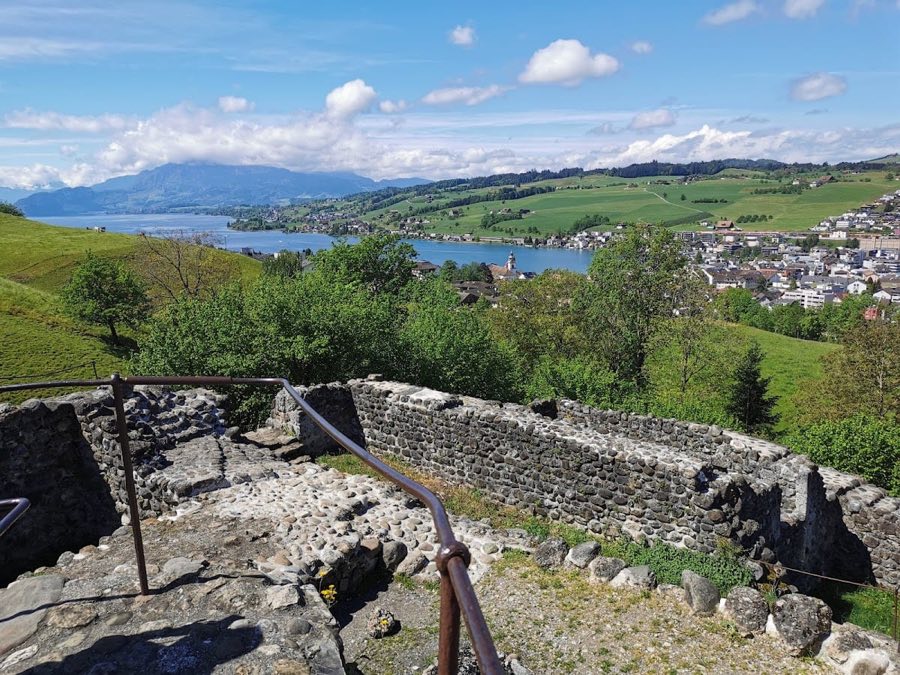
The complex reads as a layered ensemble with a stone residential tower at its heart, later domestic wings, a chapel, farm buildings and parkland on the surrounding mound. The oldest standing fabric is a stone house within the tower core, followed by later medieval enlargements and Baroque additions that together present a sequence of building materials and treatments from dressed stone to lime plaster and timber roofs.
The tower contains the earliest surviving residential stone house on Lucerne territory, with roof timber dated by tree rings to 1192. That original house was heightened and extended in phases dated to 1229/30 and 1236/37, forming a Romanesque residential tower. In the 1400s and 1500s the tower was adapted for intermittent country living rather than constant defense. In the late 1600s the ensemble was expanded toward a Baroque layout; small corner bay windows were added during the first phase of work and later removed. Between 1688 and 1698 the tower received a hipped roof (roof sloping on all sides) and a uniform yellow lime plaster that gives the silhouette its familiar regional appearance. The tower was made habitable again in 1912 and underwent comprehensive conservation in 1995–1998. The standing condition reflects careful restoration and active maintenance.
The chapel is dedicated to Saint Charles Borromeo and dates from the turn of the 17th century, forming part of the castle’s domestic-religious complex. The later residential wing includes a vaulted cellar (arched stone ceiling) and a grain store built in 1704, showing the early modern emphasis on storage and estate management. Outlying farm buildings were erected and modified from the 18th through the 20th centuries and remain clustered near the core, marking the castle’s working agricultural role.
The grounds combine historic plantings and mid-20th-century additions. A chestnut-lined avenue was laid out in the 19th century by the Pfyffer owners. A rose garden established in the 1950s was renewed in 2004–2005, and vines were replanted on the castle mound to revive a state vineyard tradition. Visitor paths and the Sieben‑Brüggli alley provide access and rest areas while preserving much of the surrounding cultural landscape. The park and the built elements together survive in a largely preserved state and the whole site, including the tower, residential house, chapel and parkland, is designated as cultural property of national significance.
No. 64777
No. 96168
No. 55305
No. 36202
Comments
Comments for Heidegg Castle will require a verified account before posting.
We'll send a verification link before your first comment is published.