No. 31088
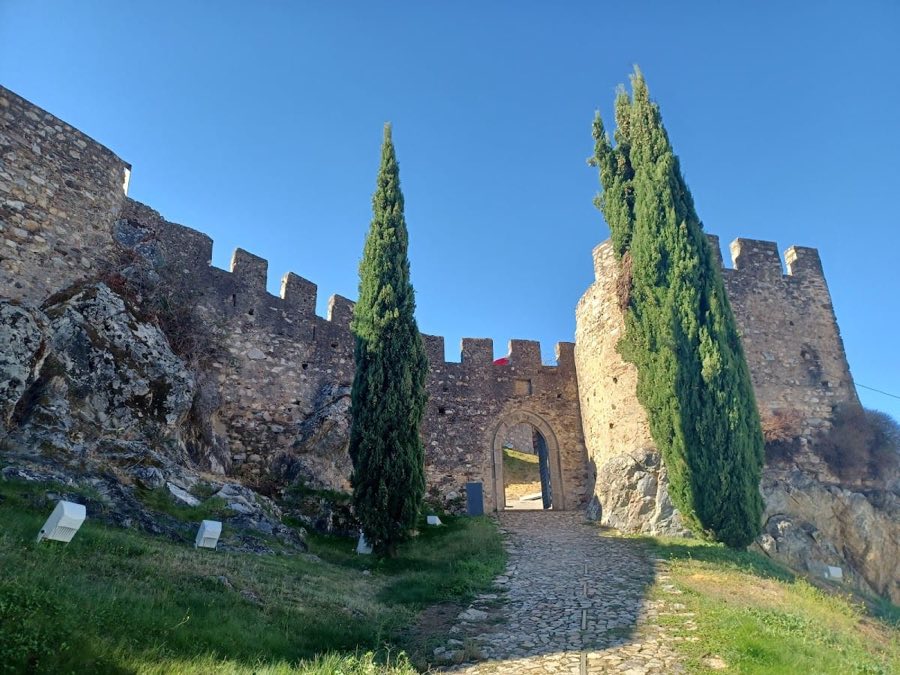
Castle of Alegrete
Portugal
CastleRuin13th century
No. 47005
Castle · Portugal
No. 47005 · 39.124 N, 7.283 W
For events
Castle of Arronches is marked as a château or castle venue lead. Capacity, indoor/outdoor spaces, catering rules, and accommodation options are published only after public verification.
Event types: Private events, Cultural gatherings, Filming and photography
Quick summary
Castle of Arronches is a castle in Portugal with origins associated with the 13th century.
See all castles in PortugalThe Castle of Arronches stands in the municipality of Arronches, Portugal, and was originally constructed by medieval Portuguese builders. Its history reflects the complex struggle between Christian and Muslim forces during the Reconquista period.
The fortress was first seized by Christian forces loyal to King Afonso Henriques in 1166, yet control of the site shifted repeatedly as Muslim troops regained and lost it over the following decades. It was not until 1242 that the castle came under permanent Christian possession when Paio Peres Correia led troops to retake it definitively.
In the mid-13th century, King Afonso III granted a formal charter (foral) to Arronches in 1255, confirming it again in 1272. Later, King Dinis placed Arronches under Crown control in 1310 and ordered significant rebuilding of the castle, signaling its importance as a royal possession. During the late 14th century conflicts with Castile, Nuno Álvares Pereira recaptured the fortress in 1384, reinforcing its defensive role in the region.
Arronches gained political importance as the seat of the first Cortes (assembly) in 1475, and King Manuel I issued a renewed foral in 1512 to regulate its administration. The site entered ecclesiastical administration in 1549 when King John III granted it to the masters of the Bishopric of Portalegre.
In the mid-17th century, amid the Portuguese Restoration War aimed at regaining independence from Spanish rule, the castle formed part of Portugal’s foremost defensive line. It was captured by John of Austria in 1661 but suffered severe damage due to an explosion in its powder magazine two years later. Following this event, Spanish forces began dismantling the fortifications. King Afonso VI reaffirmed Arronches’ municipal privileges with another foral in 1678.
The fortress endured a Castilian assault in 1712 and saw further military engagement during the campaign of 1801. In the 20th century, a series of conservation efforts took place from 1975 to 1987 to restore defensive structures such as bastions and walls. The historic value of the site was formally recognized in 1977 when it was classified as a Property of Public Interest.
The Castle of Arronches originally formed a fortification that enclosed the entire village within a defensive wall, serving as a bulwark against invasions. Constructed largely using a dry stone technique—where stones were carefully fitted together without mortar—the walls have endured centuries of military action and natural events, although some segments have been later reinforced with cement for preservation.
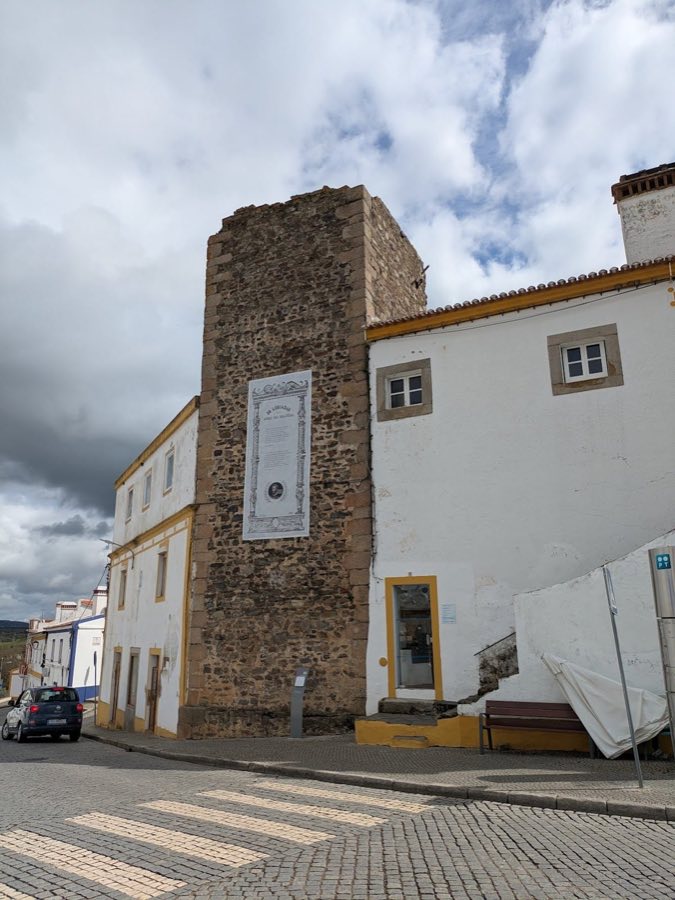
Fragments of the northeastern section survive, notably the remains of a medieval tower and an adjoining corbel, a projecting stone element supporting part of the structure. These vestiges are directly linked to the castle’s early military architecture.
Along the defensive perimeter stand several named bulwarks, or bastions, which were added or enhanced over the centuries to strengthen the fortress. The Bulwark of the Elvas Gate features distinctive prismatic corbels topped with pyramidal caps, while similar corbels are found on the Bulwark of Santo António and the Bulwark of Espírito Santo. Other defensive outworks include the Bulwark of Clérgios and the medieval walls that once encircled the settlement. The Bulwark of Nossa Senhora da Luz contains more modern remnants, reflecting adaptations during later periods.
The original medieval castle saw a major rebuilding around 1310 under the orders of King Dinis. Its layout was recorded in the early 16th century by Duarte de Armas in the “Livro das Fortalezas” (Book of Fortresses), a detailed survey of Portuguese fortifications. At that time, governance of the site was under Diogo de Sequeira, who acted as alcaide-pequeno, or minor governor, from 1496 to 1514.
During the 17th-century Portuguese Restoration War, the castle’s defenses were remodeled to meet the challenges posed by artillery. Masonry bastions and corner guardhouses, known as guaritas, were incorporated to improve resistance to cannon fire.
The complete circuit of the walls no longer exists today, largely due to extensive damage caused by the 1755 earthquake, one of the most destructive in Portuguese history, and later urban development which integrated portions of the walls into residential buildings. Despite this, some ruins remain visible and attest to the castle’s defensive past, including a single surviving medieval tower.
Together, these architectural elements provide a window into the evolution of military design responding to both medieval and early modern warfare, reflecting the castle’s enduring strategic role through centuries of conflict.
No. 31088
No. 26126

No. 22699
No. 42832
Comments
Comments for Castle of Arronches will require a verified account before posting.
We'll send a verification link before your first comment is published.