No. 12625
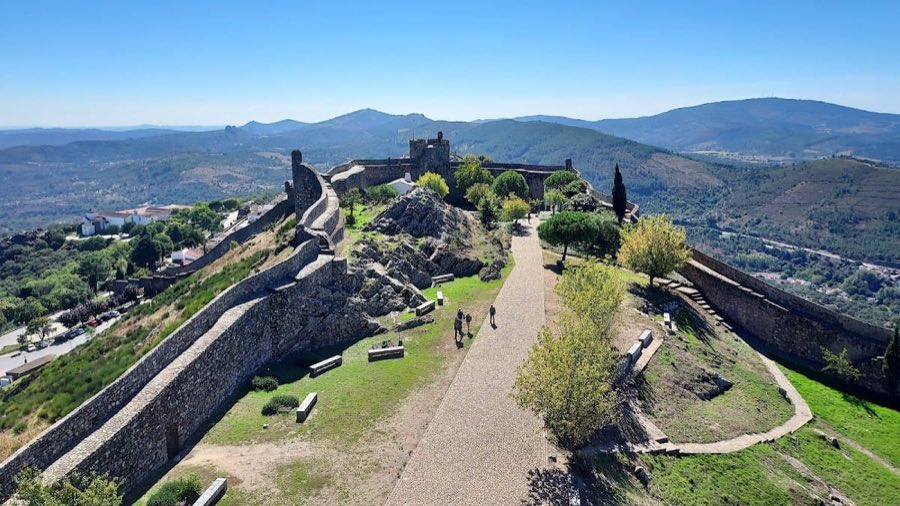
Castle of Marvão
Portugal
CastleIntact9th century
No. 72828
Castle · Portugal
No. 72828 · 39.418 N, 7.458 W
Quick summary
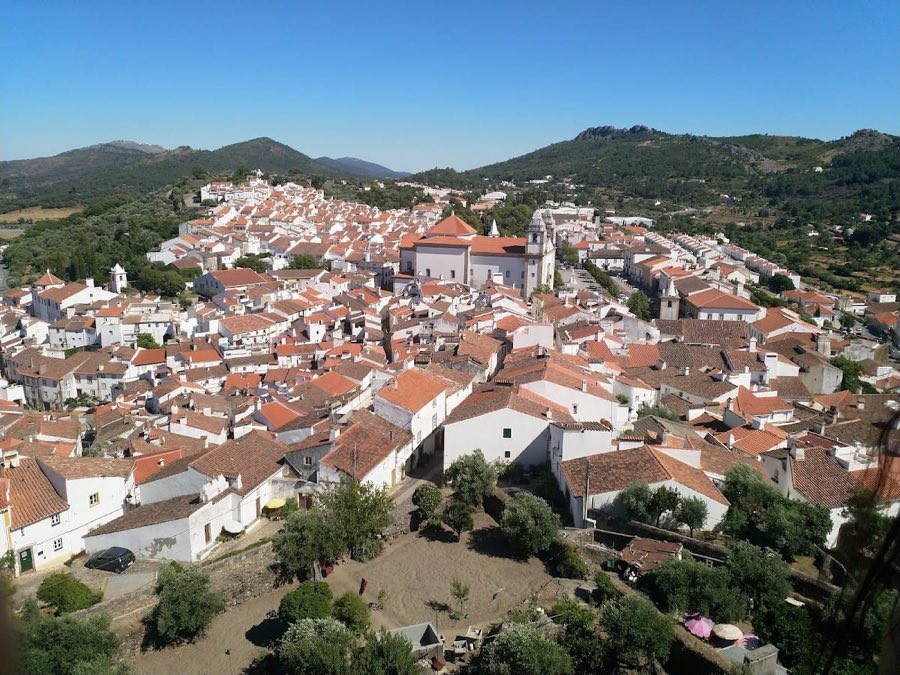
Castle of Castelo de Vide is a castle in Portugal with origins associated with the 13th century.
See all castles in PortugalThe Castle of Castelo de Vide is a medieval fortress located in the municipality of Castelo de Vide, Portugal. It occupies a strategic position atop a hill north of the Serra de São Mamede, close to the border region, which contributed to its military importance throughout history. Although the site lies along an ancient Roman road linking Mérida—then a prominent city in the Iberian Peninsula—no evidence has been found to confirm Roman occupation, leaving the earliest origins of the castle obscure.
Some historical accounts, though not fully verified, attribute the castle’s conquest to King Afonso I in 1148, and suggest a municipal charter was granted in 1180. More reliable records confirm that by 1232 the town belonged to Portugal and developed local administration by the mid-13th century. During the late 13th century, control over Castelo de Vide was disputed between King Denis I and his brother Infante Afonso Sanches. Infante Afonso fortified the town in 1279, but after a siege by King Denis in 1281, a peace mediated by an Aragonese delegation led to the dismantling of these fortifications.
In 1299, after Infante Afonso’s marriage to a Castilian princess, his territories in the Alentejo including Castelo de Vide were exchanged for lands further inland. The castle and its domains were then granted to Aires Pires Cabral, an ancestor of the famed explorer Pedro Álvares Cabral, who served as the chief military governor, or Alcaide-mor, of the fortress. Under King Afonso IV, the castle underwent significant reinforcement, with new walls built to better protect the settlement. This construction was completed around 1327, as indicated by an inscription close to the main street known as Rua Direita.
During King Ferdinand I’s reign, the castle and town were transferred to the Order of Aviz in 1383. At the outbreak of the 1383–1385 succession crisis, Castelo de Vide initially supported the heiress Beatrice but later backed the Master of Aviz, who became King John I. The castle’s governor, Gonçalo Anes, gained distinction in critical battles including Aljubarrota and Valverde. In the mid-15th century, under the regency of Peter, Duke of Coimbra, the defenses of border fortresses such as Castelo de Vide were strengthened to meet ongoing military challenges. Around 1509, the castle was documented by Duarte de Armas as having a fortified barbican, surrounding walls with corner towers, and a large central keep.
The castle saw modernization during the late 17th century amidst the Portuguese Restoration War, adapting its defenses for artillery warfare. Starting in 1641 and intensifying after 1644, French military engineer Nicolas de Langres oversaw expansions that created two main fortified areas—the original castle to the west and the newly constructed Fort of São Roque to the east—linked by extensive bastioned walls. By the 1660s, this stronghold supported a garrison of 600 infantry and three cavalry companies, underscoring its strategic role near the border.
In the early 18th century, during the War of Spanish Succession, the fortress was besieged and captured in 1704. Later, it was occupied again without resistance during the War of the Oranges in 1801. The castle experienced French occupation under General André Masséna in 1811 during the Peninsular War, after which increasing structural damage led to its military deactivation beginning around 1823. Recognizing its cultural and historical value, the castle complex was declared a National Monument in 1910.
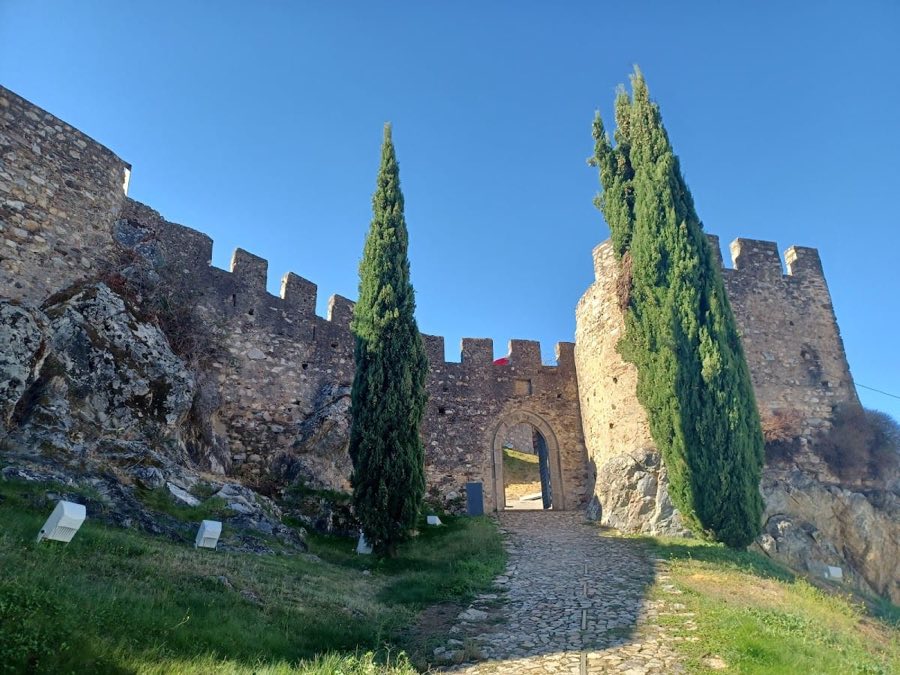
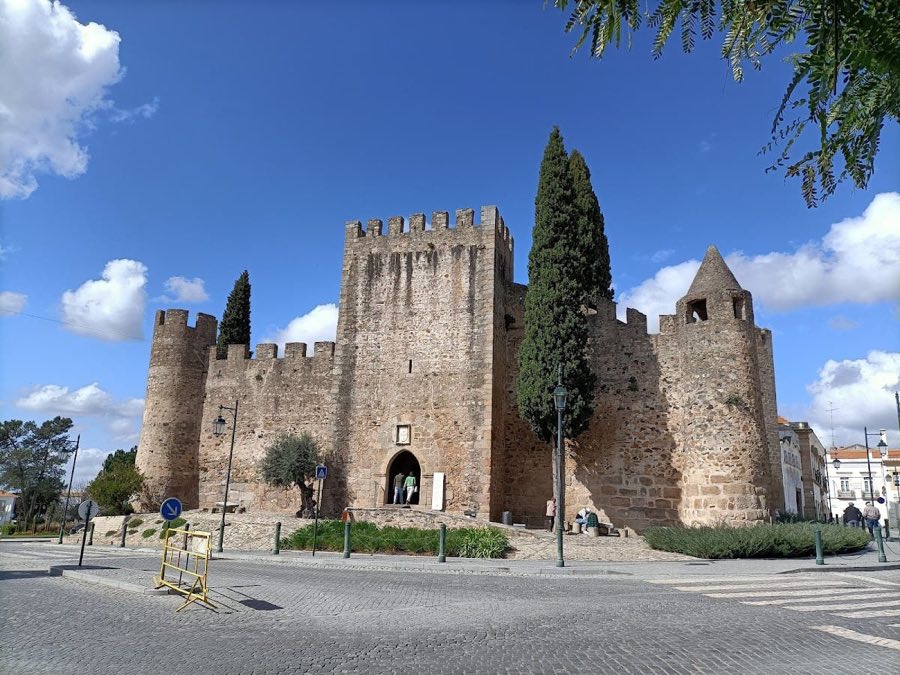
The Castle of Castelo de Vide presents an irregular quadrangular layout shaped by the contours of the hill on which it stands. Its defensive walls, constructed primarily of stone, are supported by five square towers and several rounded turrets. These fortifications are preceded by a crenellated barbican, a low outer wall designed to protect the main gateway.
The primary entrance to the settlement lies on the eastern side, where a wide double-door gate leads into a small inner courtyard called a place d’armes, used as a staging area for armed forces. From here, a second inner gate provides access deeper into the fortress. Along the northern wall, fragments of corbels that once supported a balcony remain visible, alongside two windows that overlook the surrounding landscape. Between two towers, remnants of the original citadel, known as the alcáçova (the inner fortress or keep), are still evident.
Within the inner bailey, various service structures were arranged, including warehouses to support the inhabitants and garrison. The castle’s main keep, constructed during King Denis’s reign in the early 14th century and attached directly to the main gate, suffered significant damage in 1705 when a gunpowder explosion partially destroyed its ribbed vaulted ceiling. Despite this, elements of its robust medieval architecture continue to survive.
The outer town walls once enclosed the broader settlement, featuring four gates in total. Today, two of these survive—the Porta Nova and the Porta de Santa Catarina—standing as testaments to the town’s medieval defenses. The other gates, the Porta de São João and Porta da Aramenha, have been lost due to later urban growth. Within the old town, well-preserved sections include Rua Direita, the former military barracks on Rua de Santo António, as well as civic buildings such as the town hall and the prison.
By the mid-17th century, reflecting advances in military technology and the growing importance of artillery, the fortifications expanded to include the Fort of São Roque on the eastern side of the hill. This fortification and the original castle to the west were connected by a series of bastioned walls—angled defensive structures designed to better resist cannon fire. These additions transformed the castle complex into a modern fortress of considerable size and strategic value in its border location.
No. 12625
No. 31088
No. 12299
No. 78525
Comments
Comments for Castle of Castelo de Vide will require a verified account before posting.
We'll send a verification link before your first comment is published.