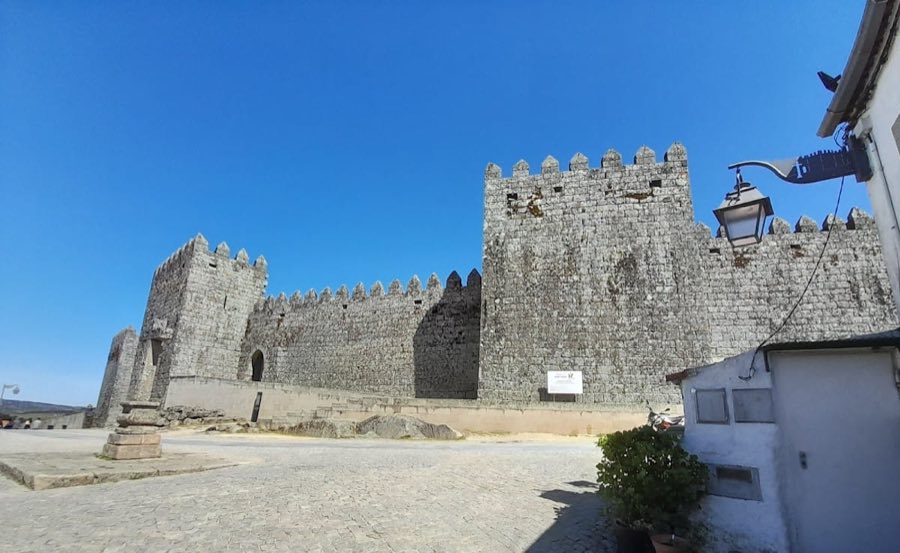
No. 62798
Castle of Trancoso
Portugal
CastleRuin19th century
No. 86650
Castle · Portugal
No. 86650 · 40.828 N, 7.321 W
Quick summary
Castle of Moreira de Rei is a castle in Portugal with origins associated with the 10th century.
See all castles in PortugalThe Castle of Moreira de Rei, in the municipality of Trancoso, Portugal, occupies a site first used by pre-Roman hillfort communities and later reworked by the Romans.
The place appears in a written will of 960 under the name Moraria, and the property passed into the hands of the Convent of Guimarães in the years that followed. In 997 the stronghold was captured by the general Almançor and remained under the caliphate until forces of Ferdinand I of León reconquered it in 1055. Archaeological traces of interior foundations assign the earliest surviving structural phases to the twelfth century, a period of renewed building at the site.
A royal charter was granted by King Afonso Henriques, and the territory was held by Fernão Mendes of Bragança until his death, when it returned to the Crown. King Afonso II confirmed a charter in 1217. In 1247 the castle served as a staging point for King Sancho II immediately before his exile to Toledo. The castle did not undergo the Gothic refurbishments carried out in the mid-thirteenth and early fourteenth centuries and thereafter endured a lengthy phase of abandonment.
Population records show fluctuations around the stronghold: the Rol dos Besteiros of 1422 records 1,065 inhabitants, the 1496 Inquirição lists roughly 202 residents, and the 1527 Numeramento records 428 people. A new charter issued in 1512 preceded transfer of control to the Fonseca Coutinho family and, later, to the Marquess of Castelo Rodrigo. By 1853 the historian Alexandre Herculano described the structure in a state of advanced ruin and reported that the courtyard had been used as a source of building stone. Between 1920 and 1930 Father Júlio César Gomes campaigned against further removal of masonry for local construction; by that time two cisterns still remained visible. The ruins were designated a Monumento Nacional in 1932. In 1942 the Direcção Geral dos Edifícios e Monumentos Nacionais began restoration work to consolidate walls and corners, followed by further rebuilding, reinforcement, excavation and leveling undertaken in 1943 and 1945.
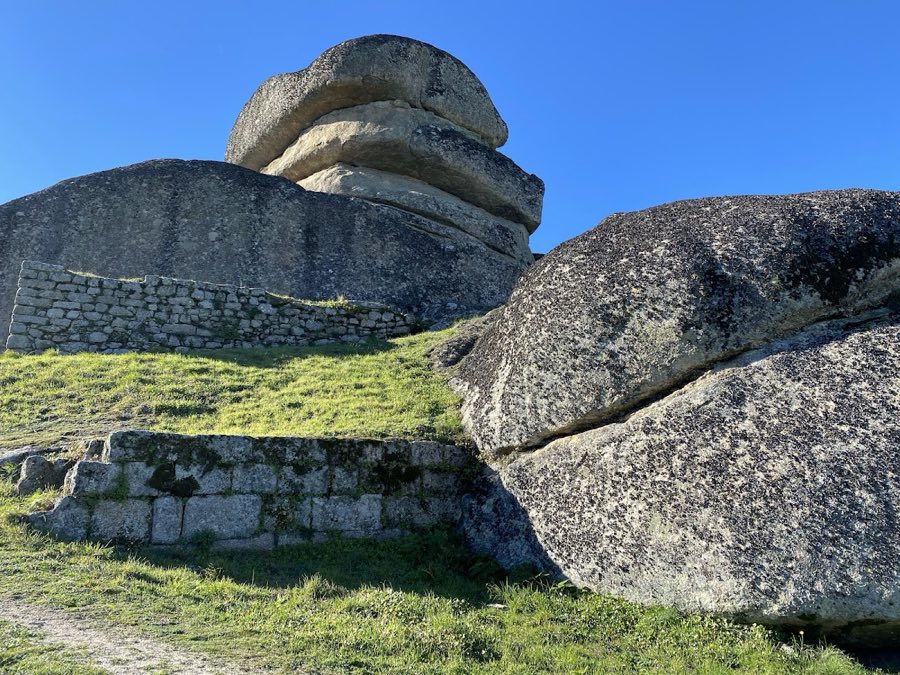
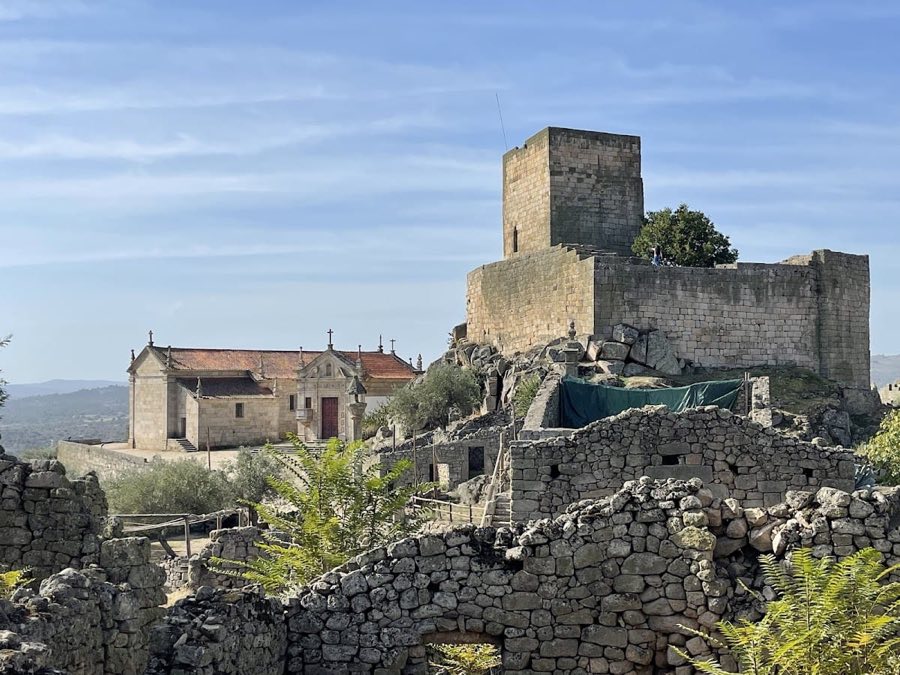
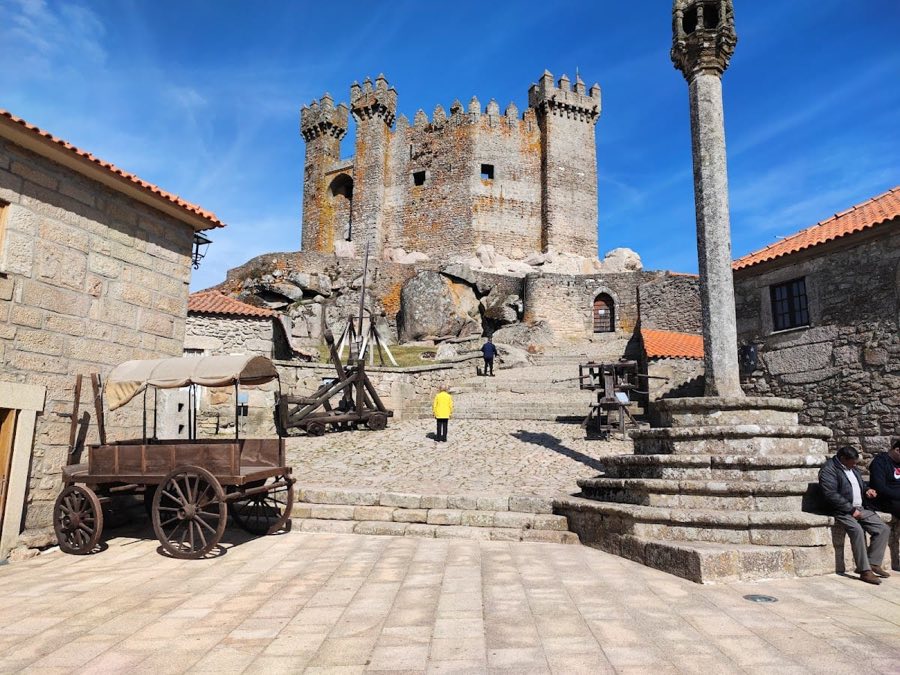
The castle crowns a granite outcrop at about 819 metres and uses the natural rock and large boulders as part of its defensive layout, giving it a commanding view over the old village and the Coa valley. Vestiges of curtain walls lie close to the town pillory and the Church of Santa Marinha, and from the hilltop the castles of Trancoso and Marialva can be seen to the south. The fortifications were built as two concentric lines of defence; the outer enclosure survives in fragments, with portions preserved along the east, south and north.
The inner enclosure describes an irregular oval plan, its eastern face recorded without merlons. Along the northern edge a largely straight wall is reinforced directly against prominent rock boulders, which serve as part of the defence. In the northwest the foundation of a rectangular keep remains visible at ground level, while to the northeast there are identifiable elements of another rectangular tower. Over the exposed rock to the northeast carved traces and masonry alignments show where wall foundations change direction at right angles.
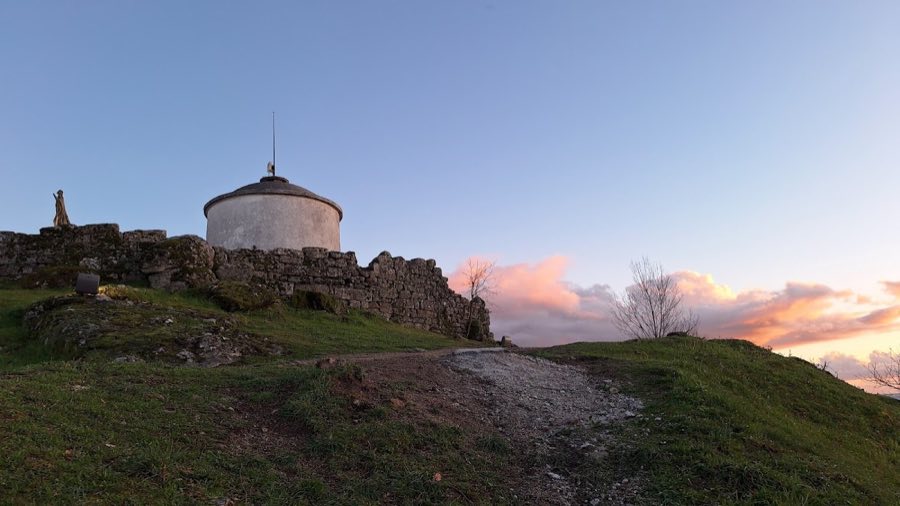
Excavation of the central courtyard uncovered a rectangular deposit, exposing part of the internal stratigraphy of the site. Remnants of the town perimeter wall survive in small segments near the position of an original northern gate, indicating where the urban limit once stood. Two cisterns are recorded within the enclosure; one sits at the summit beneath a vaulted cover and the other lies to the northwest. By the early twentieth century both cisterns were still present. Conservation work carried out in the 1940s repaired sections of wall and reinforced vulnerable corners, following a long period when the ruins had been heavily quarried for building stone.
No. 62798
No. 40104
No. 79003
No. 30021
Comments
Comments for Castle of Moreira de Rei will require a verified account before posting.
We'll send a verification link before your first comment is published.