No. 92680
Castle of Amieira do Tejo
Portugal
CastleRuinFor events13th century

No. 61156
Castle · Portugal
No. 61156 · 39.647 N, 7.690 W
Quick summary
Castle of Ródão is a castle in Portugal with origins associated with the 7th century.
See all castles in PortugalLocal tradition links the origin of a fortress on this rocky outcrop to Visigoth King Wamba, who reigned from 672 to 680, but archaeological work does not confirm construction from that century. The structure that stands today and its principal tower date to the late medieval period, raised during the eleventh and twelfth centuries, most likely atop an earlier fortification. The main tower erected in that campaign may have served as a lookout or as a keep.
In 1199 King D. Sancho donated the estate known as Herdade da Açafa to the Templars, placing the castle and surrounding lands under their control. By 1505 written evidence records that the circuit walls had suffered heavy destruction. During the eighteenth century the position was adapted for artillery to safeguard passage along the Tagus, with battlements and gun emplacements constructed on the slope that faces the river in the sector known as Batarias. At the start of the nineteenth century the Marques de Alorna oversaw reconstruction work carried out as part of preparations for the first French invasion of the Iberian Peninsula during the Napoleonic Wars.
In August 1999 municipal and national heritage authorities agreed to begin recovery of the site, sometimes referred to in official action as the Castle of King Vamba. Between 2000 and 2001 archaeological surveys were carried out under the direction of Dr. Fernando Branco. A municipal project in 2004 set out to consolidate and rehabilitate the tower and surviving walls, and from 2004 to 2006 the national monuments agency carried out works that included building an internal staircase and a floor inside the tower. In 2006 Dr. Pilar Reis excavated the area around the tower and the interior courtyard as part of these interventions.
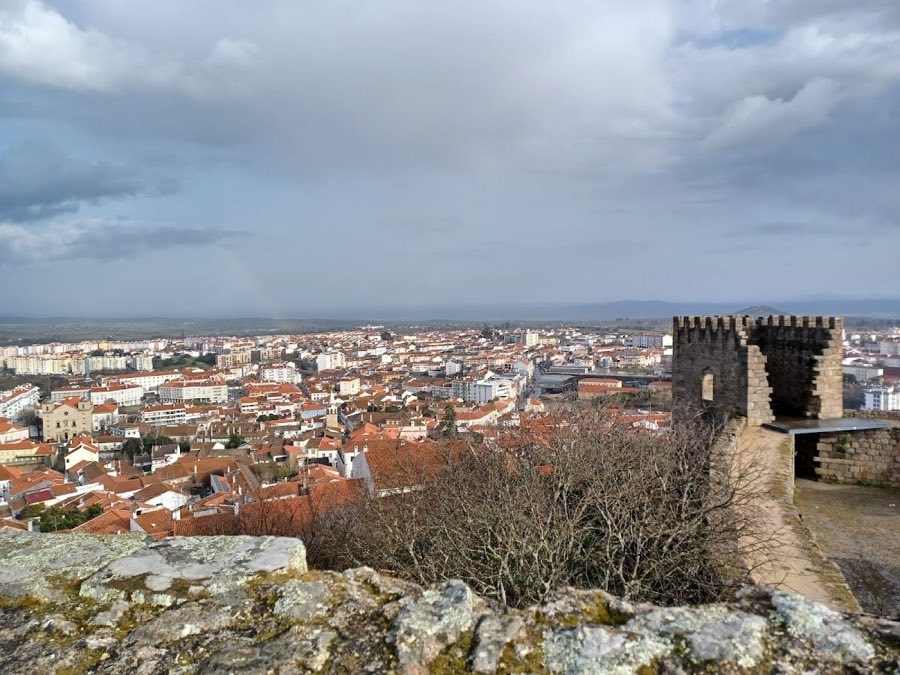
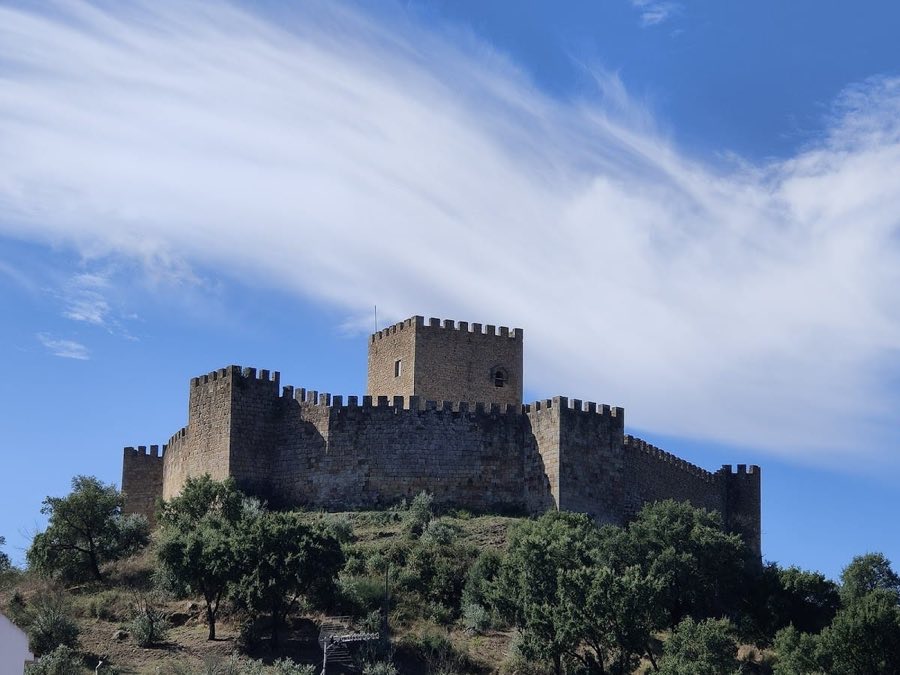
The ruins occupy an oval, irregular platform on the southern shoulder of the Serra das Talhas, also called Serra de São Miguel, where schist outcrops and scrub and trees cloak the slopes above the Tagus valley and the Portas do Ródão gorge. The defensive enclosure conforms to the mountaintop shape, with two sections of masonry battlement surviving and traces of a built wall composed of small blocks of granite set against a broad expanse of natural granite rock. Ceramic fragments have been found outside the circuit, attesting to human activity beyond the walls.
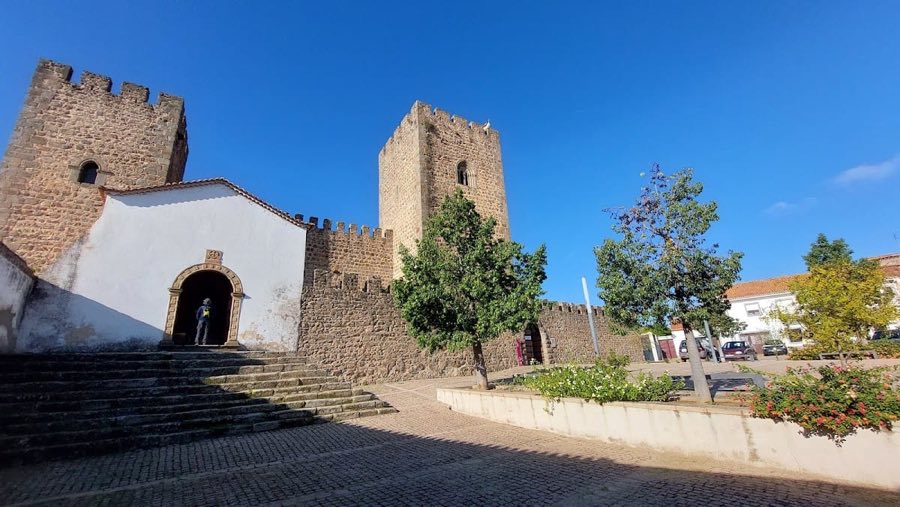
A rectangular lookout tower stands at the northeastern edge of the works, attributed to the eleventh–twelfth century Templar phase. The tower is roofless today; its interior was later altered and in the early 2000s an internal stair and a new floor were added to allow use of the tower as a viewpoint. The tower’s masonry reflects the use of dressed granite blocks and stone set directly onto the rock platform.
The south-facing wall shows a large rhombus on its first level, and on the second level a rounded doorway survives beneath a straight lintel, topped by a tympanum carved with the cross associated with the Order of the Temple. On one of the wall’s curved sections there is a carved mark shaped like a horizontal S. The northern, southern and western faces present similar features, with embrasures for defence and decorative elements that survive only in part; many of these details are fragmentary or partially destroyed.
Over time the site was adapted to new military needs. Mid-eighteenth-century modifications introduced artillery positions and battlements on the slope toward the Tagus known as Batarias. Early nineteenth-century rebuilding under the Marques de Alorna altered aspects of the fabric in preparation for the French invasion. Conservation work in the first decade of the twenty-first century consolidated masonry and made interventions to the tower and open areas; excavations around the tower and within the courtyard exposed additional archaeological deposits and clarified the sequence of construction and reuse.
No. 92680
No. 79868
No. 38325
No. 72828
Comments
Comments for Castle of Ródão will require a verified account before posting.
We'll send a verification link before your first comment is published.