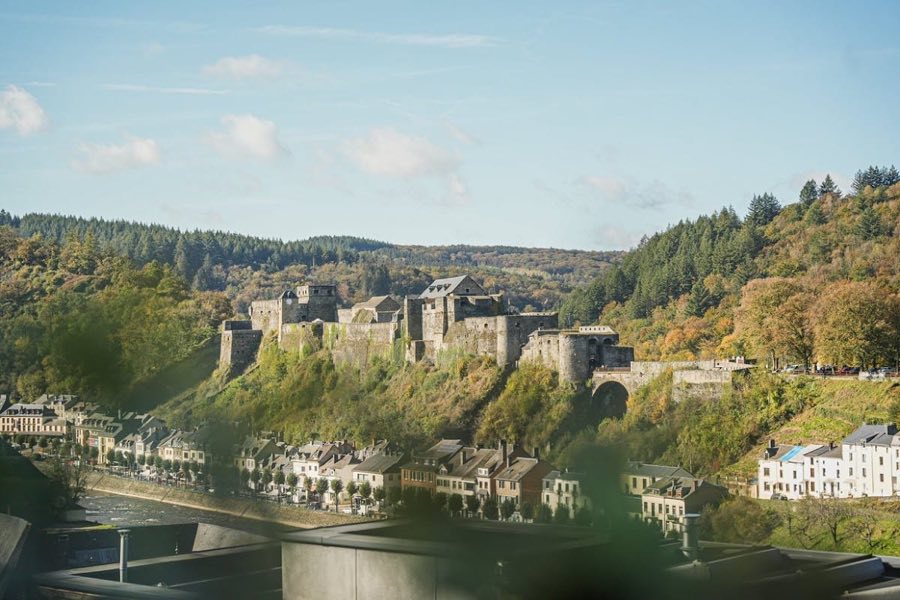
No. 88720
Bouillon Castle
Belgium
CastleRestored11th century
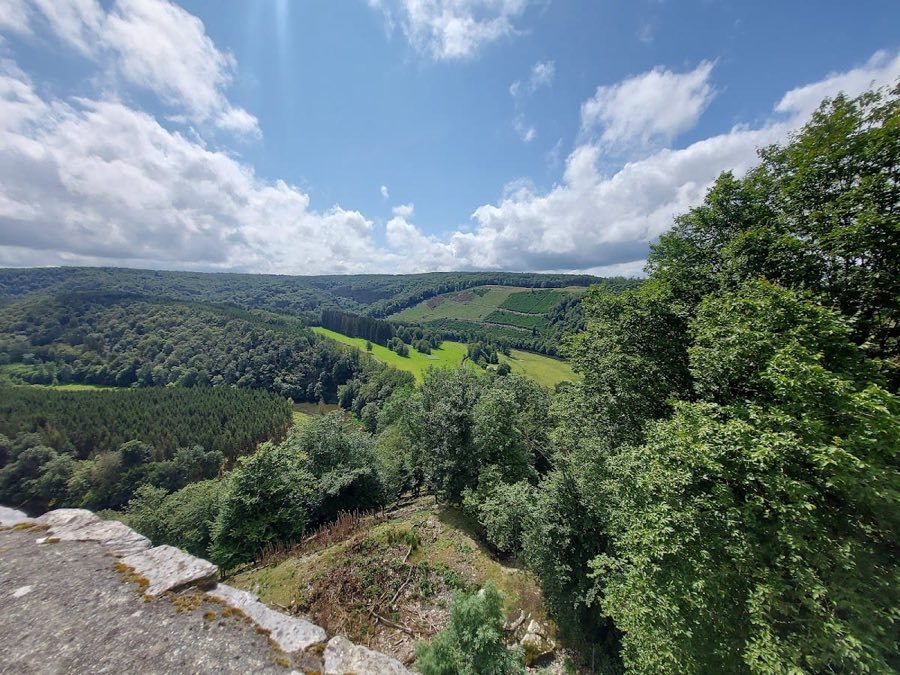
No. 66967
Château · Belgium
No. 66967 · 49.777 N, 5.233 E
Quick summary
Château d'Herbeumont is a château in Belgium with origins associated with the 17th century.
See all castles in BelgiumChâteau d’Herbeumont is a medieval fortress located in the municipality of Herbeumont in present-day Belgium. It was built by the local nobility during the Middle Ages to control a key strategic location where two roads from France met before continuing toward Neufchâteau.
The castle first appeared as an independent lordship in 1268 under Jehan de Rochefort, who erected the fortress to establish his authority. Its construction followed the principles of contemporary French military architecture inspired by the reign of Philip II, reflecting the medieval shift toward robust, defensible stone structures. Built rapidly in a single phase after 1268, the fortress served as a seat of power overseeing this important border region.
Over the following centuries, the castle’s political and military role evolved. From 1545, it became part of the Terres wallonnes, a territory functioning as a buffer zone between the Holy Roman Empire and the Kingdom of France. This position made the fortress a target during periods of conflict, notably in 1558 when French forces under the Duke of Nevers laid siege to it. The structure also endured significant damage throughout the Thirty Years’ War between 1618 and 1648, an extended series of European conflicts involving several great powers.
By the mid-17th century, the castle’s military importance had waned, leading to its abandonment. In 1657, it was deliberately dismantled under orders from Louis XIV’s troops. On August 21 of that year, forces led by Marshal de la Ferté captured the site and set it on fire, effectively ending its operational use as a fortress.
The lordship of Herbeumont passed through four noble families. Beginning with the Orjo family from the castle’s foundation in 1268 until 1420, it afterwards belonged to the La Marck-Rochefort lineage from 1420 to 1544. The Stolberg family controlled it between 1544 and 1574, followed by the Löwenstein family, whose tenure lasted until 1796.
Recognized for its cultural and historical value, Château d’Herbeumont was designated among Wallonia’s exceptional heritage sites in 1993. Restoration initiatives commenced the following year and culminated in substantial renovation work completed in 2010, which focused on uncovering and preserving features characteristic of its original 13th-century fortress design.
Château d’Herbeumont is situated atop a prominent natural schist hill that resembles a tumulus or rounded mound, with steep cliffs descending more than a hundred meters toward the Semois river below. This elevated position provided commanding views over the narrow valley and the convergence of two medieval routes, offering crucial military oversight.
The castle’s original plan featured an irregular trapezoidal shape, with seven towers placed at various corners to strengthen its defenses. Among these was a large, square-shaped donjon, or keep, which served as the central stronghold. The towers and donjon were connected by curtain walls that enclosed a spacious courtyard within. The access route to the fortress was deliberately steep and narrow, making it difficult for attackers to approach. This approach, combined with the carefully arranged towers guarding the entrance, added layers of protection.
Construction involved significant alteration of the natural terrain. The rocky crest was carefully leveled to create a flat, stable platform that could support the weight of the castle’s walls and structures. This engineering effort was completed during the initial building phase after 1268.
In the 16th century, the castle underwent modifications reflecting changes in warfare technology. Adaptations included the addition of platforms designed to hold cannons and thicker, more sheltered towers that could better resist artillery fire. Corner pavilions were also constructed to guard against mining attacks, a method where attackers would tunnel beneath walls to cause collapses.
Today, the ruins reveal these characteristic features through preservation work completed in 2010. The current appearance highlights the defensive architecture of the 13th century, allowing the structure’s medieval military design to remain visible. Despite its ruined state, the castle continues to overlook the strategic valley and remains a significant testament to the fortifications of its era.
No. 88720
No. 99727
No. 13508
No. 43432
Comments
Comments for Château d'Herbeumont will require a verified account before posting.
We'll send a verification link before your first comment is published.