No. 35082
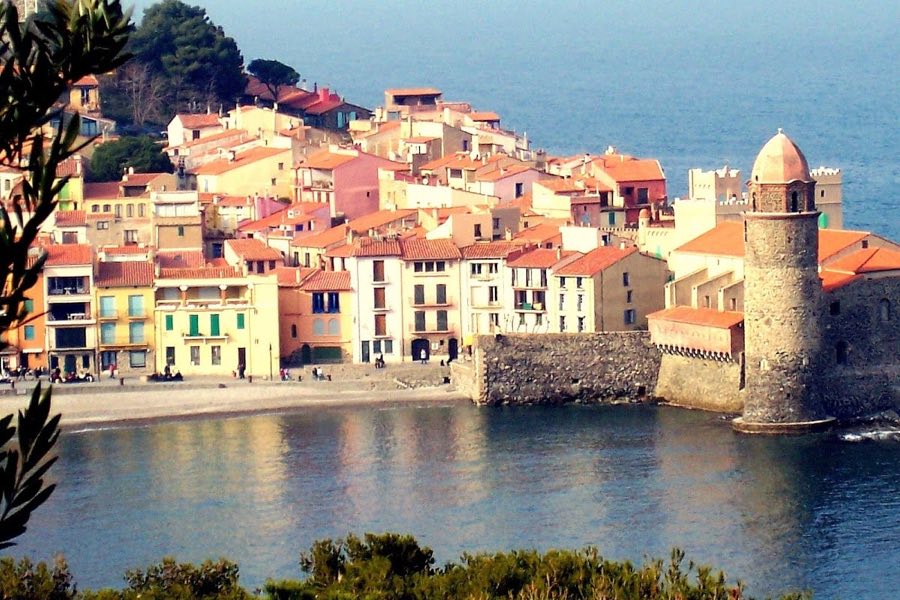
Château d'Ortaffa
France
ChâteauRestored12th century
No. 90669
No. 90669 · 42.562 N, 2.621 E
Quick summary
Château de Belpuig is a château in France with origins associated with the 14th century.
See all castles in FranceThe Château de Belpuig stands within the commune of Prunet-et-Belpuig in modern-day France. This medieval fortress was constructed by local feudal lords, reflecting the complex power structures of the region during the Middle Ages.
Documented references to the castle appear as early as 1240, when Guillaume V, viscount of Castelnou, formally recognized the authority of Nunyo Sanche, regent of Roussillon and Cerdagne, by paying homage for Belpuig. This act highlights the castle’s role as a significant seat of feudal power. Throughout the late 13th and into the 14th century, the castle’s governance involved several legal agreements. In 1282, an accord granted Arnald de Saint-Marsal the rights to oversee both civil and criminal matters for the castle’s residents and lands, a clear indication of its administrative importance. Arnald’s jurisdiction was further confirmed when he was appointed castellan—the official in charge of the castle—by the Aragonese crown in the early 1300s.
The mid-14th century reveals ongoing military concerns surrounding Belpuig. Orders in 1353 called for Arnau Deç Banch to build a gate, while a decade later, directives were issued to the castellan to strengthen the castle’s defenses. Such commands suggest persistent threats requiring vigilance and preparedness.
Ownership of the fortress shifted multiple times during this turbulent era. Bérenger de Castelnou transferred possession in 1373 when he sold the castle to André de Fenouillet, viscount of Ille and Canet. By around 1416, the Pau family held the fortress, entrusted by royal decree with collecting transhumance dues—fees linked to seasonal livestock movements—in the surrounding Vallespir region.
During the 14th century, the castle served not only as a stronghold but also as a refuge for the nearby population. Inhabitants were required to bring their belongings inside the walls during times of danger and actively participate in maintaining and defending the fortifications. This dual function underlined Belpuig’s role as a community center during periods of conflict.
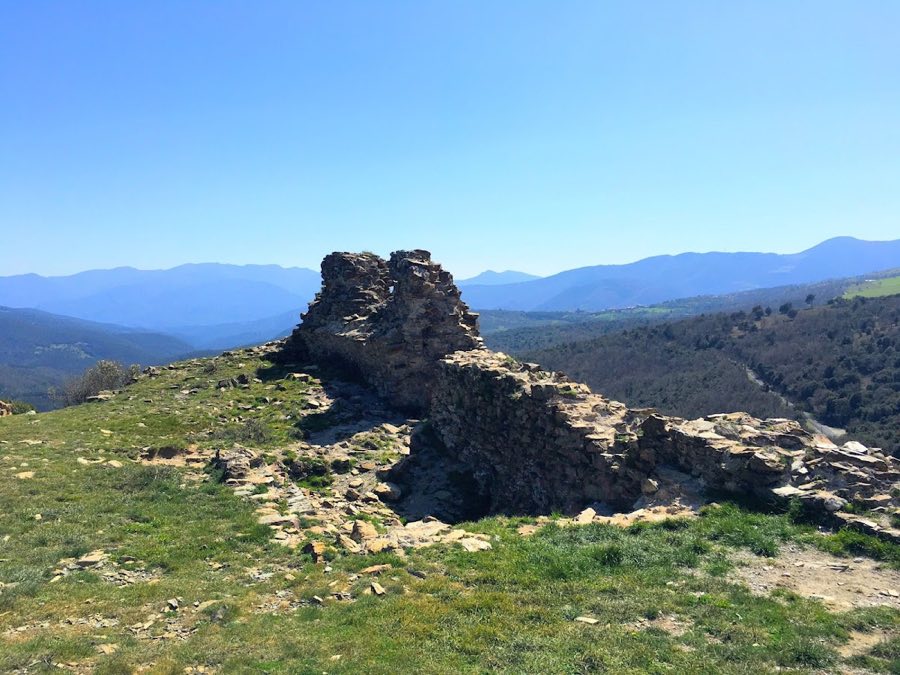
The ruins of Château de Belpuig reveal a fortress designed with both defense and refuge in mind. Its core is a pentagonal keep, or donjon, which served as the residence and command post for the castellan. This keep features a southern entrance that connects to a second, larger courtyard or enclosure, providing layered protection within the castle walls.
Encircling the donjon is an extensive polygonal outer wall, known as an enceinte, reinforced by towers notable for their design of being open at the rear, or gorge. This architectural choice allowed defenders easier access and improved defense mechanisms while also creating shelter spaces for the local population and their livestock during attacks or sieges.
Additional remains include the curtain wall flanked by cylindrical towers, creating a robust defensive barrier characteristic of 14th-century fortifications in the region. This layout bears similarity to the nearby Castellnou dels Aspres, indicating shared architectural influences or regional construction practices.
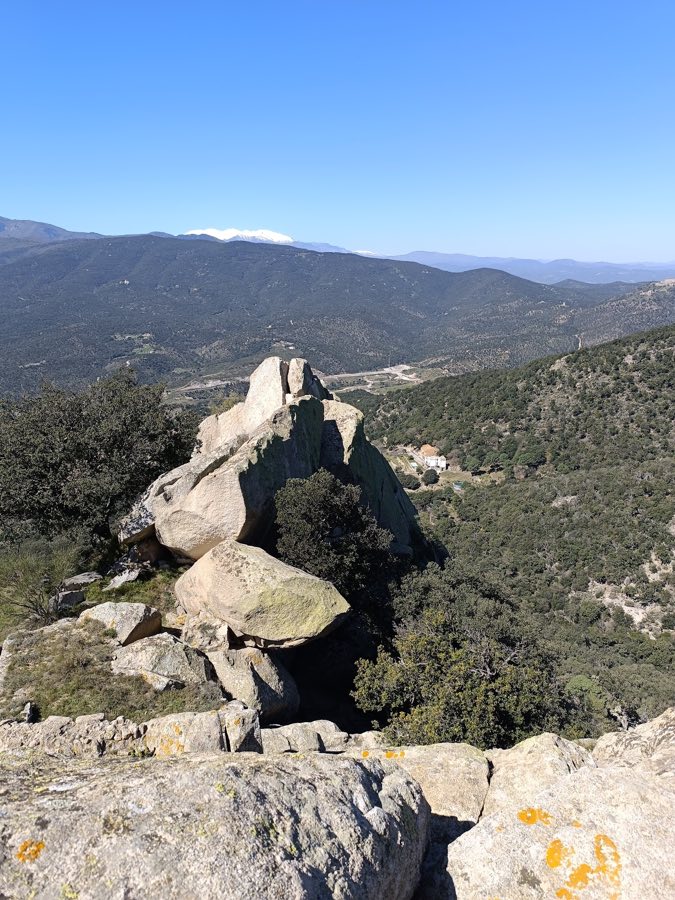
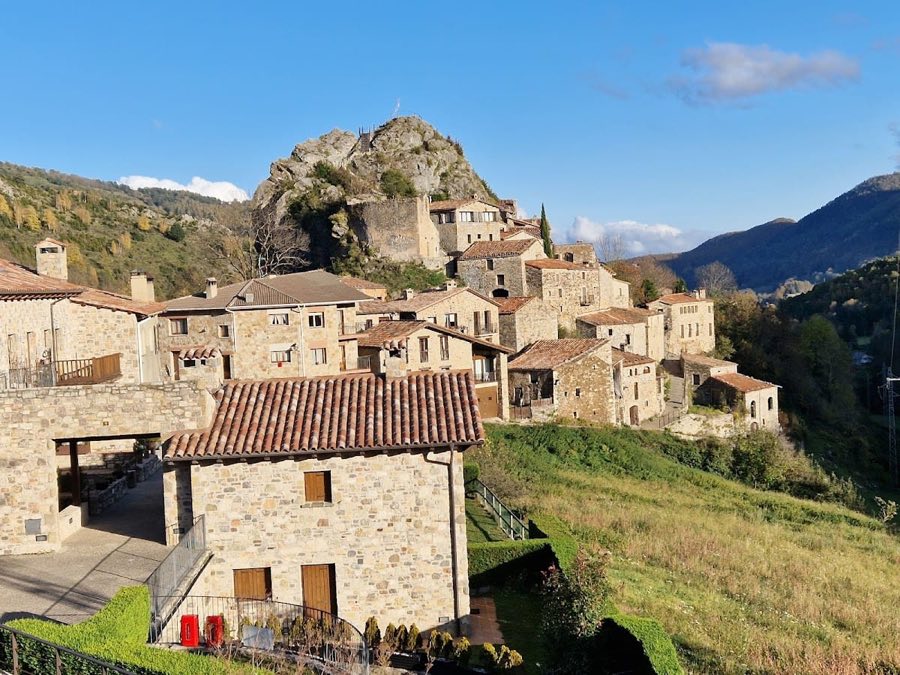
The castle occupies a rocky spur 772 meters above sea level, granting strategic and panoramic views across the Canigó massif, as well as the Albera and Corbières mountain ranges, extending to the coastal areas of Roussillon and Languedoc. Such positioning not only served military observation but also enhanced control over the surrounding territory.
Access to the fortress today is reached by a path beginning near the chapel of the Trinity, taking about fifteen minutes to ascend. Within the walls, there are traces of interior buildings, including ground-floor rooms that were sold in the 14th century, suggesting that the site contained domestic or administrative spaces alongside its military functions.
Together, these elements illustrate Château de Belpuig as a well-fortified medieval site designed to support both the ruling castellan’s authority and the safety of the local community.
No. 35082
No. 82194
No. 30119
No. 86977
Comments
Comments for Château de Belpuig will require a verified account before posting.
We'll send a verification link before your first comment is published.