No. 11916
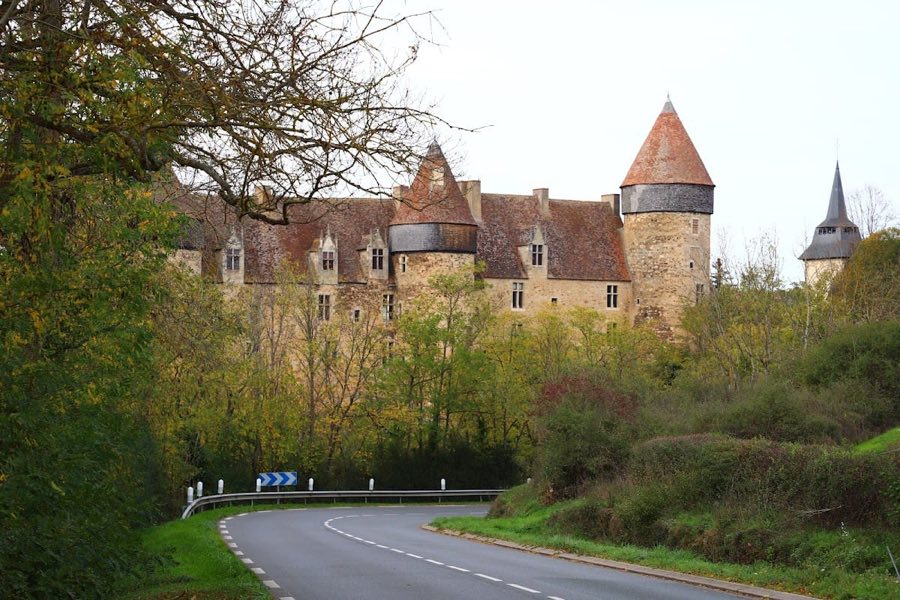
Castle of Culan
France
CastleIntactFor events10th century
No. 25196
Château · France
No. 25196 · 46.344 N, 2.576 E
Quick summary
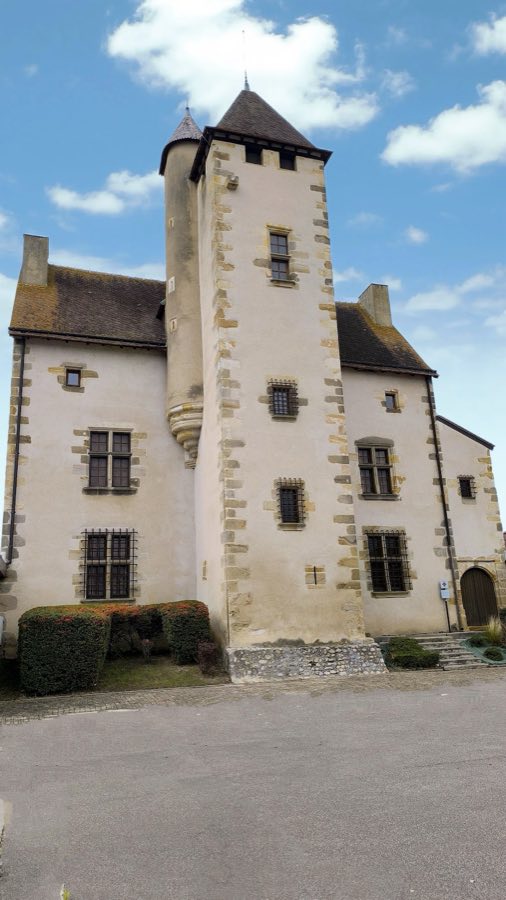
Château de Bien-Assis is a château in France with origins associated with the 15th century.
See all castles in FranceThe Château de Bien-Assis stands in Montluçon, France; it was erected by late medieval French lords in the late 1400s.
The seigneurie is recorded from 1460 under a lord named Robert, and in 1481 Colas de Peret, also known as Nicolas Dupeyret, is documented as lord of Bien-Assis. The building’s form and dating place its construction in the later decades of the fifteenth century as a small fortified manor house for local nobility.
Ownership passed through a succession of families after the medieval period, including Chasauvert, Mercier, Tardé, Alamargot and the La Saigne de Saint-Georges line. In the modern era the estate belonged to Mme Sarret, who sold it to Jean and Richard de Montaignac; the brothers then let the house to tenant farmers, marking a shift toward agricultural use.
In the twentieth century an expropriation measure returned the property into the hands of the city of Montluçon, which at first planned to demolish the house and then transferred it to the Société d’équipement du Bourbonnais to permit development of the new Bien-Assis residential quarter. Faced with that threat, the association Les Amis de Montluçon acquired the château in 1970 to preserve it. The building had suffered from exposure and poor upkeep before that work; repairs carried out later addressed the roof, principal rooms and exterior walls. The Société d’équipement du Bourbonnais received the Emile-Mâle prize in 1993 in connection with the building’s restoration.
Protection of the house under the historic monuments inventory followed a complex course. The site was entered on the supplementary inventory on 9 December 1929, removed on 17 March 1933, and then re-entered for its façade and roofs on 20 December 1965. After painted decoration from the latter half of the 1500s was discovered and conserved, the entire château was placed on the inventory in December 2015. The house occupies the western edge of the plateau above Montluçon, looks down toward the Ruisseau des Étourneaux, and has given its name to the surrounding Bien-Assis quarter.
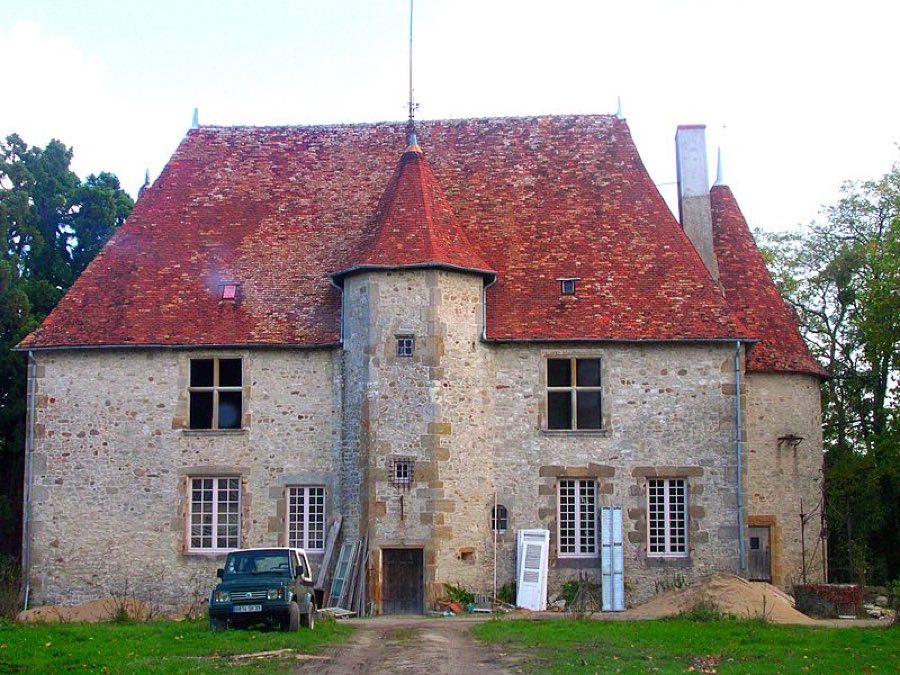
The surviving plan centers on a main living block arranged with two rooms on each floor, a layout typical of a late fifteenth-century fortified manor house. A square staircase tower projects from the middle of the main façade, and a small circular turret stands beside it, forming the principal vertical elements on the front. These projecting towers remain visible and mark the original entrance and circulation axis.
Interior fittings that have survived from the building’s occupation include several chimneys, panelled doors and ironwork datable to the relevant periods. One room revealed painted decoration from the later 1500s; those wall paintings were conserved and are part of the restored interior fabric. The carved and wrought elements show the domestic character of the house after its construction.
Beneath the main block a vaulted cellar survives, its vaulting retained in situ and reused for display. The on-site chapel also remains and has been fitted to present a lapidary collection. That chapel and the cellar now contain stones and architectural fragments, many of which were recovered from the Château jaune after its demolition in 1963, so the rooms serve both as conserved spaces and as repositories for local archaeological material.
Recent conservation has stabilised and repaired key parts of the structure. Work undertaken by local custodians repaired the roof and the principal reception rooms and consolidated the external walls. Ground-floor rooms are used for a temporary exhibition each June, the first floor hosts a permanent exhibition of the association’s collections spanning prehistory to the twentieth century, and other rooms house a library holding works from the sixteenth to the eighteenth centuries and regional publications, showing the building’s continued reuse for cultural and archival purposes.
No. 11916
No. 56978
No. 14180
No. 50832
Comments
Comments for Château de Bien-Assis will require a verified account before posting.
We'll send a verification link before your first comment is published.