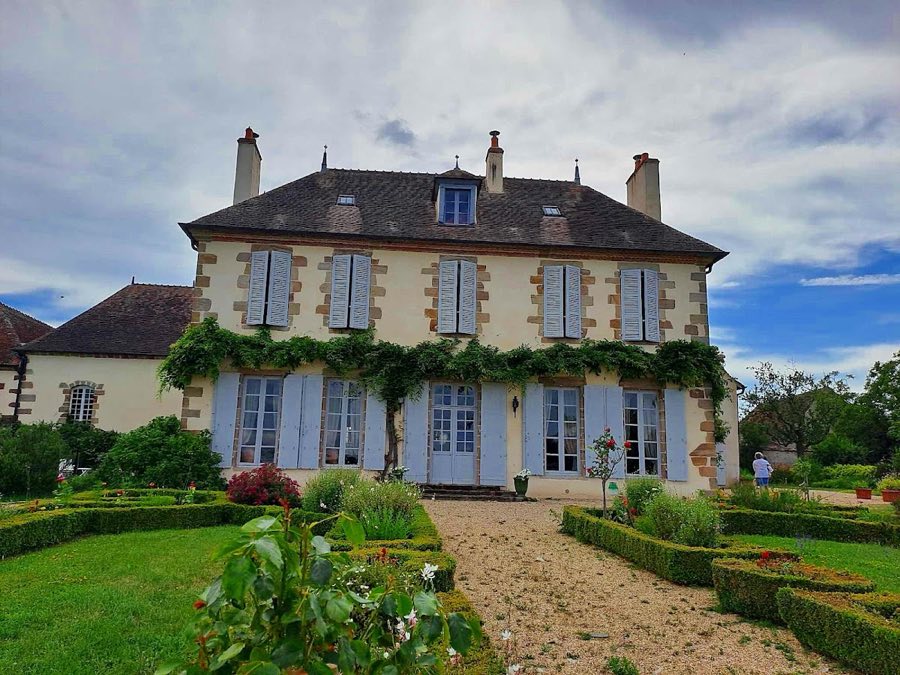
No. 33021
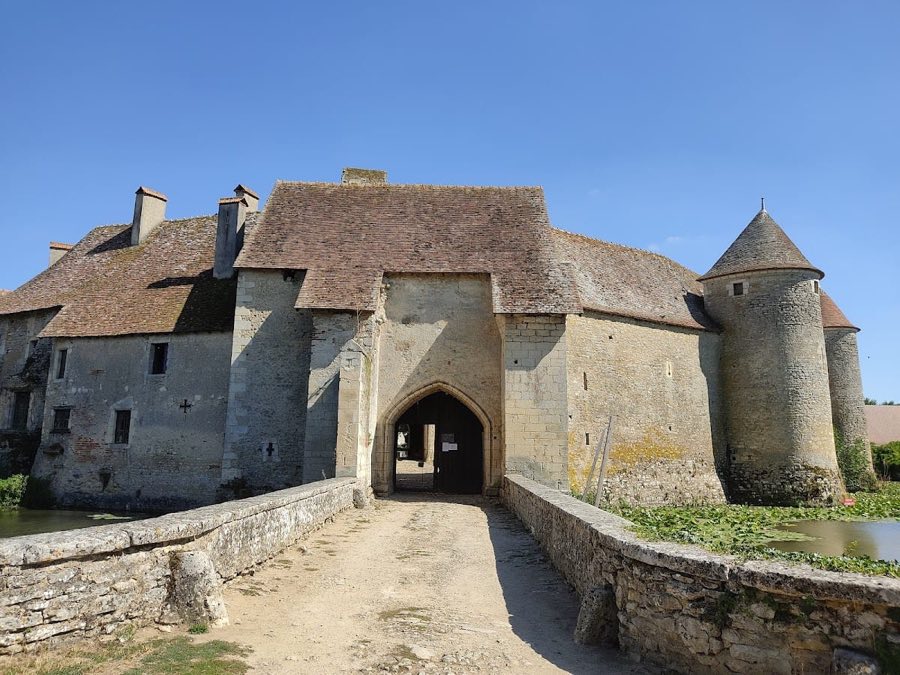
Château de Charnes
France
ChâteauIntact17th century
No. 14180
Château · France
No. 14180 · 46.588 N, 3.058 E
Quick summary
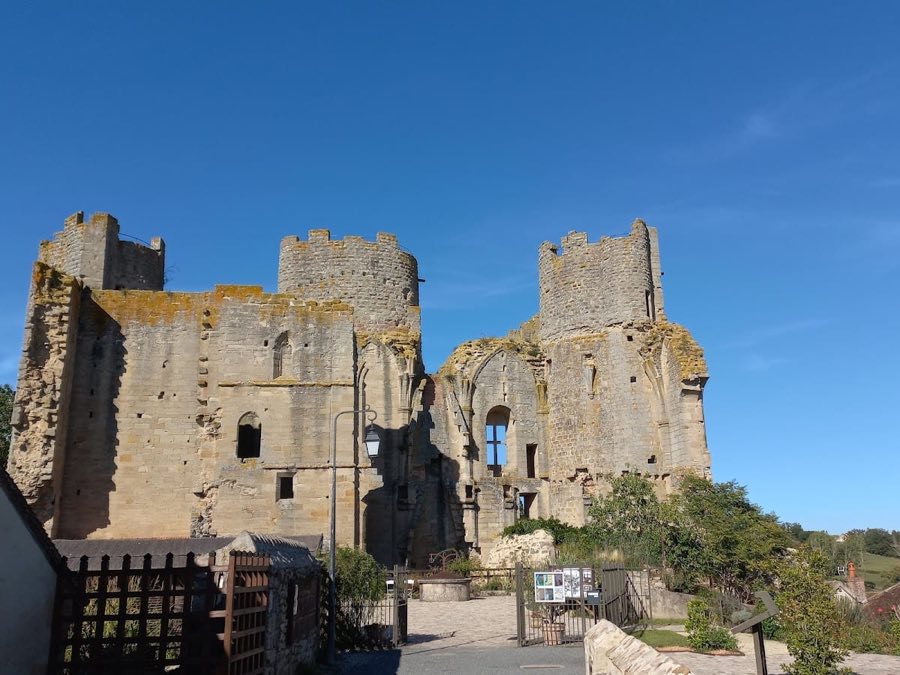
Château de Bourbon is a château in France with origins associated with the 13th century.
See all castles in FranceThe Château de Bourbon is located in Bourbon-l’Archambault, France, and was established by medieval European builders during the 13th century. Its foundations rest on earlier fortifications dating back to the early Middle Ages, situated in a region that later became known as the Bourbonnais province.
The earliest known fortifications at the site include a wooden castle noted in records from the year 947 and an even older fortress, or castrum, destroyed in 761 by the Frankish king Pepin the Short. From the 10th century onward, the Bourbon family held this stronghold as lords, beginning with Aymar de Bourbon who died in 953. The lineage included several rulers named Archambault, who formed close alliances with the influential Cluny Abbey and the French Capetian monarchy. Notably, Aimon II became a vassal directly under King Louis VI, strengthening the Bourbon family’s ties to the royal authority.
During the 12th and early 13th centuries, the castle underwent substantial reconstruction in stone, replacing earlier wooden structures. Under King Philip Augustus, its defenses were expanded, and Archambaud VIII likely added round towers to bolster its fortifications. Control of the castle later passed through marriage to the Dampierre family and subsequently to the House of Burgundy. The Bourbon royal line was established through the marriage of Béatrice de Bourgogne and Robert de Clermont, son of King Louis IX (Saint Louis).
In the early 14th century, Louis I, the first Duke of Bourbon and a grandson of Saint Louis, enlarged the fortress and founded a Sainte Chapelle to house sacred relics. The castle endured attacks by the English during the Hundred Years’ War and also suffered a damaging fire between 1356 and 1370. Louis II then undertook reconstruction and further strengthening of the fortress, establishing it as his capital. Over the course of the late Middle Ages, nine successive dukes ruled from the castle.
By the late 15th century, Jean II of Bourbon rebuilt the Sainte Chapelle, modeling it after the famous chapel in Paris. However, in the early 16th century, the duchy was confiscated by King Francis I and integrated into the French royal domain by 1531, ending Bourbonnais’s status as a feudal principality. The castle ceased to serve as a ducal residence but remained occupied by religious canons who maintained its chapels.
The Bourbonnais duchy was revived in 1661 for the Bourbon-Condé family branch. During the 17th century, visiting princes and princesses stayed at the castle, drawn by the therapeutic thermal springs in the nearby area. Notably, Madame de Montespan, a prominent figure at the court of Louis XIV, died at the castle in 1707. The fortress was partially damaged by fire in the 18th century, after which the Prince of Condé carried out restoration efforts, including installing an 18th-century clock on the Qui-qu’en-grogne tower.
With the onset of the French Revolution, the Bourbon-Condé family fled, and their properties, including the château, were confiscated. In 1793, authorities ordered the demolition of the fortress except for three northern towers and the Qui-qu’en-grogne tower, which were retained and repurposed as prison annexes.
After the monarchy’s restoration, the Bourbon-Condé family regained ownership. In the 19th century, the castle passed to Henri d’Orléans, Duke of Aumale, who created a small museum within its ruins. Upon his death, the château became part of the shared property of the House of Orléans heirs. Since 1974, the site has been managed by the Fondation Saint-Louis, charged with preserving historic monuments linked to the Orléans family.
The castle is situated atop a rocky plateau extending about 180 meters in length and 50 meters in width, overlooking the Burge valley. Its natural defenses include a pond to the west, steep slopes on the south and east sides, and a deep ditch carved into the northern side facing potential attackers. The fortress’s medieval design featured a high curtain wall supported by cylindrical towers. Within this defensive perimeter stood the residential quarters, the castle’s chapels, and a lengthy outer bailey secured by a thick outer wall with round towers.
A prominent feature at the southeastern end of the outer bailey is the large circular Qui-qu’en-grogne tower. This tower served both defensive and observation purposes, watching over the adjacent town. Access to the entire castle complex was controlled through a northern entrance flanked by two round towers forming a fortified gatehouse, known as a châtelet.
Today, only the northern section of the castle remains fully intact. This includes three cylindrical towers constructed with bossage masonry—a style characterized by projecting stone faces—dating from 1277 to 1287. These towers were further heightened during the late 14th century to enhance their defensive capabilities. Behind this northern wall lies a substantial two-level hall built near the end of the 14th century, indicating the castle’s role as a noble residence.
The castle once housed two Sainte Chapelles, or holy chapels, constructed respectively in 1315 and around 1485. The first chapel, founded under Louis I, was dedicated to Notre-Dame, while the later chapel, rebuilt by Jean II, honored Saint Louis. Both chapels contained precious relics brought to the fortress by Robert de Clermont, linking the site closely to religious practices and royal heritage.
The Qui-qu’en-grogne tower underwent significant modifications under Duke Louis II, who strengthened its structure. It closes off the outer bailey from the south and includes an entry accessible by several steps from a nearby building once used as a girls’ school and later a music school. Within the tower, a spiral staircase connects its upper levels to a battlement walk that offered panoramic views. On its first floor, a room likely served as a prison cell, as evidenced by iron rings embedded in the stone walls, which prisoners might have been chained to. Above, the tower’s belfry features a clock added in the 18th century, visible from the town and marking a later phase of modification.
Recognizing its historic and architectural importance, the castle has been classified as a Monument historique since 1862. The Qui-qu’en-grogne tower received separate classification status in 1961, underscoring its distinct heritage value within the complex.
No. 33021
No. 50832
No. 56978
No. 89600
Comments
Comments for Château de Bourbon will require a verified account before posting.
We'll send a verification link before your first comment is published.