No. 13147
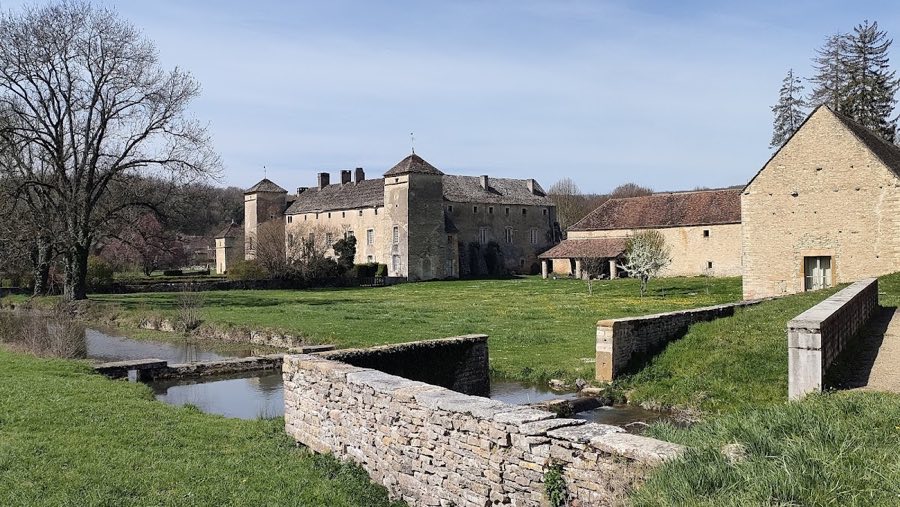
Château d'Ozenay
France
ChâteauIntact15th century
No. 87567
Château · France
No. 87567 · 46.472 N, 4.808 E
For events
Château de Lugny is marked as a château or castle venue lead. Capacity, indoor/outdoor spaces, catering rules, and accommodation options are published only after public verification.
Event types: Private events, Cultural gatherings, Filming and photography
Quick summary
Château de Lugny is a château in France with origins associated with the 16th century.
See all castles in FranceChâteau de Lugny stands in the commune of Lugny, France; it was raised in the medieval period by the local seigneurial household, initially the house of Lugny.
From the medieval era the site formed a fortified seigneurial complex at the foot of the castle hill west of the village. The stronghold was protected by several towers and a high square keep, and its defensive ditches were supplied with water from the Bourbonne spring, known locally as the Blue Waters. The house of Lugny held the lordship until the middle of the 16th century.
The estate passed by marriage in 1558 to the Chabot family and in 1579 to the de Saulx family. In 1647 the lordship was transferred to the La Baume family of Montrevel, and descendants of that house remained lords until the end of the Ancien Régime. Florent‑Alexandre‑Melchior de La Baume, born in 1736, was the last entitled lord; he was executed in 1794.
On the night of 27–28 July 1789, during the episode known as the Great Fear, the principal seigneurial residence, the castle chapel and the great keep were pillaged and set on fire. Contemporary testimony records that the buildings were burned so thoroughly that little of their superstructure survived above ground.
After the Revolution the structures that had endured the conflagration lost their agricultural role and were adapted for industrial use in the first half of the 19th century, first for cotton spinning and then by about 1838 for a factory producing colored tiles, which employed roughly thirty workers. Later the surviving buildings served administrative and ecclesiastical functions, housing the local gendarmerie and, from around 1910 until the mid‑1980s, the presbytery.
Between the world wars part of the ruined castle belonged to Dr Paul Jacques. In the autumn of 1943 a small German garrison was stationed at the château; the château itself served as the command post while troops were quartered elsewhere in the village. In 1946 Abbé Joseph Robert (1898–1987) bought the property and converted it that same year into a private boarding school. Since then the site has been partly occupied by the private school group called La Source.
Almost all of the surviving buildings are owned by the association Les Foyers communautaires, founded in December 1946, which established its headquarters in the main house. Conservation work in late 2020 repaired the long façade facing the park, restored one of the 14th‑century round towers (during which several cannon‑ports were exposed and cleared) and addressed the north façade. A local explanatory panel was installed in 2022. The château took part in the European Heritage Days for the first time in 2021 and again in 2024. Periodic collapses of the ground on the castle platform have revealed buried masonry, and an opening in 2018 exposed a small vaulted chamber below the surface. The site remains private property and is opened for occasional events.
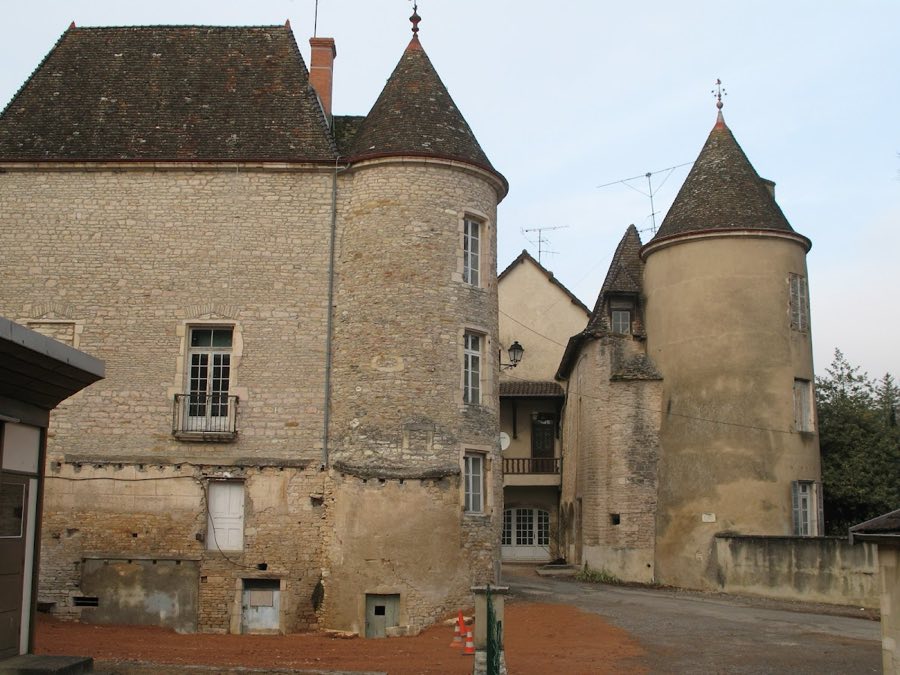
The surviving ensemble groups defensive entrance towers and a range of ancillary buildings that once formed the lower courtyard and now define a roughly quadrilateral complex. The two round gate towers, each rising three storeys and attributed to the 14th century, mark the original approach to the enclosure and show evidence of artillery use through several cannon‑ports set at different levels.
Originally the two towers flanked a gateway fitted with a drawbridge; the wooden drawbridge no longer survives. Each tower has a narrow building attached; those two wings stand at right angles to one another and are covered by tall hipped roofs clad with flat tiles. The wing beside the north‑east tower has an attic window set into its roof slope and overlooks a small circular turret built in the angle where the wing meets the tower.
Beyond the towers, on the left as one enters, three arcaded openings remain; these partially walled arches recall the former gatehouse or porter’s lodge associated with the entrance sequence. On the right side of the entrance range two bays with shaped semicircular arches and the door to the former stables are visible; those elements are traditionally dated to the 16th century and the stables’ door is set beneath a basket‑handle arch.
The main seigneurial residence that once stood on the castle platform was largely destroyed by the 1789 fire. That principal dwelling contained a great hall, numerous chambers, a vaulted cabinet used to hold the lord’s treasure and manorial land records, and a chapel. Above ground only a short length of curtain wall and the base of one circular tower remain as fragments of that grand building.
Subsurface investigations and accidental openings have revealed hidden structural remains. Repeated surface collapses have exposed buried masonry and vaulting, and a 2018 collapse opened onto a small vaulted chamber roughly four by three metres in plan. This low room is spanned by a basket‑handle vault and is built of roughly squared limestone blocks set with minimal dressing and tight joints, showing a straightforward, functional construction technique.
The medieval defensive circuit was hydraulically sustained, the ditch system being fed by the Bourbonne spring that rises at the foot of the castle hill. Over time the surviving buildings were adapted to new uses, including textile work and tile manufacture in the 19th century, official accommodation and the presbytery in the 20th century, and educational activities from 1946 onward. Recent restoration work repaired the long park façade, conserved a 14th‑century round tower and cleared several cannon‑ports, and a local explanatory panel now interprets the site for occasional public openings.
No. 13147
No. 86523
No. 10482

No. 33948
Comments
Comments for Château de Lugny will require a verified account before posting.
We'll send a verification link before your first comment is published.