No. 12050
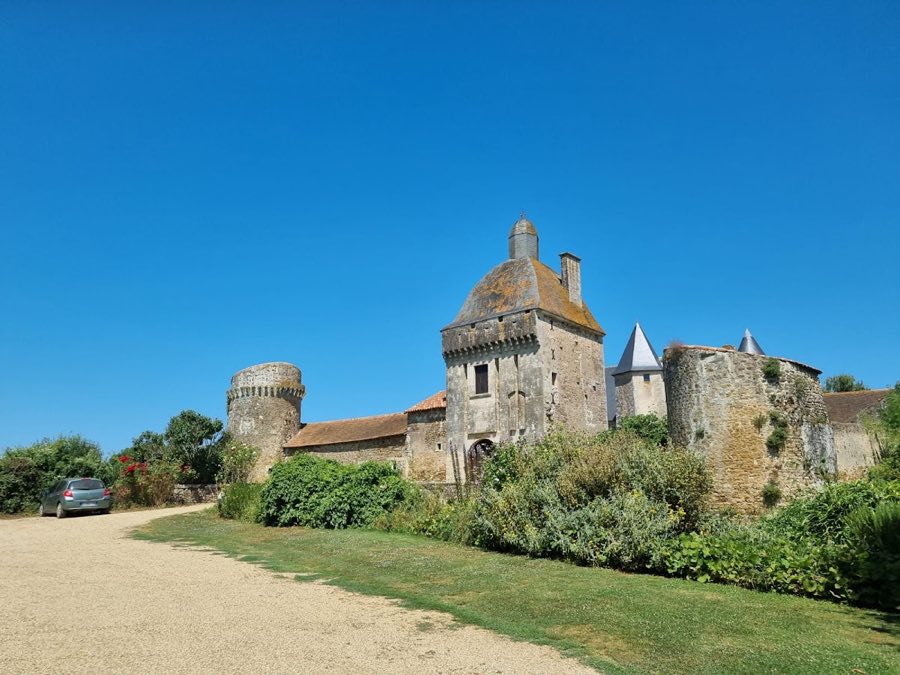
Château de Marconnay
France
ChâteauIntact15th century
No. 17572
Château · France
No. 17572 · 46.437 N, 0.128 E
Quick summary
Château de Lusignan is a château in France with origins associated with the 12th century.
See all castles in FranceChâteau de Lusignan stands in the town of Lusignan in modern France, and it was created by the medieval lords of the House of Lusignan.
The first fortifications were erected in the late tenth century under Hugues II le Cher, and the site became the hereditary seat and birthplace of the seigneurs de Lusignan. Members of this family later became kings in Cyprus and Jerusalem; Aimery II de Lusignan (around 1145–1 April 1205) is one named example of that wider dynastic reach.
In 1168 forces of Henry II Plantagenêt partly dismantled the fortress. A few years later, in 1171, Hugues VIII de Lusignan and his sons rebuilt the stronghold. Further major rebuilding took place in the thirteenth century, and again at the close of the fourteenth century.
Jean, duke of Berry, carried out modernising works at the end of the fourteenth century and kept the castle as one of his favoured residences until his death in 1416. Local tradition and medieval chroniclers associated the foundation with the fairy Melusine; Pierre Bersuire recorded this story around 1342–1350, and the duke of Berry’s manuscript known as the Très Riches Heures shows the castle with Melusine above one tower.
During the French Wars of Religion the town and castle were attacked on 27 September 1574 by the duke of Montpensier, who besieged the outskirts and the fortress. Heavy fighting followed, with a notable assault on 21 December 1574. The garrison, reduced to about five hundred men under the vicomte de Rohan, capitulated on 5 January 1575. A siege plan said to have been drawn by the commanding officer survives at the National Library of France (BnF). After the siege the regiment of Sarrieu occupied the town and castle for a period and then tore down parts of the defences.
King Henry III ordered further dismantling of the castle in 1586; after that campaign only the tower associated with Melusine remained standing until 1622. In the seventeenth century the site was reinforced in the newer style of fortification associated with Vauban. Over the following decades the castle served many secular functions: it was used as a prison, holding notable prisoners such as Jacques Cœur and the future king Louis XII, then later accommodated a primary school and after that a local tourist office. During the eighteenth century Paul Esprit Marie de La Bourdonnaye, comte de Blossac, cleared large parts of the ruins to form a public pleasure ground, and the structure long supplied stone for local building work. The ruin was officially listed as a historic monument in 1997.
The castle occupies a narrow rocky spur that drops steeply on both sides, and archaeological evidence shows that builders exploited this natural defence by setting walls and foundations directly against the cliffs. At its height the enclosure covered a very large area, and pictorial evidence from the March miniature of the Très Riches Heures records the castle’s principal towers and gateways, including a barbican tower at the left, a clock tower with an external latrine chute, and the tower known as the Tour Poitevine at the right.
Surviving masonry and subsurface structures include substantial stretches of curtain wall set against the rock face and a surviving section of the medieval keep. The base of the Tour Poitevine remains in place and matches its depiction in late-medieval imagery. A cistern and multiple vaulted cellars survive, indicating the castle’s arrangements for water storage and below-ground service spaces; these features remain in situ as archaeological fragments.
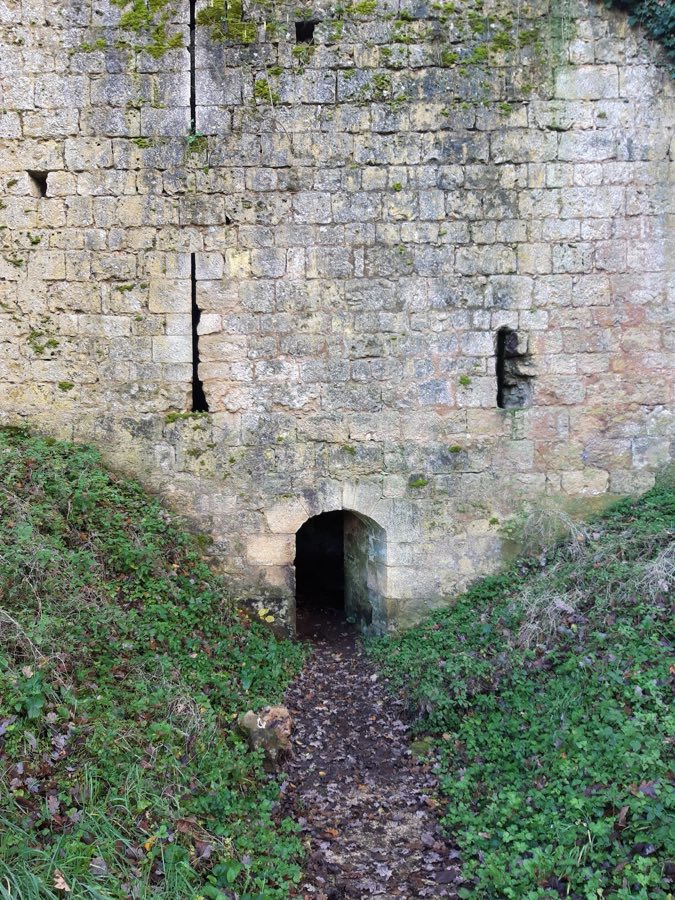
An entrance to a subterranean passage has been exposed and a possible exit for that tunnel lies near the town church, showing how underground communication was arranged. Within the main defence line an upright spiral stair tower is preserved in the curtain wall; this provided vertical circulation between levels. Archaeologists have also recorded the foundations of a moutardier, a named small defensive work noted in the site record.
Parts of the town’s later defensive line survive only as foundations, reused cellars, or sections of defensive ditches, reflecting successive phases of rebuilding and partial demolition. Traces of the seventeenth-century modernising works associated with Vauban are connected with the site. A detailed sketch-plan of the defences from the 1574–75 siege is conserved at the National Library of France and complements the physical remains preserved on the promontory. Local tradition continues to link the standing features to the Melusine legend, a connection recorded in medieval texts and shown in contemporary illustration.
No. 12050
No. 39133
No. 12123
No. 56382
Comments
Comments for Château de Lusignan will require a verified account before posting.
We'll send a verification link before your first comment is published.