
No. 56366
Castle of Miraval
France
CastleIntact12th century
No. 56319
Château · France
No. 56319 · 43.555 N, 2.222 E
For events
Château de Montespieu is marked as a château or castle venue lead. Capacity, indoor/outdoor spaces, catering rules, and accommodation options are published only after public verification.
Event types: Weddings, Private events, Cultural gatherings, Filming and photography
Ceremony spaces: Ceremony setting to verify
Quick summary
Château de Montespieu is a château in France with origins associated with the 16th century.
See all castles in FranceChâteau de Montespieu stands in Navès, France, and its origins lie in the medieval period, built by the region’s feudal lords.
The earliest built fabric of the site rests on work from the twelfth century. The estate originally belonged to the knights of Caudière, with Pierre I of Caudière recorded as the first known lord. Control later passed to the Hue or Hugues family. Around 1510 the castle seen today was raised in place of earlier structures by Pierre III d’Huc together with his sons. Ownership moved by marriage to the Padiès, and thereafter to the Toulouse-Lautrec line, who held the title barons de Montfa.
Violence affected the castle during the late sixteenth century. The building was looted and set on fire in 1570, probably in the wider conflict of the Wars of Religion. Between 1590 and 1592 several violent incidents are recorded: Marguerite de Sales was murdered on 23 January 1590; on 19 July 1591 a clash occurred involving the viscount and the baron de Montfa and the people of Labruguière, after which Duke Henri I de Montmorency briefly imprisoned one of the local leaders; and on 21 March 1592 an armed party led by a soldier named Bonavene attacked the castle. The site suffered further burning in 1592.
On 23 May 1600 Abel de Suc bought Montespieu. A surviving document dated 17 September 1664 lists repairs to be carried out and describes defensive ditches, a dovecote, and an eastern entrance, reflecting work and layout in the seventeenth century. The Suc family were followed by the Scorbiac family, and Antoine de Juge obtained the estate by preemption in 1680. Major alterations were made in the seventeenth century, and the building later lost its battlements during the upheavals of the French Revolution. The de Juge family carried out restoration work in the later nineteenth century; beginning in 1896 the architect Henri-Paul Nénot undertook significant restorative work that continued into the period around 1900. The de Juge family retained ownership until the death of Henriette de Juge de Montespieu in 1964. The château, together with its outbuildings and the dovecote, was officially listed as a protected historic monument on 26 October 1992, and it is presently used as a venue for weddings and other events.
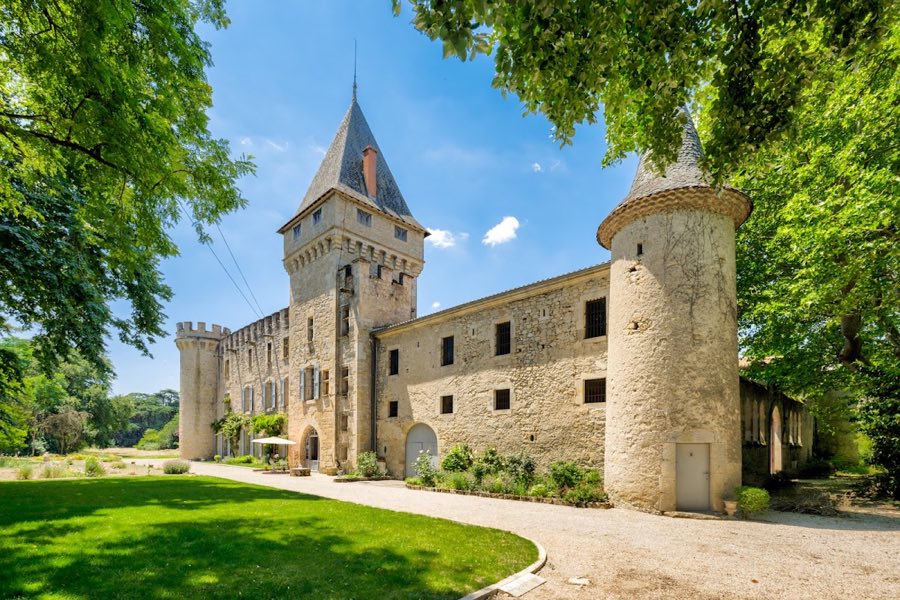
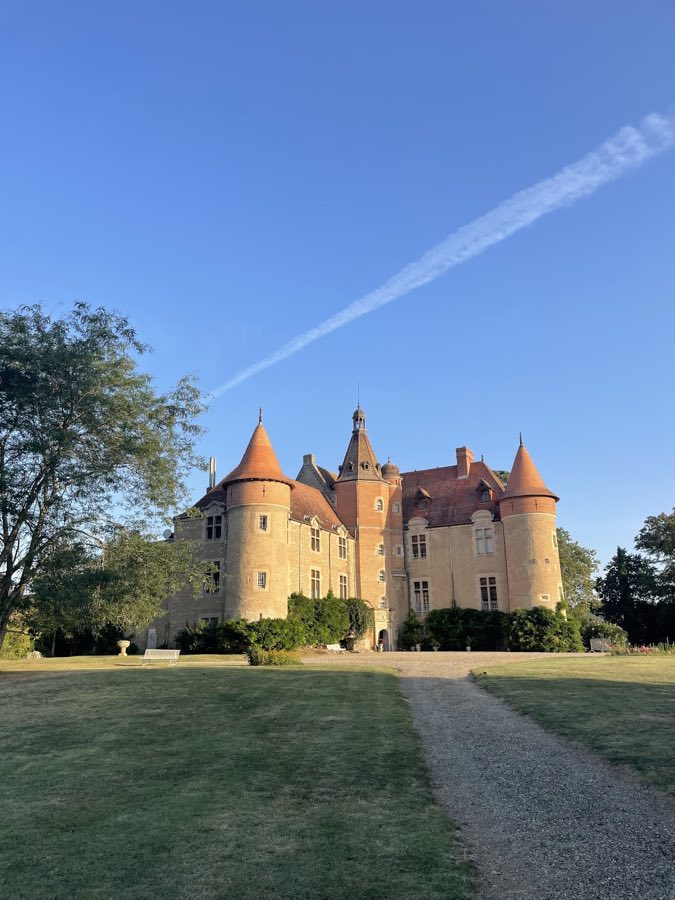
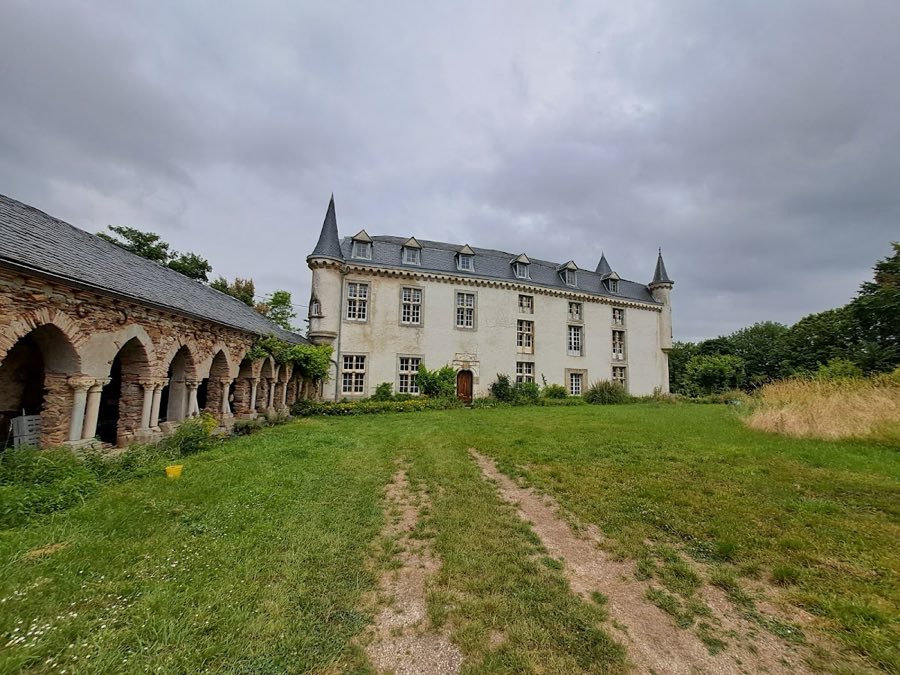
The castle occupies a large rectangular footprint, presenting the appearance of a neo-medieval or early medieval fortress as a result of successive building campaigns. Archaeological evidence and documentary records show the standing complex rests on twelfth-century foundations, was largely reconstructed in the early sixteenth century, and underwent remodeling in the seventeenth century before restoration work at the turn of the twentieth century.
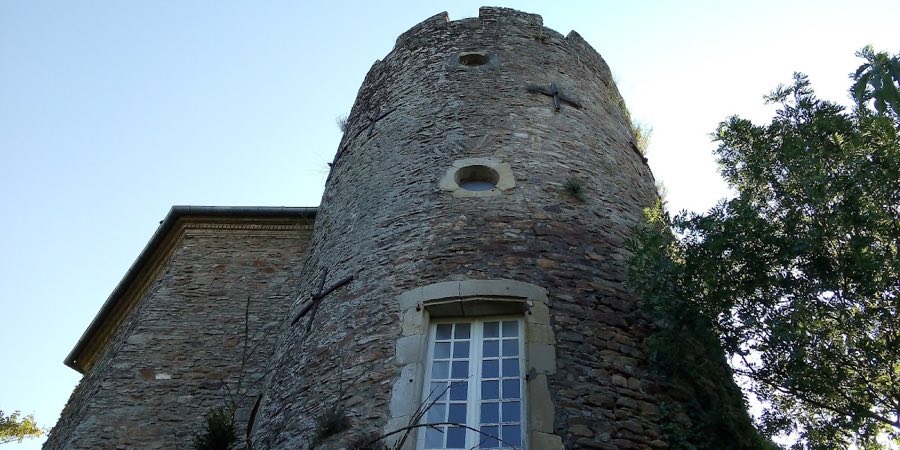
Seven towers punctuate the main block, three incorporated into the principal long face and four attached to pavilions set at right angles to that main mass. These towers rise to about fourteen to fifteen metres in height. A seventeenth-century record mentions perimeter ditches surrounding the castle, an on-site dovecote, and an entrance facing east, indicating the defensive and domestic arrangements in place at that time. Battlements were removed during the Revolutionary period, and later repair and restoration work, including the projects begun by Henri-Paul Nénot in 1896, altered and rebuilt portions of the exterior to the form visible today.
The dovecote and the ancillary buildings that accompany the main residence are documented elements of the estate and were included alongside the château when the property received official historic designation in 1992. The sequence of foundation, early sixteenth-century rebuilding, seventeenth-century modification, Revolutionary damage to the battlements, and nineteenth- to early twentieth-century restoration together define the present fabric and condition of the site.
No. 56366
No. 40648
No. 67166
No. 23475
Comments
Comments for Château de Montespieu will require a verified account before posting.
We'll send a verification link before your first comment is published.