No. 72603
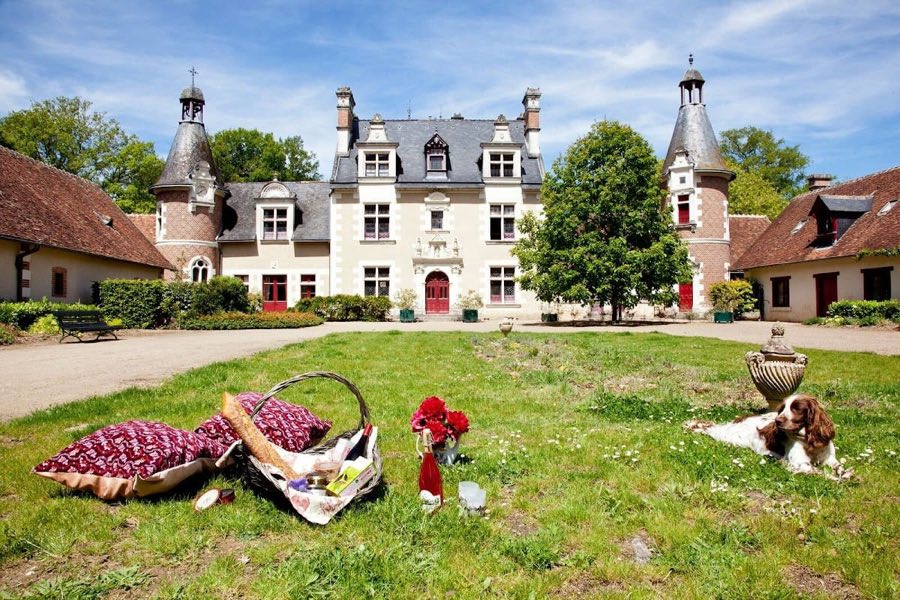
Château de Troussay
France
ChâteauRestored16th century

No. 70532
Château · France
No. 70532 · 47.566 N, 1.204 E
Quick summary
Château of Bury, Valencisse is a château in Valencisse, France with origins associated with the 11th century.
See all castles in FranceThe château of Bury in Valencisse, France, began as a medieval fortress erected in the mid‑11th century by the counts of Blois, and later acquired a Renaissance residence in the early 1500s. Its position guarded the entrance to the Forest of Blois and the river obstacle formed by the Cisse, making it an important forward defence for the county of Blois during the long rivalry with Anjou that followed the Battle of Nouy in 1044.
Shortly after its foundation, a knight named Gervais de Vendôme transferred the site in 1080 to the church of Saint‑Secondin for the abbey of Marmoutier. In 1145 the original fortification was levelled by Sulpice II d’Amboise, a viscount who had asserted his independence from the count of Anjou and was engaged in fighting with neighbouring lords. After that destruction a new fort was raised on the same footprint and, between the 12th and 13th centuries, a castellany (an administrative district centered on a castle) was reestablished and granted to the lords of Burel de Buracio; a local lord named Geoffroy, called Bourreau and son of Ascho Borellus, is associated with this period.
In the 1200s the lords of Bury constructed a second stronghold at nearby Onzain. During the first half of the 14th century Bury served as a country residence for the counts of Blois. When the Hundred Years’ War divided the region, the Forest of Blois became a frontier between French and English areas. English forces occupied Bury from 1356 until 1365, and Count Louis II of Blois‑Châtillon retook the place in 1365; the long occupation left a local place name, the “valley of the English,” at Valencisse.
Ownership then passed through several families over the early modern period. The Vielz‑Pont family lived at Bury for more than a century. In 1511 Florimont Robertet bought the estate and commissioned a new residence in the Renaissance manner; work began in 1515 and the house was finished in 1525, its splendor prompting contemporaries to compare it to Chambord. Florimont Robertet died in 1527 and his son Claude was raised to a barony by King Charles IX in 1566. The property later passed to the Neufville de Villeroy family and in 1633 Charles de Neufville de Villeroy sold it to Charles de Rostaing. Under Rostaing, and by royal approval of Louis XIII, the lands of Bury and Onzain were joined into the county of Rostaing; Charles de Rostaing died in 1660.
After 1666 the widow Anne‑Marie d’Urre allowed the estate to fall into decay and in 1680 she entered the household at Versailles as a lady‑in‑waiting to the king’s favored daughter, where she stayed for nearly ten years. In 1720, having no children, she transferred her lordship and obligations to her nephew Alexandre‑Louis Perrachon, Count of Varax. Ambroise‑Julien‑Clément de Feillet bought the property in 1753 and sold it in 1760 to Michel‑Jean‑Hugues de Péan, who had been governor general of Québec until 1759; de Péan was imprisoned in the Bastille from November 1761 to June 1764 over speculation on Québec wheat prices, and he died in 1782. His widow sold the estate during the Revolution in 1791.
Following the Revolution the château entered the ownership of Eugène‑Joseph‑Stanislas Foullon d’Ecotier, son of Joseph Foullon. He had served as intendant in Guadeloupe and Martinique until 1790, was imprisoned at the Conciergerie on 21 April 1794 and was tried on 31 October of that year and acquitted. He later served as a local councillor and as mayor of Onzain in 1812 before departing for Martinique in 1816 after financial setbacks. The property was seized in 1816 and sold in parcels to help incorporate the communes of Onzain and Molineuf. A series of private owners followed: M. Crognon‑Bonvalet, then his relative François‑Philippe Gastebois, who sold to M. Ragnon in 1868.
In 1882 an English woman named Mme Trawford bought the ruined estate; after her death her husband sold it to Paul Jousselin, who erected a new dwelling built against a surviving tower of the medieval complex. Later proprietors included Mme Lenoir in 1921, M. Alibert in 1925, and Henry Reverdy in 1933, the Reverdy family holding it until 1969. Since 1969 the property has belonged to the de Guillenchmidt family and remains private. Local tradition adds a supernatural layer to the place: the ruins of Bury and nearby Montfrault are said to be among the nightly haunts of the accursed spirit of the first count of Blois, which local legend calls the Infernal Hunt of Thibaud the Cheater and places in nearby woods around midnight.
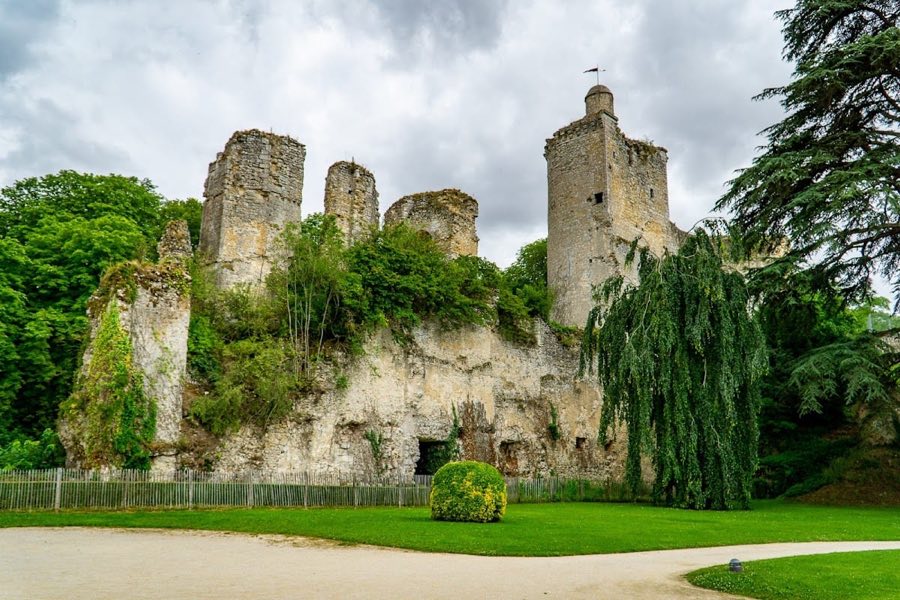
The visible complex consists today of partially ruined structures set at the woodland edge where the Forest of Blois meets the valley of the Cisse, within the delegated commune of Molineuf in Valencisse. The site occupies the defensive approach to the forest and the river obstacle, a position chosen to control access. The remains reflect several building phases from a medieval military stronghold to a 16th‑century Renaissance house and later domestic additions.
The earliest phase is the mid‑11th‑century fortress raised to protect the Blois fief after the fighting of the 1040s. That fort served as a forward defensive work until it was destroyed in 1145 during an assault by Sulpice II d’Amboise. A second fortified enclosure was built on the same location in the centuries that followed and a castellany, an administrative district centered on the castle, was reconstituted between the 1100s and 1200s and granted to the local lords of Burel de Buracio; elements from these medieval campaigns survive in the form of ruined defensive masonry.
A Renaissance château erected under Florimont Robertet between 1515 and 1525 stood alongside or replaced parts of the medieval fabric, and contemporaries described the completed residence as exceptionally ornate. Later, in the late 19th or early 20th century, Paul Jousselin constructed a new house built up against one of the old château’s towers, showing that at least one tower element remained substantial enough to be incorporated into modern work. Overall the site is recorded as partially destroyed; masonry from the medieval fortifications and the later manor remain in situ in fragmentary condition, with the later house integrated directly against surviving vertical work.
The ruins carry local associations as well as physical traces. The region retains the place name “valley of the English,” inherited from the English occupation during the mid‑14th century, and oral tradition links the ruined buildings with the night‑time apparition known as the Infernal Hunt of Thibaud the Cheater. The estate continues as private property and the remains stand as layered evidence of defensive, residential, and reused architecture spanning the 11th through the 19th centuries.
No. 72603
No. 37528
No. 72108
No. 94283
Comments
Comments for Château of Bury, Valencisse will require a verified account before posting.
We'll send a verification link before your first comment is published.