No. 58010
Dave Castle
Belgium
PalaceRuin17th century
No. 76376
No. 76376 · 50.350 N, 4.960 E
Quick summary
Crupet Castle is a castle in Belgium with origins associated with the 12th century.
See all castles in BelgiumCrupet Castle is located in the village of Crupet, within the province of Namur, Belgium. Its origins trace back to the medieval period, with some authors suggesting the 11th or 12th century. However, architectural evidence points to a more probable construction during the first half of the 13th century. The lordship of Crupet is first recorded in 1278, and the earliest mention of a building on the site, referred to as the “mannoir de Cripeit,” dates from 1304.
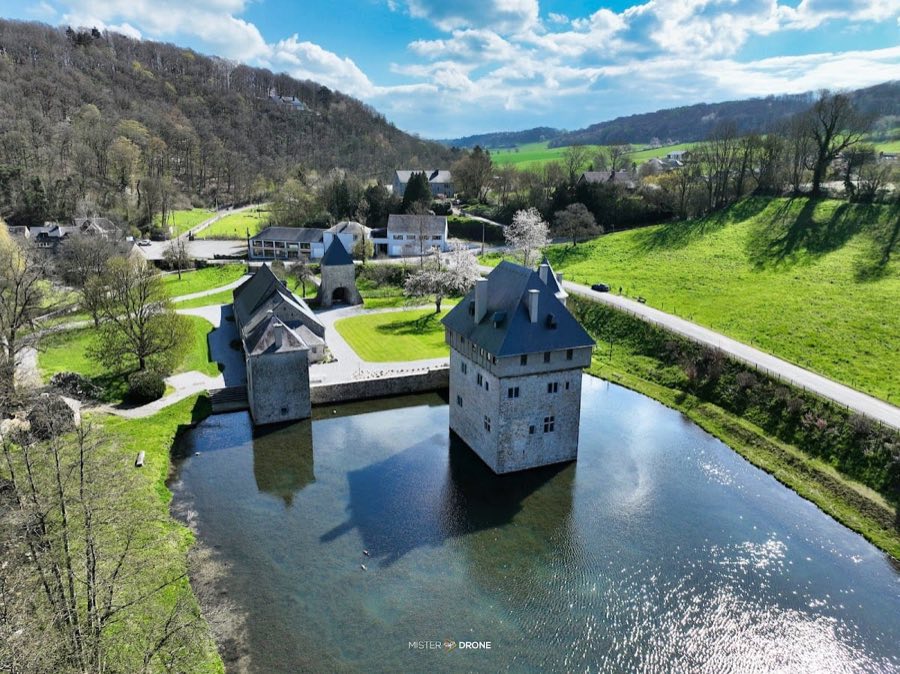
Initially, the castle consisted of a strong donjon, or fortified tower, surrounded by a deep moat. This structure belonged to the Count of Luxembourg and served as a defensive stronghold. Soon after its initial construction, additional buildings were added, creating a fortified domain that enhanced the site’s defensive and residential functions.
In the 14th century, ownership of Crupet Castle passed to the Prince-Bishop of Liège, marking a shift from secular to ecclesiastical control. Later, in 1549, the Carondelet family acquired the property. They made significant modifications, including adding a projecting upper floor with a pyramid-shaped roof to the donjon. They also built structures forming a lower courtyard, transforming the castle into a château-ferme, or fortified farmhouse.
The castle changed hands several times in the following centuries. It came under the House of Merode in either 1629 or 1667. Through inheritance and marriage, it later passed to the Count of Thiennes and subsequently to the Marquis of La Boëssière. The castle remained in noble possession until 1925.
In 1925, architect Adrien Blomme purchased Crupet Castle and undertook restoration work. He adapted the medieval structure for modern residential use. The castle was inhabited by Blomme’s descendants until recently. Today, it is owned by a Dutch family from ‘s-Hertogenbosch. Historically, the castle grounds included a hospitality establishment and a well-known trout farm located near the donjon.
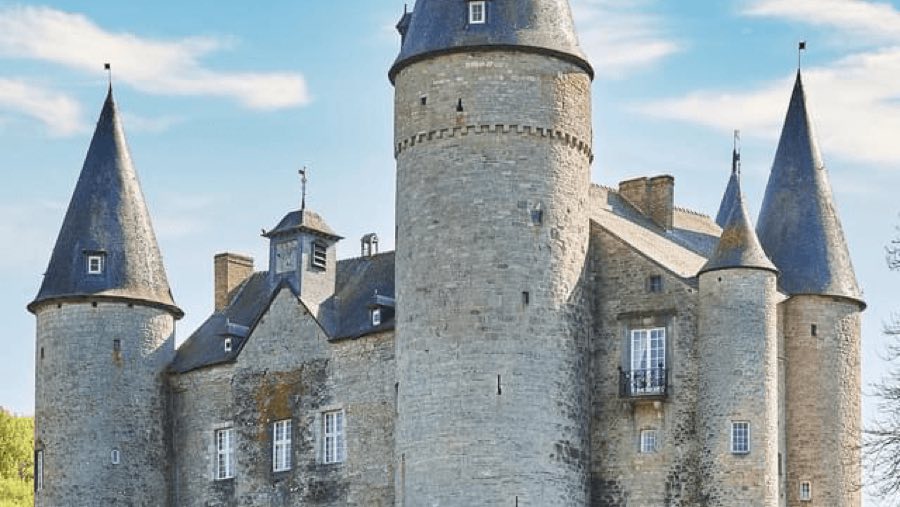
The core of Crupet Castle is a medieval moated donjon, a fortified tower typical of lowland castles. This tower was originally surrounded by a deep moat, emphasizing its defensive purpose. The donjon’s construction dates to the early 13th century, built using traditional medieval masonry techniques.
In the mid-16th century, the Carondelet family added a projecting upper floor to the donjon. This addition is topped with a distinctive pyramid-shaped roof, which remains a notable feature. The family also constructed additional buildings around the donjon, creating a basse-cour, or lower courtyard. This development transformed the site into a château-ferme, combining residential and agricultural functions within a fortified setting.
The castle retains heraldic elements linked to the Carondelet family, including their name and crest displayed in various locations. These features reflect the family’s influence during their ownership.
In the early 20th century, architect Adrien Blomme restored and modernized the castle. His work preserved the historical character while adapting the building for contemporary living. The castle remains in good condition, maintaining its historical features and residential use.
Although the trout farm once adjacent to the donjon is no longer operational, the castle’s moated layout and key medieval structures survive. The site’s preservation allows for an understanding of its evolution from a defensive tower to a fortified farmhouse.
No. 58010
No. 84802
No. 25284
No. 90954
Comments
Comments for Crupet Castle will require a verified account before posting.
We'll send a verification link before your first comment is published.