No. 27788
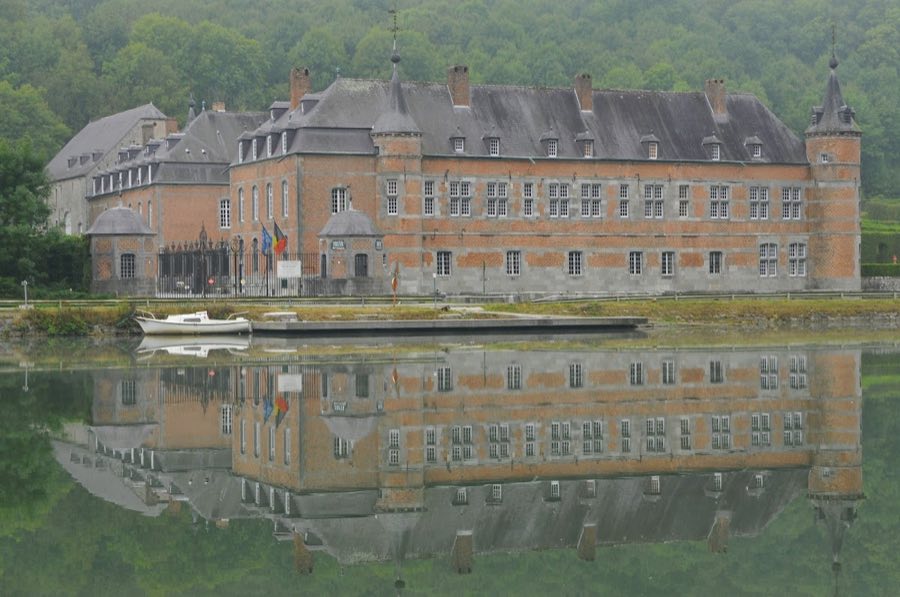
Château of Freÿr
Belgium
ChâteauRestored14th century
No. 84802
Castle · Belgium
No. 84802 · 50.267 N, 4.900 E
For events
Crèvecœur Castle, Dinant is marked as a château or castle venue lead. Capacity, indoor/outdoor spaces, catering rules, and accommodation options are published only after public verification.
Event types: Private events, Cultural gatherings, Filming and photography
Quick summary
Crèvecœur Castle, Dinant is a castle in Dinant, Belgium with origins associated with the 11th century.
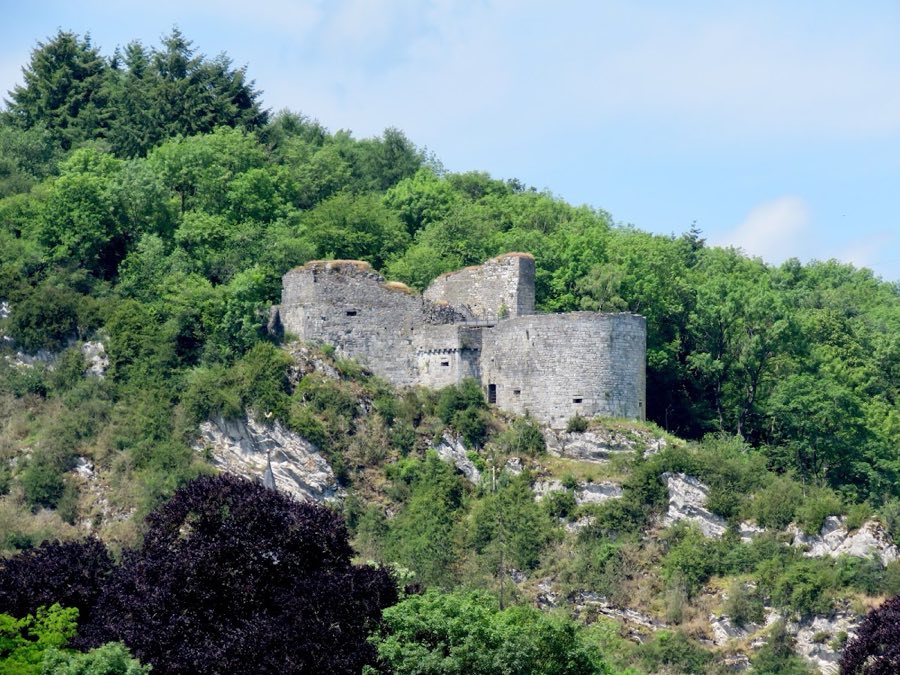
See all castles in BelgiumCrèvecœur Castle in Dinant, Belgium, is a medieval fortress first established by the Counts of Namur at the end of the 11th century and built into the medieval political landscape of the Meuse valley. The site contains a Romanesque keep dated to about 1320, and over several centuries the complex served as a defensive stronghold, a watch position and a point of contention in regional wars.
The location was used for military purposes long before the Counts of Namur. The Romans constructed a castrum here, and the Normans strengthened the position in the ninth century. At the end of the 11th century Godfrey I, Count of Namur, founded the fortress that would evolve into the medieval castle; his son Henry the Blind later had substantial defensive walls added.
Fighting affected the castle repeatedly in the high Middle Ages. In 1188 Baldwin V, Count of Hainaut, laid siege to the town of Bouvignes, and archaeological traces of burning have been linked to that action, when knights from Champagne aided the Namur defenders. In 1214 Waleran III, Duke of Limburg, attacked the castle on behalf of Countess Ermesinde, but the fortress resisted that siege. Around 1320 the square keep that forms the core of today’s ruin was erected on a separate rock, and an assault by forces from Liège in 1321 failed to take it.
Expansion continued in the late 14th and early 15th centuries. The castle was extended in 1388, and later received a projecting semi-circular gun platform. In 1429, while the place lay under Burgundian control, its captain made a night attempt to seize the nearby tower of Montorgueil on 5–6 February. Dinant appealed to the Prince-Bishop John of Heinsberg, an action that led to the Wars of Liège from 1429 to 1431. Liègeese attackers deployed a “cat” siege engine and caused serious damage, but they were unable to force entry; the arrival of Philip the Good ended the siege and brought a truce.
A local tradition links the castle’s name, Crèvecœur—literally “broken heart”—to a siege around 1430 in which three knights died and their wives leapt from a tower. The tale gave the site its name, and by 1778 the story had already been confused with later events, including the French attack of 1554. In that year French troops under King Henry II sacked Dinant and battered Crèvecœur with artillery; the damage ended the castle’s role as an active fortress and reduced it thereafter to a lookout post.
The ruined stronghold underwent partial rebuilding between 1567 and 1580 to serve as a watch position. French forces captured it again in 1655, and it was deliberately dismantled in 1672 under the supervision of a royal agent. On 13 May 1940, during the Battle of France in World War II, elements of the German 7th Panzer Division seized the castle from the French 66th Infantry Regiment after crossing the Meuse. The ruin was stabilised and partly restored in 1950–1951. The site is now property of the Walloon Region.
Perched about 80 metres above the Meuse, the surviving fabric of Crèvecœur forms a compact defensive grouping grown over earlier fortifications. The dominant element is a rectangular keep (donjon) built around 1320 in the Romanesque manner. Its ground plan measures roughly 15 by 11.5 metres, and it occupies a separate rocky outcrop within the complex.
Flanking the keep are two short stairways, each of twelve steps, that lead up to a projecting semi-circular bastille, a 15th-century gun platform. That rounded tower contains seven cannon embrasures, consistent with its use for artillery in late medieval and early modern warfare. By about 1430 the main Crèvecœur ensemble extended to an overall length near forty metres along the ridge.
Below the later keep lie the remains of an older comital castle three times that length, arranged on three descending terraces. The highest terrace corresponds to the earliest keep level. The middle terrace sits approximately five metres lower and held the outer courtyard, an area expanded in the 13th century toward Saint Lambert’s Church; here a remarkably intact cellar survives. This second level also contains the traces of Saint Catherine’s Chapel, the former mint where coinage was struck, and a great hall that was later repurposed as the town hall. The lowest terrace ran down to the church wall of Saint Lambert, integrating the castle complex with the town’s ecclesiastical boundary.
These ruins are in a fragmentary but stabilised state following mid-20th-century conservation work. The succession of building phases—Roman castrum, Norman consolidation, medieval keep and later artillery adaptations—remains readable in the stacked terraces, the large keep plan, the stair accesses and the semi-circular gun tower. The site preserves visible evidence of its military and administrative roles across the centuries.
No. 27788
No. 90954
No. 76376
No. 25284
Comments
Comments for Crèvecœur Castle, Dinant will require a verified account before posting.
We'll send a verification link before your first comment is published.