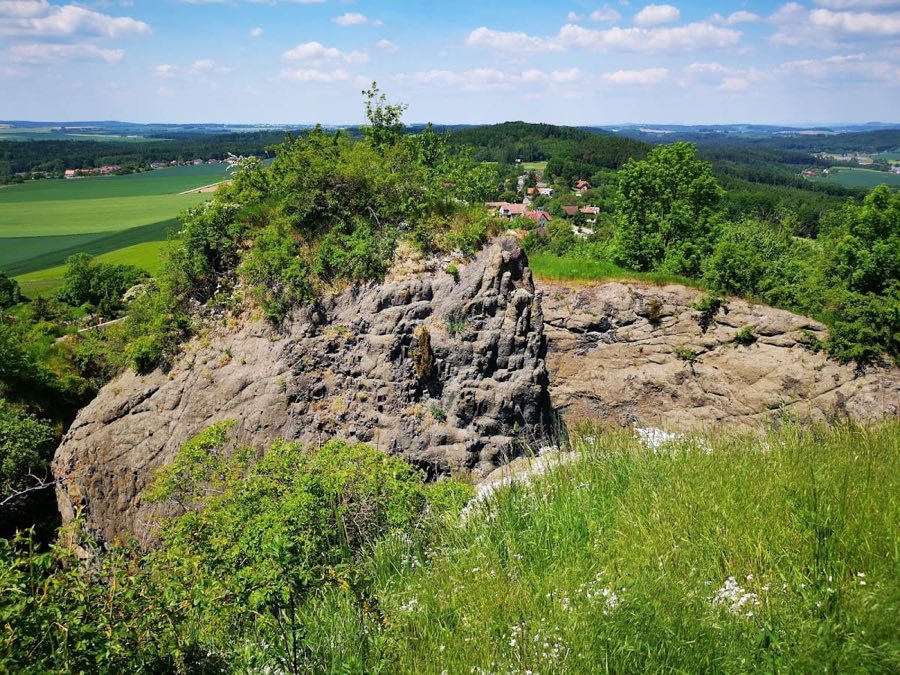
No. 22730
Veliš Castle
Czechia
CastleIntact16th century
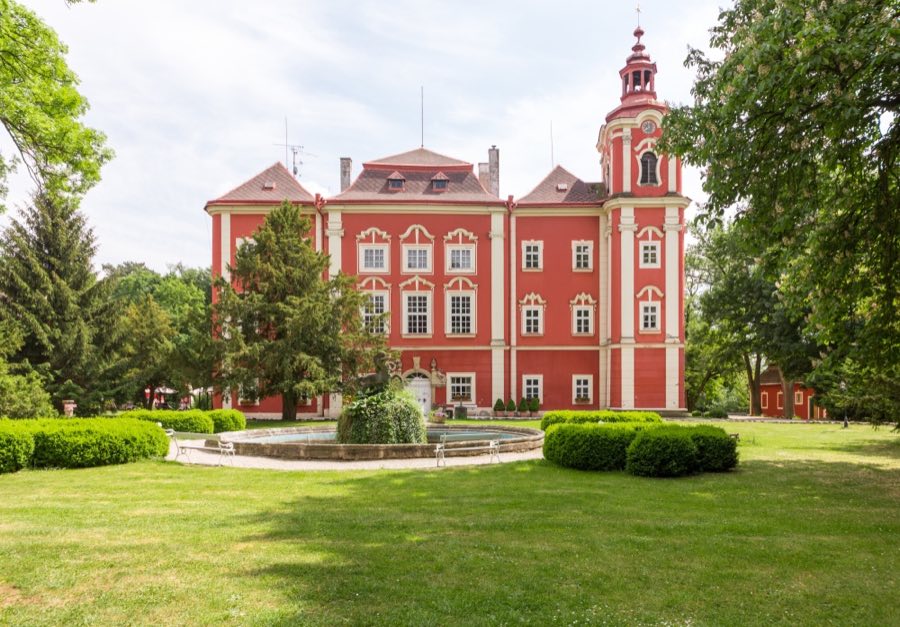
No. 49882
Castle · Czechia
No. 49882 · 50.368 N, 15.173 E
Quick summary
Dětenice Castle is a castle in Czechia with origins associated with the 14th century.
See all castles in CzechiaDětenice Castle in Dětenice, Czechia, is a medieval stronghold established by local Bohemian nobility in the late 13th to early 14th century and first built in stone in the Gothic manner. The site grew into an important local seat through successive rebuilding and changes of ownership, later receiving Renaissance and late‑Baroque remodelling that reflect shifting tastes and political fortunes from the 1500s into the 18th century.
Local tradition ties the town’s origin to a mid‑11th century episode in which Prince Oldřich is said to have found and adopted two abandoned boys, a founding legend kept in local memory. Documentary history begins with Beneš, named in medieval records as a member of the regional nobility active c. 1269–1318, who replaced an earlier wooden fortress with a Gothic stone castle; the first explicit written mention appears in 1404.
In 1503 the estate passed to the Křinečtí family. During their tenure Boguslav Křinecký of Ronov undertook a Renaissance rebuilding in 1587, and in 1619 his son Jiří added a large tower and further transformed the medieval fortress into a Renaissance palace with a clock tower. After the Battle of White Mountain, the Křinečtí lost favor; their lands were seized and transferred by royal decree to Albrecht von Wallenstein. Jiří Křinecký fled to Saxony after being condemned to execution, and tradition says he hid a fortune in secret cellar passages that has not been located.
Royal confiscation and transfers continued under King Ferdinand II, with the property moving within the Wallenstein family to Albrecht’s nephew Adam and later expanded under Ottaviano of Wallenstein. Ottaviano founded a school in the town in 1673. In the 18th century Count Jan Clam‑Gallas rebuilt the estate in its present late‑Baroque appearance. Subsequent private owners shaped the surrounding economy and buildings: a Baron Wimmer added a sawmill beside the pond, and in 1820 Filip Wessenberk carried out repairs focused on the family chapel and left the property to the Order of the Knights of Malta.
Under the Knights of Malta the estate underwent industrial and infrastructural development, including the founding of a furnace, repairs to a nearby brewery, and the opening of the Bakovo–Kopidlno railway; the order also built a village chapel and a new school to replace a burned cellar, and enlarged the park with statues and terraces. In 1903 the Bloch industrial family bought the castle and carried out village modernisation. In the interwar years Emanuel Řehák restored parts of the building and from 1926–1927 opened sections to the public.
The state nationalised the estate in 1948. The castle then accommodated a school for gardening apprentices until that school closed in 1991 and the buildings fell into disuse. Pavel Ondráček purchased the property in 1998, carried out restoration work, and reopened the castle to visitors in 2000; the site has remained accessible since that reopening.
The castle stands as a compact late‑Baroque residence set on a roughly square plan, with descriptions alternating between a two‑storey house with a three‑storey tower at the southwest corner and a three‑storey building with a four‑storey tower and a porch. The main entrance is marked by four freestanding columns that carry a broad terrace at the first‑floor level, giving the façade a formal, layered composition.
Internally, the ground floor retains a vaulted corridor (an arched stone ceiling) that connects the front and rear parts of the building, while the first floor contains a large entrance hall that links principal rooms. Several chambered rooms preserve Rococo ceilings (ornate 18th‑century decorative plaster) richly modelled in stucco. Fragments of the medieval complex survive within the fabric, including visible remains of the original Gothic manor’s tower and the cellars beneath the castle.
The wider complex includes the burgrave’s buildings (burgrave meaning the castle governor) and a range of outbuildings that once served the estate’s domestic and industrial needs. The park lies chiefly to the northeast of the house and was reshaped in the 19th century with stepped terraces and statuary added as part of landscape improvements. The castle houses historical collections that include weapons associated with the Knights of Malta and a display of hunting trophies. The property is protected as a cultural monument of the Czech Republic, catalogue number 1000135881.
No. 22730
No. 70101

No. 15218
No. 13493
Comments
Comments for Dětenice Castle will require a verified account before posting.
We'll send a verification link before your first comment is published.