No. 52928
Dunlough Castle
Ireland
CastleRuinFor events13th century
No. 76138
No. 76138 · 51.633 N, 9.924 W
Quick summary
Dunboy Castle is a castle in Ireland with origins associated with the 15th century.
See all castles in IrelandDunboy Castle in Dunboy, Ireland, was erected by the Gaelic O’Sullivan Bere clan as their coastal stronghold.
Construction and early use, from the 15th century onward, established the site as a defended centre for the clan. The castle stood to protect and control Berehaven harbour, to oversee local sea fisheries and levy taxes on fishing vessels, and to act as a hub for trade with continental partners. Donal Cam O’Sullivan Beare is recorded as the Gaelic leader associated with the site and is named as the “Chief of Dunboy.”
In the summer of 1602, during the Nine Years’ War, the castle was the scene of a major military action. Forces sent by Elizabeth I, commanded on the ground by Sir George Carew, attacked to put down the rebellion led by Donal Cam O’Sullivan Beare. Contemporary reports give the attacking army as about 4,000 to 5,000 men. The castle garrison numbered 143 men. After sustained artillery fire breached the defences, the defenders engaged in close fighting. Fifty-eight survivors from the garrison were executed in the nearby market square following the assault.
After the 1602 assault the medieval stronghold was left in ruin. In the middle of the 17th century a bastion-style fort was built on the same site, representing a later phase of military use. Both the medieval remains and the later fortifications were examined in surveys carried out by Edward M. Fahy in the late 1960s.
A manor house known as Puxley Mansion was constructed in the 19th century close to the ruined works; it has at times been referred to as Puxley Castle and also as Dunboy Castle. The house was burned by the IRA in 1920. Some restoration work took place in the early 2000s but was stopped for lack of funds, and the property was reportedly sold in March 2022.
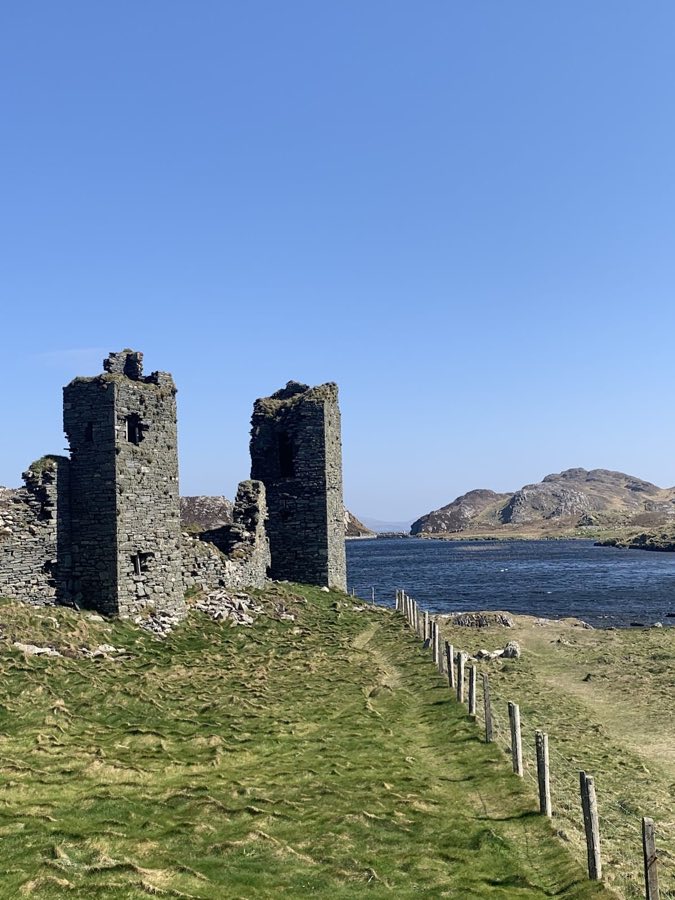
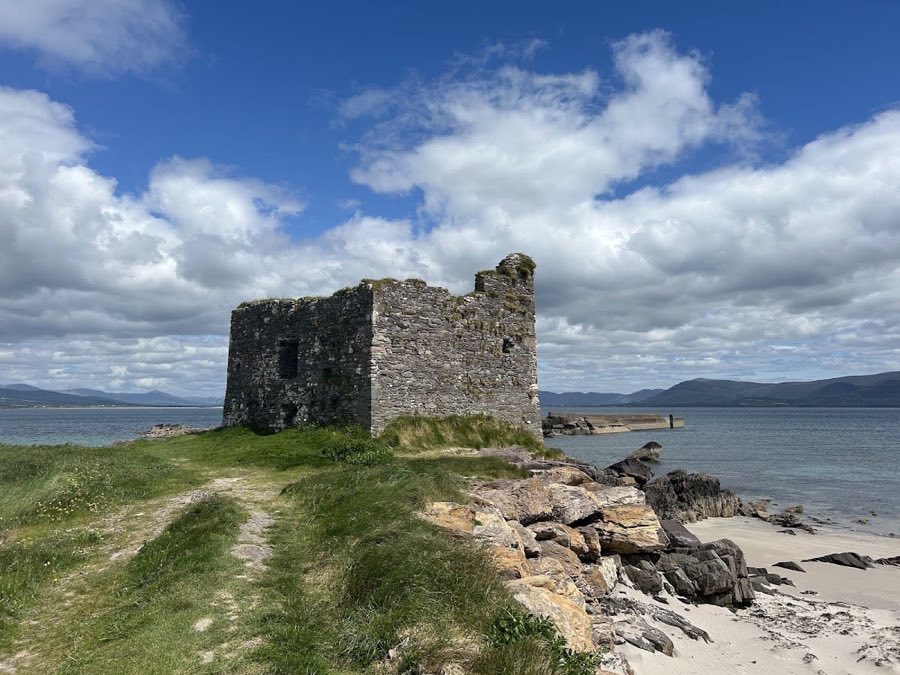
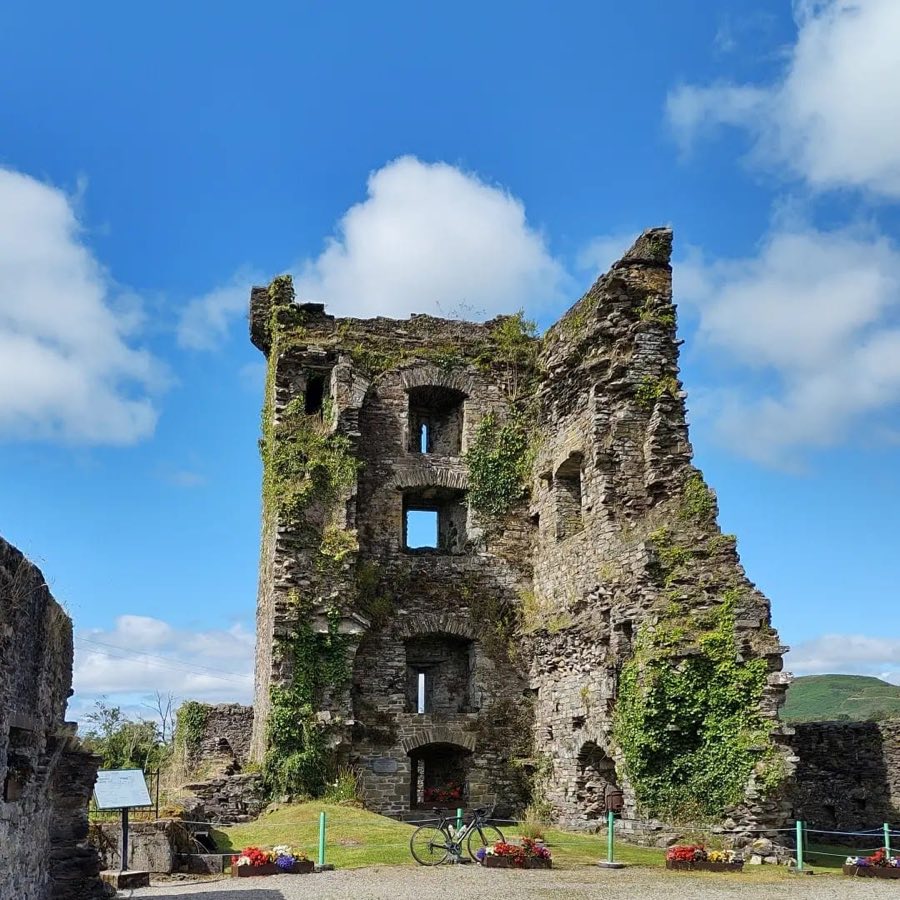
The site retains the visible ruins of more than one phase of occupation clustered around the harbour. The first major component is the 15th-century stronghold, built as a tower house set within an enclosing bawn, which functioned as the clan’s defensive and administrative centre. The tower and its surrounding enclosure were destroyed during the 1602 siege and survive now only as fragmentary remains.
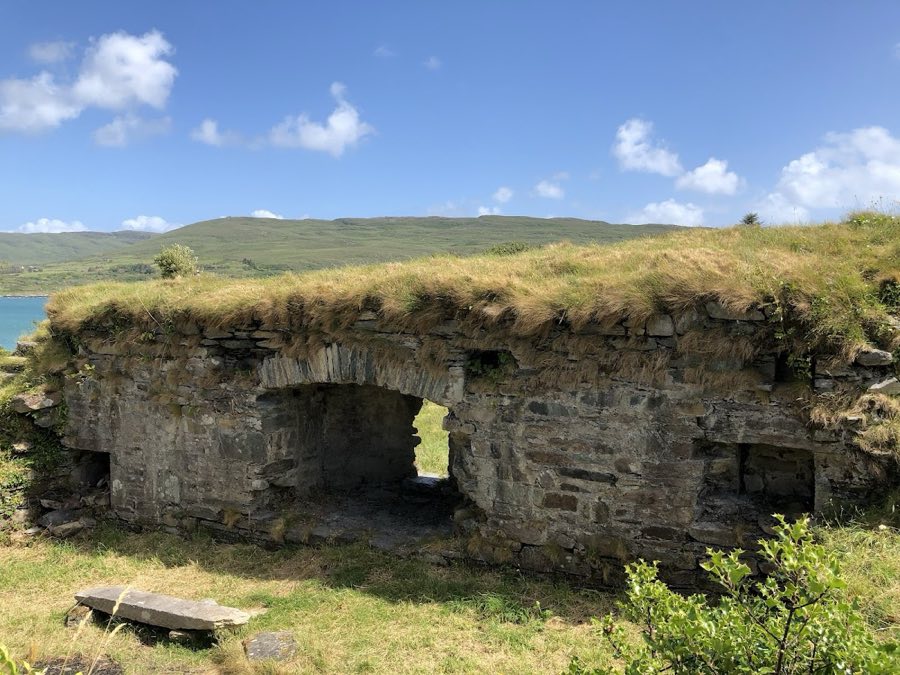
On the footprint of the ruined medieval defences there is a later military construction dating to the mid-17th century, a bastion-style fort. This work represents a different phase of defensive architecture placed on the same strategic position and its earthworks and masonry remain evident as ruined structures. The later fort was documented in field surveys in the late 1960s.
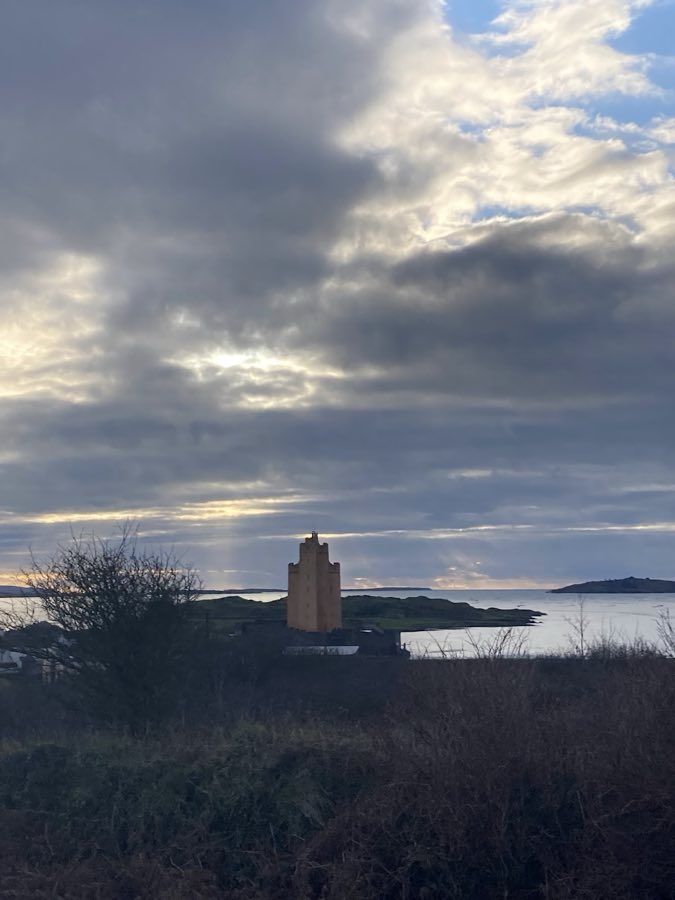
Nearby stands the 19th-century Puxley Mansion, built close to the earlier ruins and sometimes called Puxley Castle or Dunboy Castle in references. The house was deliberately burnt in 1920 and subsequently stood in a damaged state. Partial restoration was undertaken in the 2000s before work ceased for financial reasons, and the property changed ownership in March 2022. The surviving fabric across the site, including the medieval tower house remnants and the later fort, survives in ruined condition and is visible on the ground, having been recorded during archaeological investigation.
No. 52928
No. 22168
No. 24809
No. 80228
Comments
Comments for Dunboy Castle will require a verified account before posting.
We'll send a verification link before your first comment is published.