No. 75718
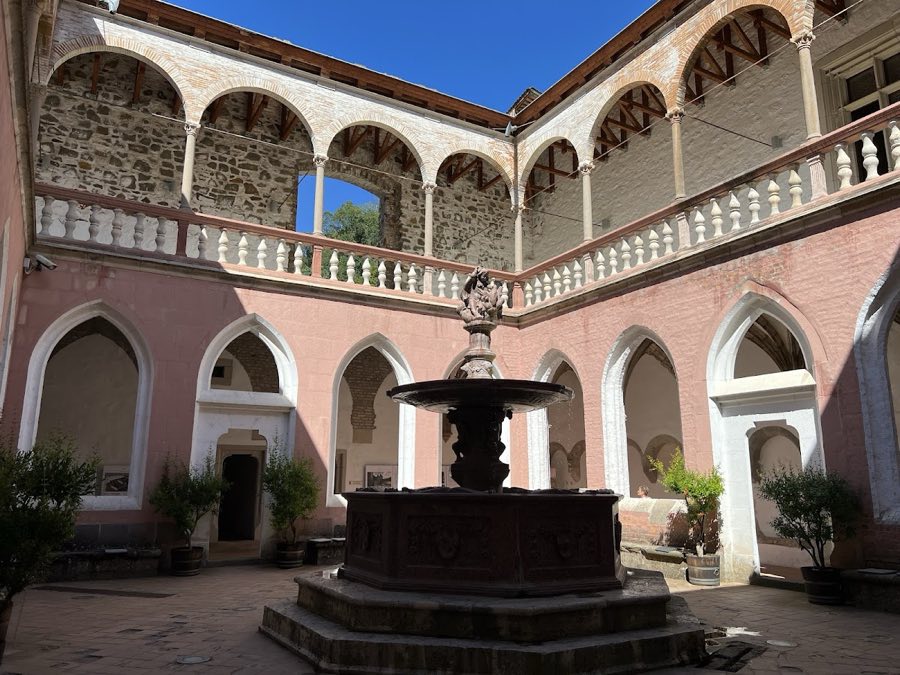
Visegrád Royal Palace
Hungary
PalaceRuin14th century
No. 76789
Castle · Hungary
No. 76789 · 47.798 N, 18.737 E
Quick summary
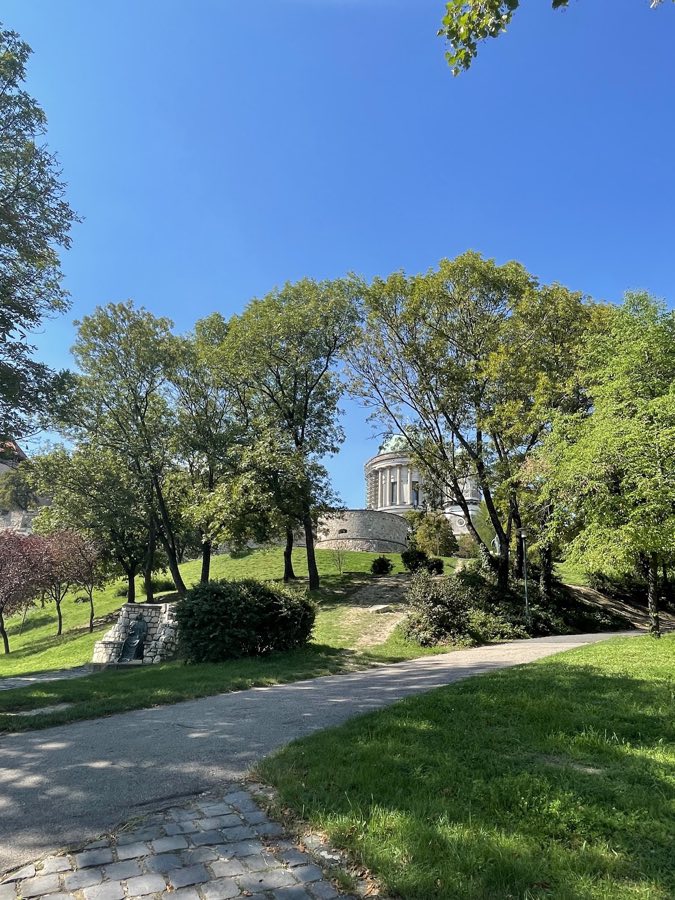
Esztergom Castle is a castle in Hungary with origins associated with the 13th century.
See all castles in HungaryEsztergom Castle in Esztergom, Hungary occupies the site of a Roman fort known as Solva.
The location acquired new importance at the end of the tenth century when Grand Prince Géza established a palace and a church there. His son, Saint Stephen, is credited with the earliest royal residential buildings and the first major southern defensive works. In the mid-eleventh century the Holy Adalbert Cathedral and additional archiepiscopal structures were built on the central plateau, and the hill became the administrative and religious heart of the Hungarian kingdom. For roughly two and a half centuries the palatial and defensive complex was rebuilt and enlarged and served as one of the principal royal residences of Hungary.
The castle’s status changed after the Mongol invasion of 1241. King Béla IV moved the royal seat to Buda in 1256 and left the complex to the clergy; the archbishopric seat building survives and today functions as a museum. Over the late medieval and early modern centuries the site continued to be altered and adapted in response to shifting needs.
From the early sixteenth century the castle was the focus of repeated military contest between Habsburg and Ottoman forces. Ottoman occupation is reported in 1526, and Ferdinand of Habsburg took the site in 1527. Ottoman forces retook it in 1529, and there are reports of Ferdinand occupying the castle again in 1530. Another account records Ottoman rule beginning in 1529, a loss in 1531, and a reoccupation in 1543. In 1543 Sultan Süleyman I laid siege to the fortress and captured it in August of that year after a campaign that some accounts place as beginning in late April; following the capture the locality was organized as a sancak and attached to the Buda beylerbeyliği.
The late sixteenth and early seventeenth centuries saw further sieges. On 4 August 1595 a force composed of German, Polish and Venetian troops began a siege against the castle, which was held by a small garrison under Sokolluzade Lala Mehmed Pasha; the defenders surrendered on 2 September 1595 because of hunger and thirst. The resistance was recorded by the Ottoman historian İbrahim Peçevi and inspired the folk song known as the “Estergon Kalesi Türküsü.” In 1605 Sokolluzade Lala Mehmed Pasha retook the castle after a siege lasting about thirty days, with dates of recapture given as 25 September 1605 and 3 October 1605 in different accounts. Ottoman control of the fortress ended in 1683 after the Ottoman failure at Vienna and subsequent operations by the armies of the Holy League, with one source recording the loss on 1 November 1683.
In the twentieth century and later, restoration work has been undertaken on the palace structures on the southern side of the complex, with major interventions carried out in 1938, around 1970 and in 2000.
The castle crowns a formerly triangular hilltop plateau with a raised central plateau area beside the Danube. Archaeological evidence demonstrates continuous use from the Roman period through the medieval and early modern eras, the early construction having been set directly above the Roman fortification known as Solva. Surviving defensive lines run along the west, northeast and south edges of the plateau, indicating the site was defended on multiple fronts.
On the plateau itself the mid-eleventh-century Holy Adalbert Cathedral and associated archiepiscopal buildings once stood as the complex’s spiritual and administrative core. The archiepiscopal seat building remains in situ and now serves as a museum, preserving the location of those ecclesiastical structures within the central area of the site.
The southern palace complex preserves evidence of long occupation and phased building. Restoration work in 1938, around 1970 and in 2000 revealed the lower portion of a residential tower or keep, the palace chapel, rooms showing late Romanesque to early Gothic decorative features, the remains of a hall building and the northern residential range. Substantial elements of late Gothic and Renaissance expansion were also uncovered, showing that the palace area was remodelled and extended over several centuries.
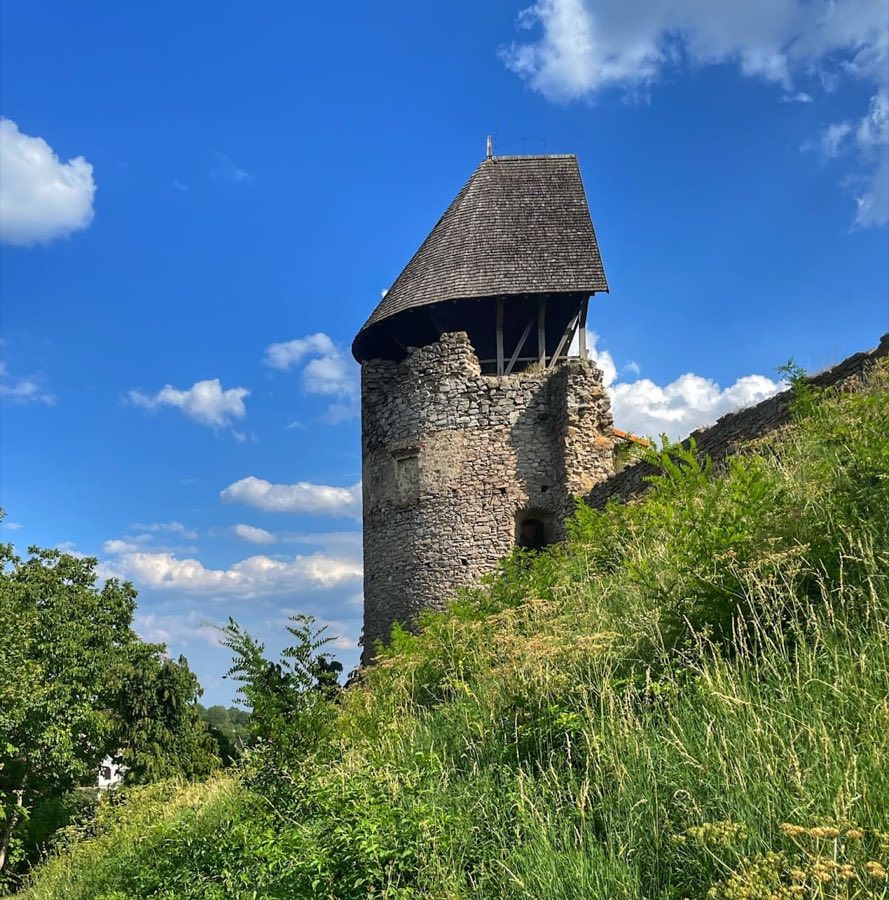
Defensive features include outer gateworks and a preserved round defensive tower on the north side. Many medieval and early modern fortification elements have survived and have been conserved or restored. The north side of the medieval castle has received comparatively little investigation, while the portions that have been examined show a complex sequence of construction phases and later reuse.
No. 75718
No. 21872
No. 40775
No. 13953
Comments
Comments for Esztergom Castle will require a verified account before posting.
We'll send a verification link before your first comment is published.