No. 16826
Kozan Castle (Sis)
Turkey
CastleRuin8th century
No. 51815
Castle · Turkey
No. 51815 · 37.860 N, 35.952 E
For events
Feke Castle is marked as a château or castle venue lead. Capacity, indoor/outdoor spaces, catering rules, and accommodation options are published only after public verification.
Event types: Private events, Cultural gatherings, Filming and photography
Quick summary
Feke Castle is a castle in Turkey with origins associated with the 11th century.
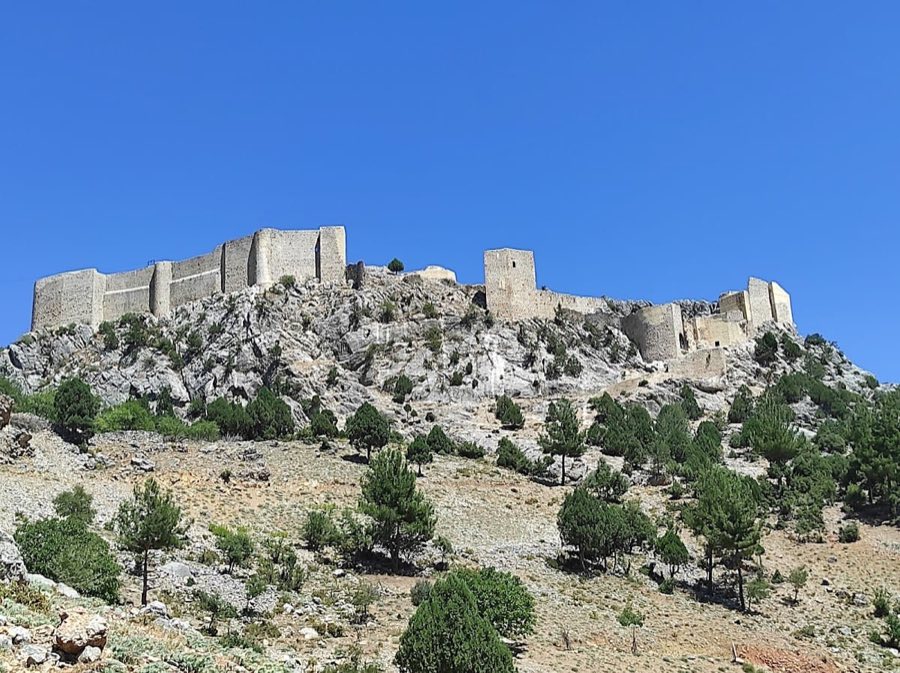
See all castles in TurkeyFeke Castle, situated in the municipality of Feke in modern-day Turkey, was originally built by the Byzantine Empire. Positioned strategically in the rugged terrain of Cilicia, this fortress oversaw the surrounding region and served as a military outpost.
The fortress’s earliest phase dates back to the late 10th or early 11th century when Byzantine forces constructed it as a defensive bastion along their eastern borders. Before this Byzantine construction, the castle area was a contested zone during the Byzantine-Arab conflicts of the 7th and 8th centuries. This location’s military importance continued to grow as changing powers vied for control.
In the mid-11th century, the castle came under Armenian control when King Constantine I, the son of Ruben I, seized and rebuilt it. He established it as the main seat for the Rubenid dynasty, the founders of the Armenian Kingdom of Cilicia. In 1097, Constantine I declared this stronghold the capital of his principality, reinforcing the castle’s role as the political and military center of his realm. His successor, Thoros I, who ruled in the early 12th century, expanded the fortifications and added palatial structures, marking the castle as both a military fortress and a princely residence.
A significant siege occurred in 1137 when Byzantine Emperor John II Komnenos laid siege to the castle with a large army. Despite the determined defense led by an Armenian commander also named Constantine, the fortress eventually fell. During this conquest, important Armenian nobles, including Prince Leo I and his sons, were taken prisoner. However, Armenian forces under Thoros II recaptured the castle in 1145, restoring it to their control.
By 1173, the political center shifted when Mleh, the successor of Thoros II, moved the capital away from the castle to Sis and transferred the treasury there. Following this relocation, the fortress’s role changed from a seat of power to a prison for nobles and courtiers who had fallen out of favor.
After the fall of the Armenian Kingdom of Cilicia in 1375, the castle remained occupied by the Ajapahyan family, continuing through to the 19th century. The settlement surrounding the castle, known in Armenian as Vaka and in Turkish as Feke, once housed approximately 800 Armenian residents before the tragic events of the 1915 Armenian Genocide, during which many inhabitants were deported or killed.
Throughout its history, the castle was linked to Armenian culture, including being associated with Etienne of Vahka, a noted 13th-century scholar and miniaturist. The fortress grounds also serve as the burial site of notable figures such as Isabella of Antioch, who died in 1206. Nearby stood the Drazark Monastery, a renowned Armenian cultural and religious center dating back to the early 12th century, celebrated for its manuscripts featuring illustrated miniatures.
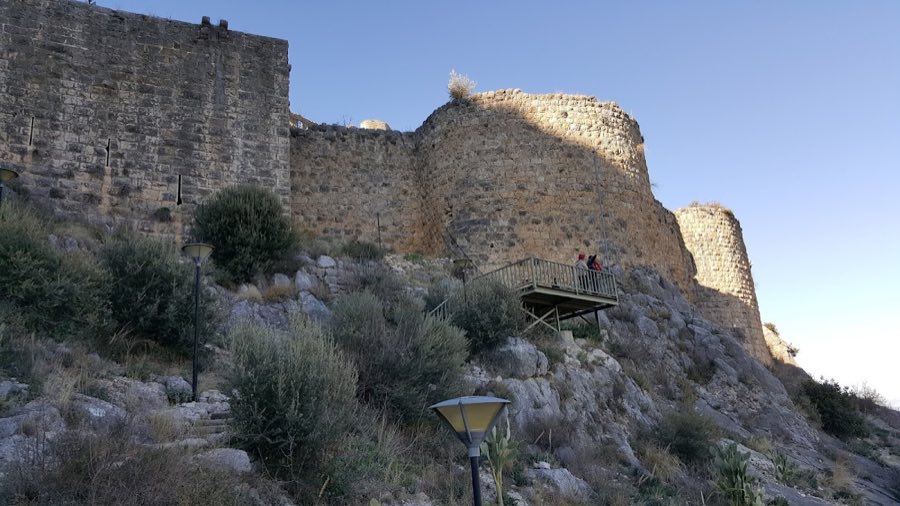
Feke Castle is perched atop a steep mountain ridge, stretching about 180 meters from north to south and narrowing to around 25 meters at its midpoint. Its construction primarily features large, roughly dressed basalt stones, a volcanic rock known for its strength, which was carefully shaped and placed to create durable defensive walls.
The fortress is divided into two distinct parts: a lower outer section and a main upper fortress. The lower fortress surrounds the entrance area, and its eastern side hosts the only gateway into the complex. This entrance is designed with a multi-level passageway that follows the walls upward, allowing defenders to counter attackers who breached the gate in a controlled, step-by-step manner.
The northern and eastern faces of the castle are protected by a series of semicircular towers, built solidly and with precise masonry. These towers strengthened the defensive walls, providing vantage points for surveillance and protection. In contrast, the western side is naturally shielded by sheer cliffs so steep and vertical that no walls were built there, leaving the terrain itself as an effective deterrent to assault.
Within the upper fortress lie the remains of various structures, including the ruins of palaces that were once home to the Rubenid rulers. There are also remnants of a water reservoir, essential for sustaining the garrison during sieges, and armories where weapons and equipment were stored. Some additional buildings, likely serving administrative and residential purposes, are evident in the archaeological record.
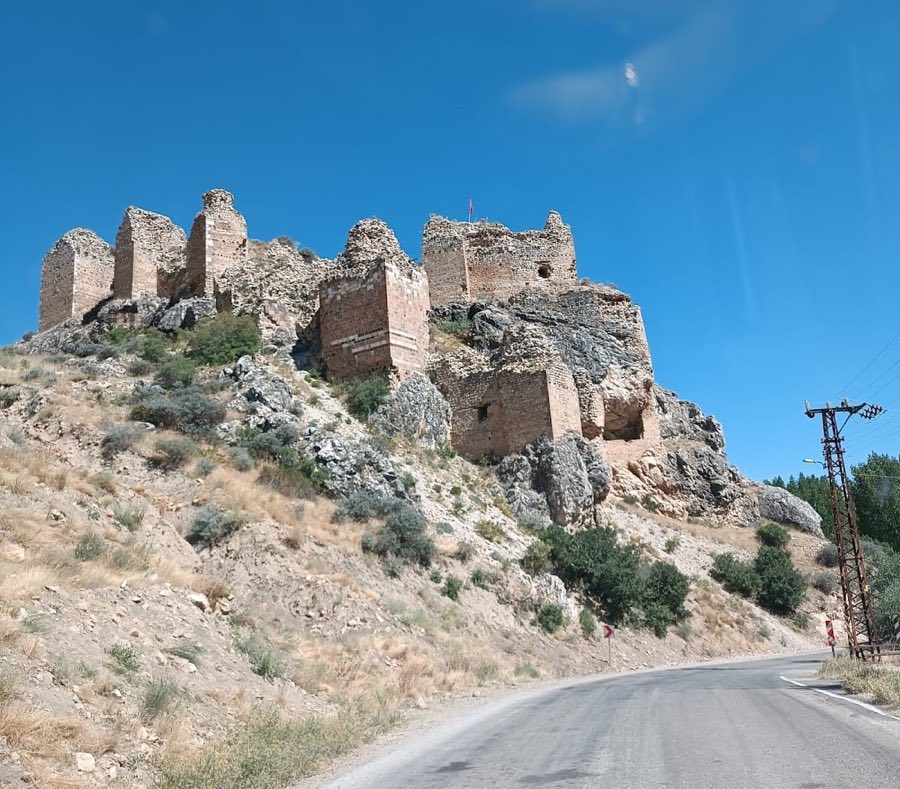
Today, much of the fortress survives as fragmented ruins, yet its core layout and defensive features remain discernible, illustrating the site’s long military and noble history. This combination of natural and man-made defenses demonstrates thoughtful design intended to protect rulers and resist enemy forces in an era of frequent conflict.
No. 16826
No. 33040
No. 47999
No. 47923
Comments
Comments for Feke Castle will require a verified account before posting.
We'll send a verification link before your first comment is published.