No. 51815
Feke Castle
Turkey
CastleRuinFor events11th century
No. 16826
No. 16826 · 37.442 N, 35.810 E
Quick summary
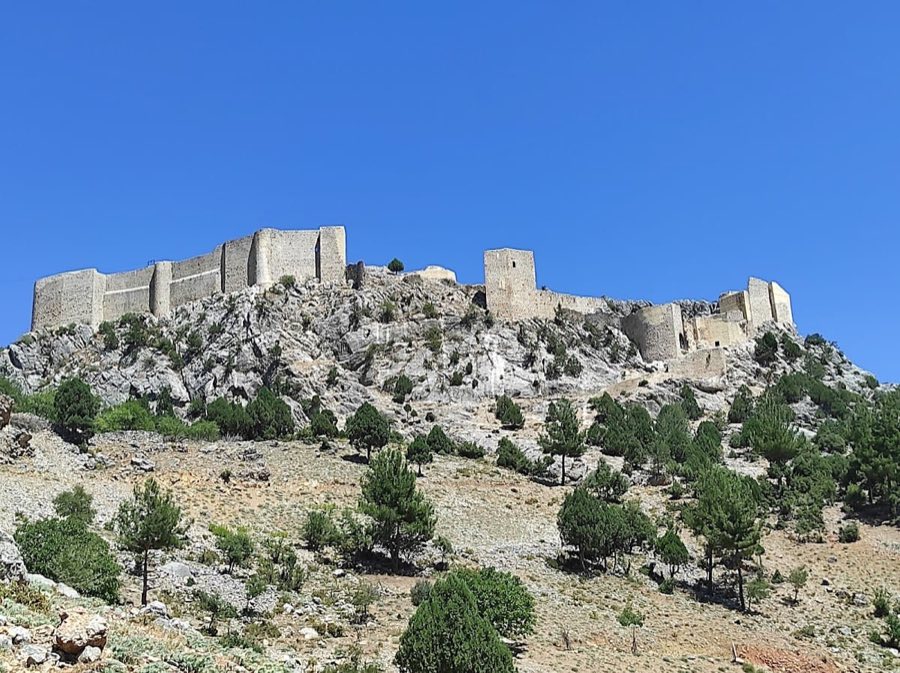
Kozan Castle (Sis) is a castle in Turkey with origins associated with the 8th century.
See all castles in TurkeyKozan Castle stands in the municipality of Taş in Turkey, and its first known fortifications were established during the Byzantine era.
During the early medieval period an Arab attack on the town was repelled in 705. After that event the Christian inhabitants abandoned the settlement and the place known as Sis became a fortified frontier post under Abbasid control. In 962 a Byzantine army led by Nikephoros II Phokas recaptured Sis.
In 1113 the site was taken by Toros I, ruler of Cilician Armenia. The city later became the capital of the Armenian Kingdom of Cilicia after the seat of government moved from Anavarza sometime between 1180 and 1190. Most of the surviving castle fabric belongs to the period of Armenian rule. Within the castle two chapels that are probably from the thirteenth century stand in a heavily ruined state.
In 1375 Mamluk forces besieged and captured Sis, and the royal palace that lay below the castle was destroyed during that campaign. A vaulted entrance corridor that carries an Arabic inscription may date to the Mamluk period after 1375, and immediately beyond this corridor a simpler gateway likely represents the earlier Byzantine portal. A Turkish account attributes the castle’s construction in the twelfth century to the Artuklu ruler Fahrettin Karaaslan and records that the fortress later served as a military base during the Ottoman era.
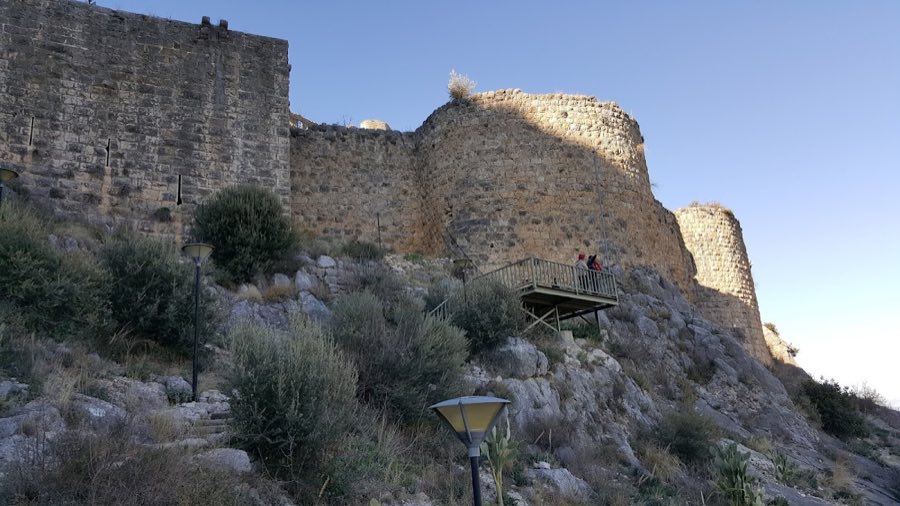
The castle occupies a steep hill rising to about 400 metres at coordinates 37°26′30″N 35°48′35″E, with the lower town of Kozan visible to the north and nearby fortresses such as Anavarza and Yılankale observable from the site. The defensive complex is arranged as two primary sections enclosed by a single outer rampart, and that rampart incorporates forty-four projecting bastions.
The inner stronghold occupies the southern portion of the site and is bounded by a roughly 400‑metre‑long curtain wall according to a Turkish description. Within this inner area archaeologically attested features include wells, cisterns, dungeons, kitchens and vaulted storage chambers; these vaults were used for storing supplies and remain as recognizable substructures today.
Access to the castle involves a vaulted entrance corridor that bears an Arabic inscription and has been identified as a possible Mamluk‑era insertion after 1375. Immediately past this corridor stands a plainer gateway that is interpreted as the original Byzantine entrance, so the approach combines masonry from separate historical phases and different builders.
Two Armenian chapels are preserved in ruin inside the enclosure, one set on the castle’s central spur and the other built into a semicircular tower on the east wall of the southeast bailey; both survive only as fragmentary remains. The royal palace stood as a separate fortified complex below the main walls; the palace was destroyed in 1375 but two corner towers of its donjon remain standing in situ.
The curtain walls and towers are constructed from carefully worked stone blocks quarried from nearby mountains and bonded with a mortar described as high quality. Much of the visible masonry dates to the period of the Armenian kingdom, while later repairs and additions, including the Arabic‑inscribed vaulted corridor, mark subsequent phases of reuse and modification.
No. 51815
No. 47923

No. 90807
No. 47999
Comments
Comments for Kozan Castle (Sis) will require a verified account before posting.
We'll send a verification link before your first comment is published.