No. 15100
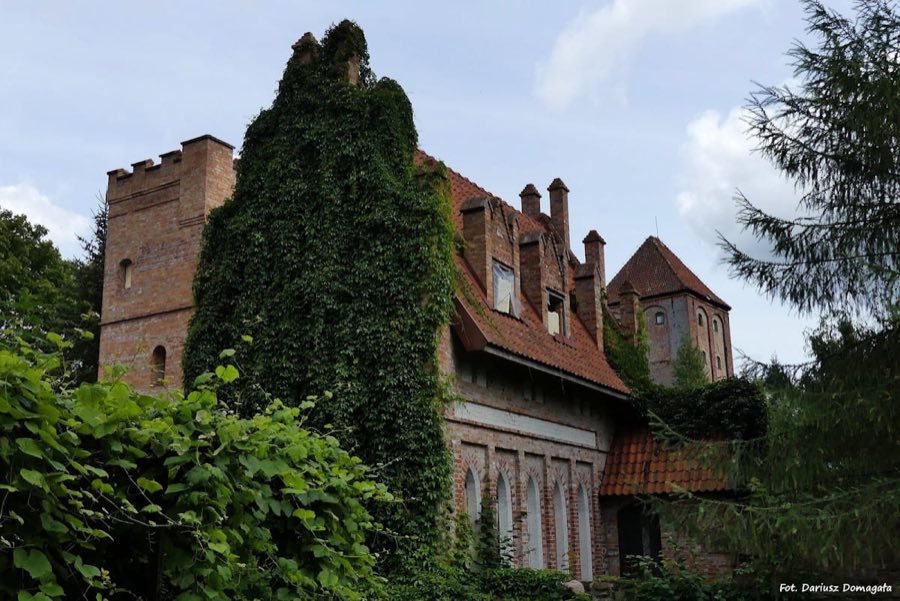
Przezmark Castle
Poland
CastleRuinFor events16th century
No. 35832
No. 35832 · 53.767 N, 19.376 E
For events
Finckenstein Palace is marked as a château or castle venue lead. Capacity, indoor/outdoor spaces, catering rules, and accommodation options are published only after public verification.
Event types: Private events, Cultural gatherings, Filming and photography
Quick summary
Finckenstein Palace is a palace in Poland with origins associated with the 18th century.
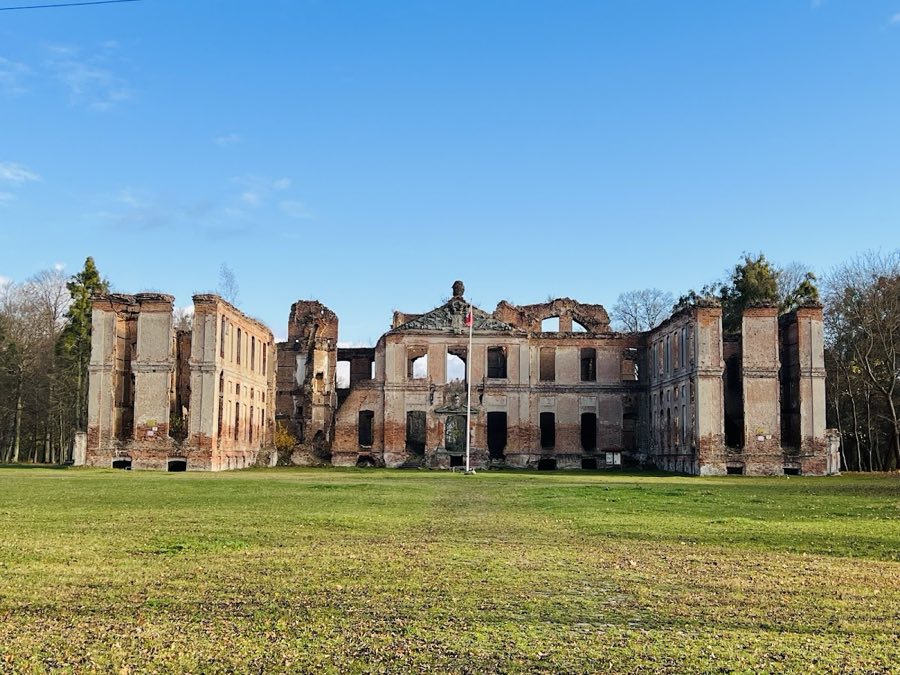
See all castles in PolandFinckenstein Palace in Kamieniec, Kamieniec, Poland, is an early 18th-century Baroque country palace built by Prussian nobility between 1716 and 1720. Erected for Lieutenant General Albrecht Konrad Finck von Finckenstein, the house was constructed to reflect the tastes of the Prussian royal court and became a site of repeated royal stays and important political events, most notably serving as a headquarters during the Napoleonic campaigns.
The estate on which the palace stands had been acquired in 1705 for 78,000 guilders by the Finck von Finckenstein family. Construction took place from 1716 to 1720, and in 1718 King Frederick William I ordered the nearby village Habersdorf to be renamed Finckenstein and required a separate wing in the new palace for royal use during journeys. During the 18th century, successive Prussian monarchs, including Frederick William I and later Frederick William II, used the residence while travelling between Berlin and Königsberg.
The palace remained in the Finck von Finckenstein family until 1782, when ownership passed to the Dohna-Schlobitten family. The new owners removed furniture and movable valuables to their Schlobitten seat, and continued to use the house in the 19th century. During the War of the Fourth Coalition, from April to June 1807, Napoleon Bonaparte established his headquarters at the palace; there the Finckenstein Treaty between France and Persia was signed, and Napoleon lodged there with Maria Walewska. After the Napoleonic period the Dohna family reoccupied the building and preserved the bedroom shown as the chamber in which Napoleon slept.
Around 1900 the palace and its grounds underwent restoration work and alterations to the park. In January 1945 the site lay in the zone of heavy fighting between Soviet and German forces; Soviet troops captured the palace on 22 January 1945 after it had been badly damaged by artillery and looted. The building was set on fire in January 1945, a blaze that consumed the roof. A further reported fire in 1947 destroyed interiors, roof and floor structures, leaving only the outer walls. After the post-war settlement the former territory of West Prussia, including this site, became part of Poland, and the palace has stood as a ruin since 1945.
The palace complex occupies a rectangular footprint measuring roughly 65.5 by 83.5 metres and followed late Baroque, French-influenced composition. It consisted of three two-storey blocks—a central corps de logis and two lateral wings—arranged at right angles to one another. The roofs were covered with tiles and the principal central section rose beneath a high, broken roof form known as a mansard roof (a high roof with a steep lower slope), which was clad in green-glazed tiles and pierced by twelve chimneys.
The main west-facing façade retained a triangular pediment (tympanum, the triangular panel above the entrance) which displayed the Finck von Finckenstein coat of arms held by two lions. The central recessed bay was set between two forward-projecting bays on the north and south, creating a measured rhythm to the elevation. Sandstone was used for sculptural and decorative elements that adopted Rococo curves, and the upper façade carried four figural sculptures identified as Jupiter, Juno, Hercules and Venus, presented as an allegorical group.
A formal garden laid out in the French manner surrounded the house and included landscaping features such as a romantic grotto. Water-management elements survive as fragments of channels that once linked the palace complex to the nearby Gaudy Lake. Interior fittings once included a bedroom with a large canopy bed, which was displayed as the room where Napoleon slept. By the mid-20th century the complex had been heavily damaged by artillery, stripped of moveable valuables, and consumed by fire; after conflagrations in 1945 (and a further fire reported in 1947) the roof, floors and interior fittings were destroyed and only the masonry walls remain.
No. 15100
No. 95709
No. 43372
No. 71594
Comments
Comments for Finckenstein Palace will require a verified account before posting.
We'll send a verification link before your first comment is published.