
No. 60997
Çandarlı Castle
Turkey
CastleRuin6th century
No. 39132
No. 39132 · 38.669 N, 26.751 E
Quick summary
Foça Castle is a castle in Turkey with origins associated with the 12th century.
See all castles in TurkeyFoça Castle is located in the town of Foça, within modern-day Turkey. This fortress was originally built by medieval builders during the 11th or 12th century, developing from an earlier fortified settlement in the region.
The earliest fortifications surrounding the ancient city of Phocaea, near which the castle stands, date back to 590–580 BC. These walls were part of the original Greek colony’s defenses. During the Byzantine Empire, which controlled the area for centuries, the ancient walls received restoration, maintaining their defensive function.
In the 13th century, Foça Castle came under the authority of the Republic of Genoa, a maritime republic from what is now Italy. The Genoese undertook a significant rebuilding of the castle, adapting it to their needs and strengthening its fortifications to protect their trade interests.
During the 14th century, the castle gained historical notoriety when Şehzade Halil, a prince of the Ottoman dynasty, was abducted and held prisoner within its walls. This event indicates the castle’s continued importance in regional power struggles.
Following the Ottoman conquest of Foça, enhancements were made between 1538 and 1539 to repair the castle’s walls and add new towers, reflecting the Ottomans’ commitment to maintaining and updating the fortress within their expanding territory.
In recent history, the castle’s cultural and historical value was recognized when it was placed on UNESCO’s World Heritage Tentative List in 2013, highlighting its significance within Turkey’s heritage.
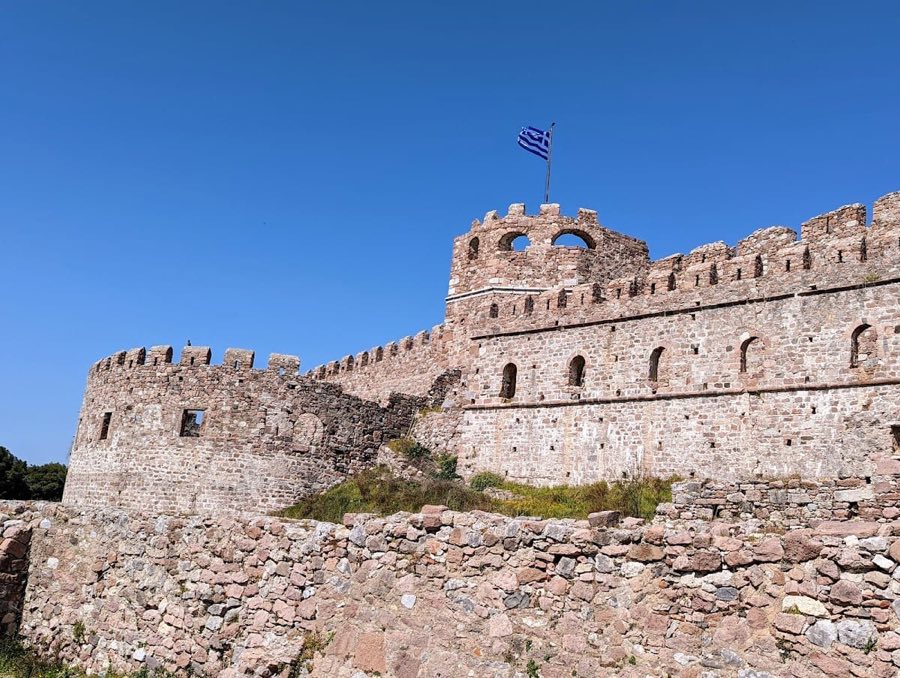
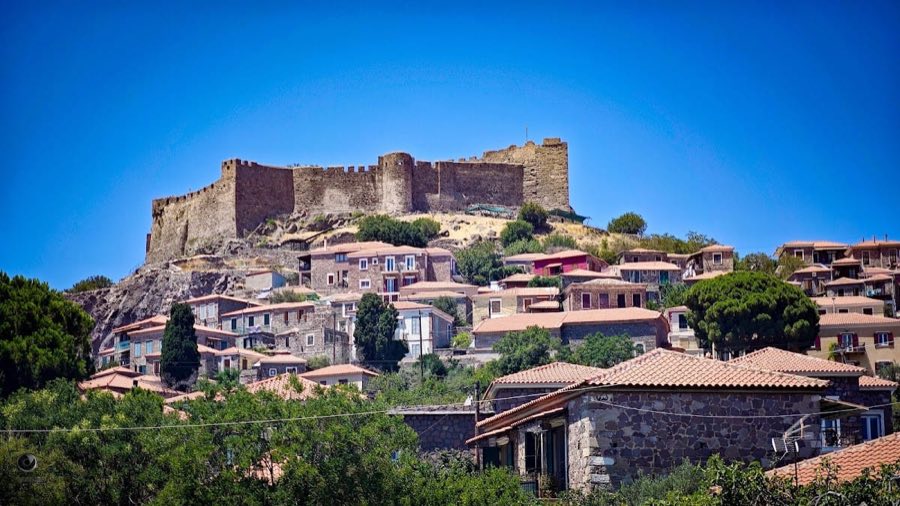
Foça Castle occupies a strategic position on a peninsula, surrounded by the sea on three sides. Its layout takes advantage of this natural defense, overseeing access routes between the northern part of the İzmir region, the town of Çandarlı, and the wider Gulf of İzmir. The construction of the castle’s walls and towers reflects a mix of Byzantine and Ottoman fortification styles, revealing the site’s long history of adaptation and restoration.
One notable feature of the castle is a tower located near the northern tip, close to the ancient Temple of Athena. This tower marks the boundary at one end of the fortress. On the southwestern side, the castle is distinguished by a series of five gates, collectively known as Beşkapılar, meaning “Five Gates.” During the Ottoman era, this section was repurposed to serve as a boatshed, locally called a kayıkhane, illustrating how parts of the castle were adapted to new functions over time.
The walls and towers are constructed using materials and techniques consistent with those used in the Byzantine period, later repaired and enhanced during Ottoman rule. Though specific details of the building materials are not noted, these combined influences demonstrate the castle’s layered history. The site’s location near the islands of İncir, Oraq, and Fener emphasizes its role as a critical harbor and defensive point for maritime activity.
Today, the remains of Foça Castle stand as a partly restored and preserved complex, with its prominent gates, towers, and walls providing tangible links to its varied historical phases. The castle’s relationships with the surrounding landscape and sea continue to underscore its importance as a fortified site guarding a significant coastal settlement.
No. 60997
No. 45358
No. 94728
No. 68585
Comments
Comments for Foça Castle will require a verified account before posting.
We'll send a verification link before your first comment is published.