No. 85634
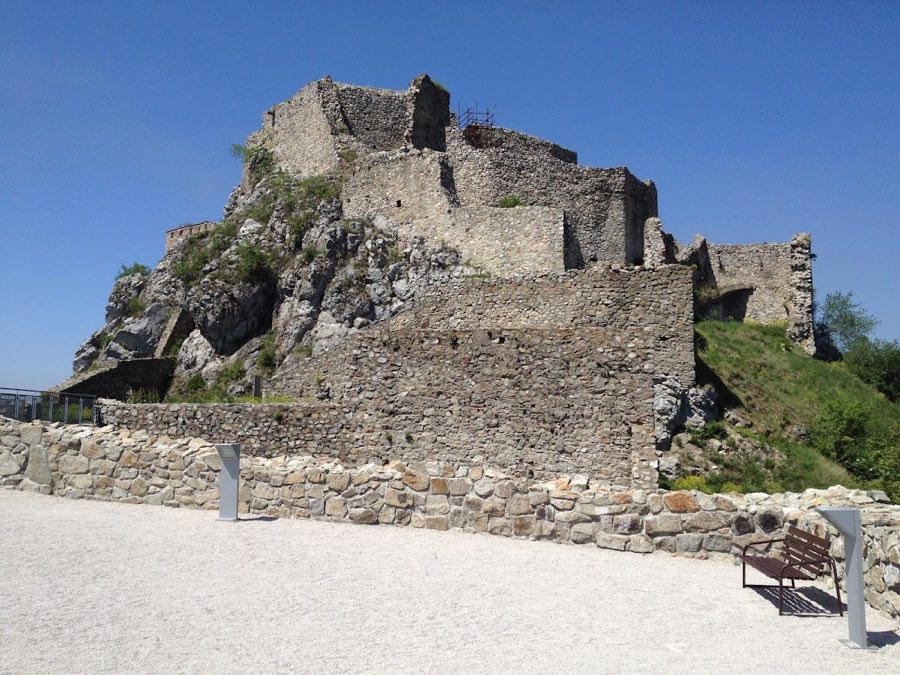
Devín Castle
Slovakia
CastleRuin3rd century
No. 21852
Castle · Austria
No. 21852 · 48.142 N, 16.948 E
Quick summary
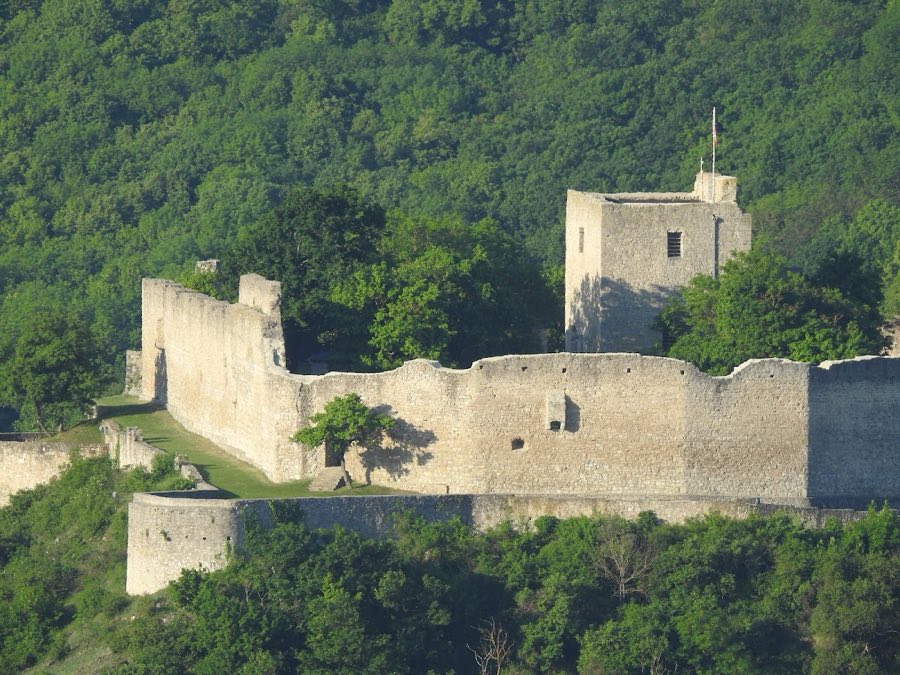
Heimenburg Castle, Hainburg an der Donau is a castle in Hainburg an der Donau, Austria with origins associated with the 11th century.
See all castles in AustriaCastle Heimenburg stands on the Schlossberg above Hainburg an der Donau in Austria, and its foundation and later development took place under the authority of the Holy Roman Empire. A local tradition connects the earliest origin to Heimo, a cupbearer of Arnulf of Carinthia, who is said to have established a church and a fortress on the site; a predecessor stronghold at nearby Bad Deutsch-Altenburg was destroyed in 1042 by King Henry, later Emperor Henry III.
By 1043 the place belonged administratively to the Hungarian march within the imperial sphere. Around 1050 Emperor Henry III ordered rebuilding of the Heimenburg on the Schlossberg and in July of that year discussed erecting a new castle there, entrusting the project to the bishop Gebhard, who is recorded as active in military campaigns and later arrested in 1055. Ownership of the castle passed to the counts of Sulzbach by 1065 and later came under the Babenberg dynasty by 1188.
In the late twelfth and early thirteenth centuries plans for enlargement were made using funds tied to the ransom of Richard I, and after Duke Leopold V’s death his son, Duke Leopold VI, began work at the site around 1200. In spring 1252 Margarete of Babenberg married Přemysl Ottokar II in the castle chapel, and in 1260 Ottokar had a residential tower built in the middle of the fortress, which he used frequently. The castle was a place of frontier diplomacy, including negotiations conducted by Ottokar with King Béla IV of Hungary and later discussions by Rudolf II in 1277.
During the later Middle Ages the castle changed hands through warfare and politics: it was captured by Matthias Corvinus in 1482 and returned to imperial control under Emperor Maximilian I in 1490. The site suffered multiple violent blows in the early modern period. Ottoman forces devastated the castle in 1529. A lightning strike set the complex on fire in 1569. The fortress was rebuilt with new defensive works, including bastions and casemates, and was subjected to sieges associated with Gábor Bethlen, recorded either in 1619–1620 or in 1620–1621. Between 1629 and 1652 the citizens of Hainburg held the lordship in pledge.
In 1683 the castle was stormed and burned by Ottoman troops; contemporary reports record the capture and enslavement of thousands of townspeople, with figures given as 8,000 and 8,432 in different accounts. In 1703 Emperor Leopold I sold the ruined stronghold to Count Johann Jakob von Löwenburg, who began restorative work and had the castle chapel repaired about six years later. After construction of a new palace at the foot of the hill, the castle fell into decay after 1742. Emperor Franz Joseph I purchased the ruins in 1852, and the municipality acquired them in 1977 and carried out reconstruction work on the site.
The site survives as the ruins of a hilltop castle built on the Schlossberg. The surviving plan reflects a central stronghold with a prominent chapel and a later-erected residential tower, together with traces of the early modern defensive upgrades that incorporated bastions and casemates. The position on the slope allowed visual control of the Danube and of river traffic near the then-border with the Kingdom of Hungary.
The chapel, known from its role as the place where the 1252 marriage of Margarete of Babenberg and Přemysl Ottokar II took place, was repaired after 1703 under Count Löwenburg. Its historic use as a place of worship and ceremony is documented by that marriage; the present condition reflects the sequence of damage, repair, and later conservation carried out in the nineteenth and twentieth centuries.
The central residential tower dates to 1260 and is associated with Přemysl Ottokar II, who ordered its construction and made frequent use of the castle. Its position in the middle of the castle marks the medieval phase when the site functioned as a noble residence as well as a fortress. The tower survives in fragmentary form within the ruin complex.
The defensive upgrades, undertaken after the fires and attacks of the sixteenth century, included the addition of bastions and subterranean casemates. These modifications reflect the conversion of the medieval hilltop fortress into an early modern fortification capable of artillery defense. Remains of those bastions and vaulted casemate chambers are part of the ruined fabric visible today.
The ruinous state of the castle reflects repeated destruction and later conservation. The complex was burned and stormed in 1529, struck by lightning and burned in 1569, and again stormed and burned in 1683. Restoration initiatives after 1703 repaired parts of the chapel and other structures, Emperor Franz Joseph I purchased the ruins in 1852, and the municipality undertook reconstruction work after acquiring the site in 1977. Today the overall ensemble stands as fragmentary masonry and reconstructed elements that preserve the sequence of medieval residence, early modern fortification, violent destruction, and later repair.
No. 85634
No. 81073
No. 83971

No. 26685
Comments
Comments for Heimenburg Castle, Hainburg an der Donau will require a verified account before posting.
We'll send a verification link before your first comment is published.