
No. 23643
Úštěk Castle
Czechia
CastleRestored15th century
No. 34673
Castle · Czechia
No. 34673 · 50.579 N, 14.384 E
Quick summary
Helfenburk Castle is a castle in Czechia with origins associated with the 14th century.
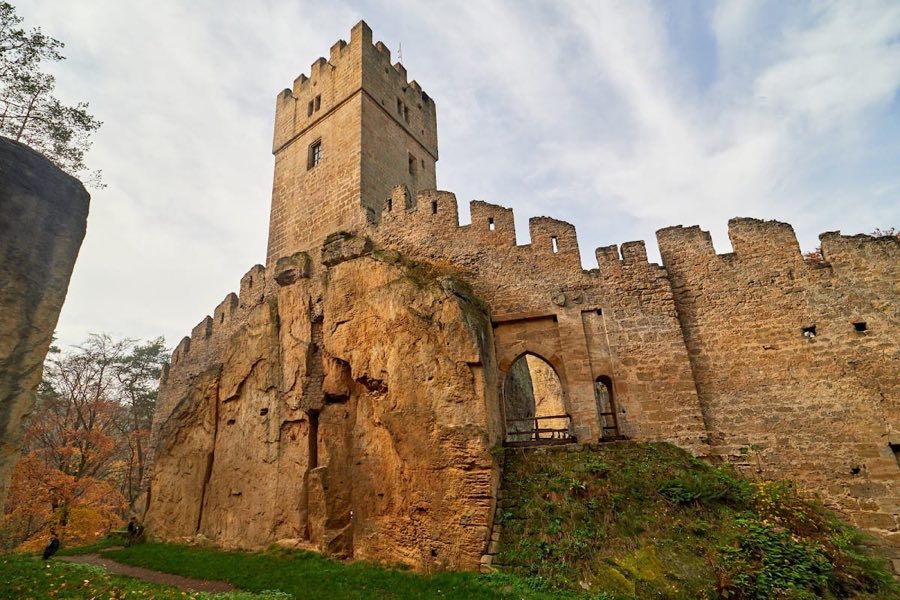
See all castles in CzechiaHelfenburk is a castle ruin situated near the village of Úštěk in the Czech Republic, originally constructed by the medieval Bohemian nobility. The fortress dates back to the first half of the 14th century and was probably founded by Jan of Klinštejn, a member of the Lords of Klinštejn, a branch of the Ronovci family. Jan took his name from the castle, marking Helfenburk as a seat of his lineage.
In 1375, the castle entered ecclesiastical hands when Archbishop Jan Očko of Vlašim purchased it. He transformed Helfenburk into a countryside residence, overseeing a domain that incorporated neighboring fortifications such as Hřídelík castle. His successor, Archbishop Jan of Jenštejn, invested in enlarging the castle and used it to safeguard precious treasures, relics, and manuscripts from the nearby St. Vitus Cathedral during unstable times.
The turbulent period of the Hussite Wars and the following conflicts brought numerous changes in ownership. The castle was held at various times by figures including Aleš of Malíkovice, Půta III of Častolovice, the Berka brothers of Dubá, Jan Smiřický, and Zdeněk Konopišťský of Šternberk, an opponent of King George of Poděbrady. During this era, Helfenburk was besieged and seized by royal forces, after which King George granted it to the nobleman Petr Kaplíř of Sulevice.
Later, Wilhelm of Ilburg became the last aristocratic owner. He carried out renovations and favored Helfenburk over the nearby Ronov castle until his family line ended in 1538. Following this, the castle was inhabited solely by servants and gradually deteriorated. In 1622, during the violent aftermath of the Battle of White Mountain, imperial troops commanded by Marshal Buquoy plundered and set fire to Helfenburk. The Jesuit order from Liběšice subsequently acquired the surrounding lands, incorporating them into the estate of Úštěk.
In the late 19th century, industrialist Count Josef von Schroll purchased the ruins and undertook significant restoration work. He rebuilt the collapsed third floor of the main tower, turning it into a summer residence, and created a new side entrance, as the original medieval tower ingress had become inaccessible.
Since the 1960s, preservation and archaeological projects have been carried out by the Czech Union for Nature Conservation with the help of local volunteers. These efforts included excavating the castle’s well shaft, uncovering historical components such as a winch axle now exhibited near the site. Starting in 1978, a dedicated volunteer organization has maintained the ruins and provided guided access to the tower.
Historic records first mention Helfenburk in 1374 in a document detailing its sale to Archbishop Jan Očko. Earlier traditions relate that the Italian political figure Cola di Rienzo was imprisoned there around 1350. The final documented references to the castle as a noble residence date from 1591.
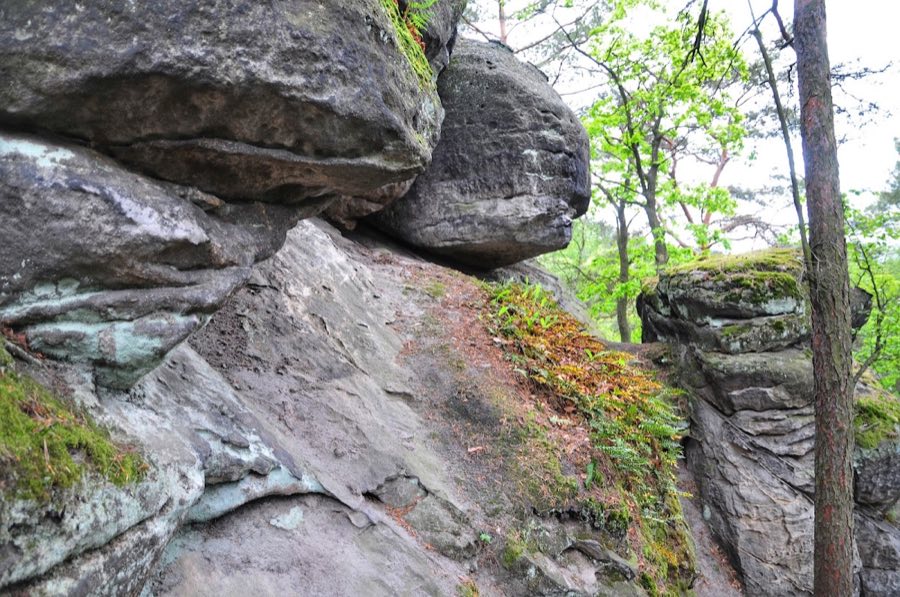
Helfenburk occupies a sandstone plateau rising approximately 70 meters above the Hrádecký důl valley, at an elevation of 310 meters above sea level. The castle initially featured timber constructions, but the significant phase under Archbishop Jan Očko saw the complex rebuilt mostly from stone. This stone fortress incorporated a palace, a chapel, and various smaller service buildings arranged across the rocky summit.
A striking feature of the site is a deep well, about 65 meters in depth, equipped with a tread wheel mechanism for drawing water. This well was dug during the castle’s medieval expansion and remains an important archaeological element. Excavations in the 20th century uncovered a wooden winch axle connected with the well, which has been restored and is displayed near the shaft.
The castle’s defenses include a wall constructed under Archbishop Jan of Jenštejn, notable for its battlements, parts of which survive to this day. Access was secured by drawbridges of the cradle type and a deep surrounding moat, though the moat has since been mostly filled in. The gate through which visitors entered still shows two large heraldic stone carvings: one bearing the emblem of the Lords of Vlašim, featuring two vulture heads, and the other displaying the symbol of the Prague Archbishopric with a horizontal bar. These carvings confirm the historical identity and ownership of the castle.
Dominating the site is a three-story residential tower rising around 30 meters. The tower is accessible via a narrow spiral staircase winding through three living floors. The middle level is open to the public and contains four windows with built-in stone seating. From the top of the tower, visitors can take in extensive views of the encircling forests. Although the tower’s original medieval entrance led inward to the castle court surrounded by the remains of palace walls on natural rock foundations, this entryway became unreachable over time. Restoration efforts in the 19th century introduced a new side entrance to the tower.
The castle’s surviving core includes parts of the main defensive ring wall and the bergfried, or main tower, which remain structurally intact. Below the tower, in the courtyard area, there is a small log cabin currently used by the managing association. The central interior zones of the castle continue to be closed to public access.
Helfenburk can be approached by marked walking trails from the nearby settlement of Úštěk and neighboring villages, with parking situated at Ostré and Rašovice. The site is freely accessible throughout the year, and the tower opens on scheduled days when attendants are present.
No. 23643
No. 23764
No. 60518
No. 27100
Comments
Comments for Helfenburk Castle will require a verified account before posting.
We'll send a verification link before your first comment is published.