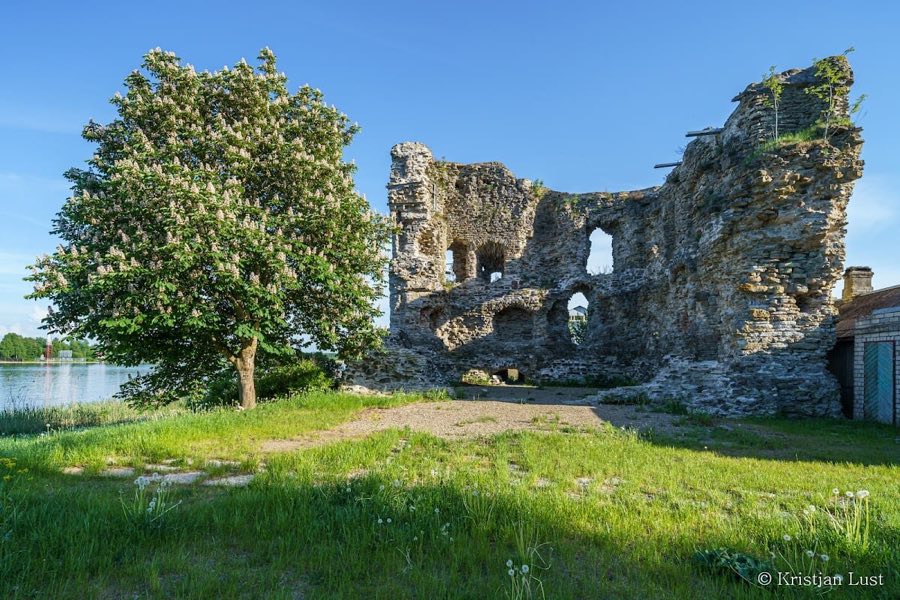
No. 38485
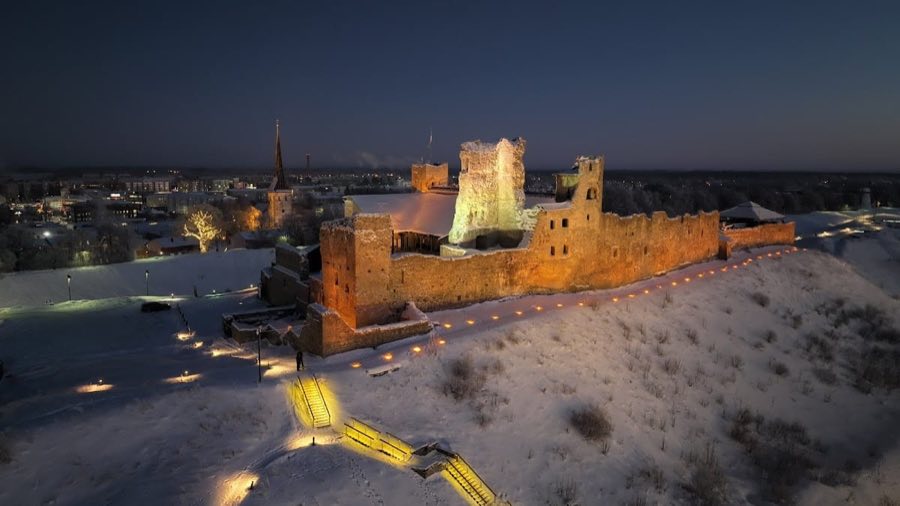
Vasknarva Castle
Estonia
CastleRuin18th century
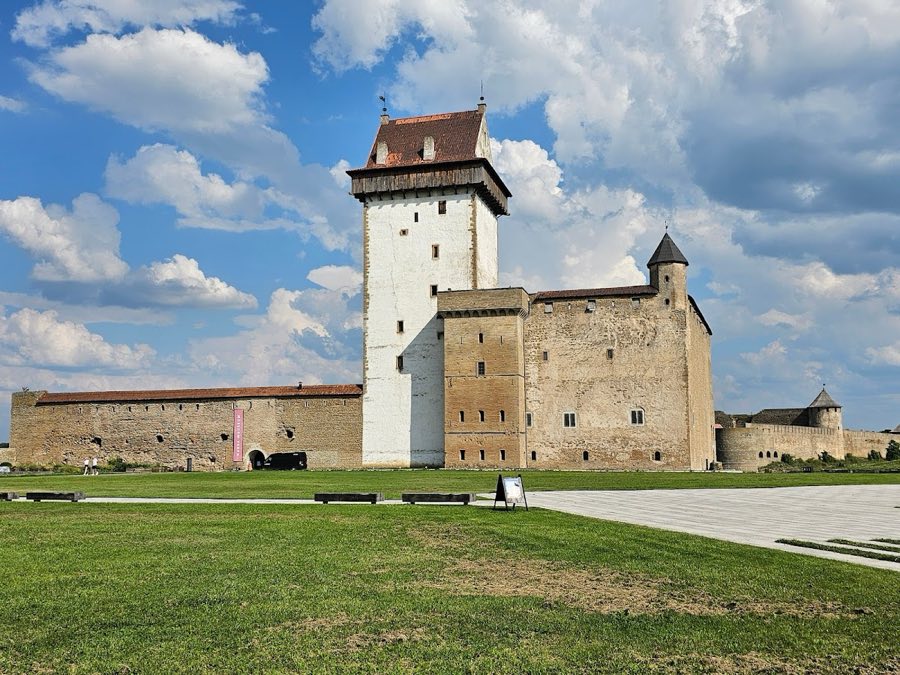
No. 78855
Castle · Estonia
No. 78855 · 59.376 N, 28.201 E
For events
Hermann Castle, Narva is marked as a château or castle venue lead. Capacity, indoor/outdoor spaces, catering rules, and accommodation options are published only after public verification.
Event types: Private events, Cultural gatherings, Filming and photography
Quick summary
Hermann Castle, Narva is a castle in Narva, Estonia with origins associated with the 13th century.
See all castles in EstoniaHermann Castle in Narva, Estonia, was founded by the Danes in the 13th century.
A wooden strongpoint stood at the Narva river crossing during the 13th century and a stone castle was built on that site in the early 14th century. The castle first appears in a written record in 1329. In the mid‑14th century the Danish king sold northern Estonia, including Narva, to the Livonian Order on 29 August 1346 (another record gives 1347). Under the Livonian Order the complex was reorganised into a convent house around an inner courtyard. Between 1341 and 1342 an extensive foreburg was raised beside the west wall and a larger western bailey was added by the middle of the 14th century. A roughly square initial building of about 40 metres on a side and a tower at the north‑west corner formed the nucleus that later became the Hermann tower.
In the late 15th century the Russian fortress on the opposite bank, Ivanogorod, was constructed in 1492, and the castle’s tower was heightened in stages. Work on the Hermann, later called Long Hermann, continued from the 14th century into the early to mid‑16th century; by the end of the 15th to the early 16th century the tower reached roughly 50 metres to permit observation of the opposite fortress. Russian forces captured the castle in 1558. Swedish rule began in 1581 and continued until 9 August 1704. During the Swedish period the western and northern approaches were reinforced in campaigns from 1676 to 1680 and again from 1684 to 1704, following plans by the engineer Erik Dahlberg. By 1704 six bastions and the Spes work had been constructed while the Wrangel and Pax bastions remained unfinished. The river‑facing wall was not altered during these works.
The castle and the town saw combat in 1700 and were taken by Russian troops under Peter I in 1704. In the 19th century the West Gate between the bastions Triumph and Fortuna was completed in 1822. The site lost its fortress‑city status and restoration work began under engineer Modest Rezvoy in 1863; the Dark Gate was removed in 1875. German forces controlled the castle from 3 March to 11 November 1918 and during transitional events in November 1918. Heavy damage was inflicted in the Second World War, with major destruction in 1944; after the fighting only walls remained and the main tower suffered severe damage. Restoration began in 1950, a first phase concluded in 1986, and an exhibition covering the period from the 13th century to the early 18th century opened in 1989. Over its history the castle has belonged to Denmark, the Livonian Order, Russia, Sweden, Germany and Estonia. The Narva river forms the border with Russia and the Ivanogorod fortress lies on the opposite Russian bank.
The castle retains the convent‑house arrangement with massive wings around a central courtyard, reflecting the medieval conversion under the Livonian Order. The earliest stone fabric replaced a 13th‑century wooden fortification; an initial small block, roughly square and about 40 metres on a side, stood with a tower at the north‑west corner that served as the precursor to the present Hermann tower. A small northern bailey and a large western bailey were incorporated during the early and mid‑medieval phases, and an extensive foreburg was built alongside the west wall in 1341–1342. Much of this medieval plan is archaeologically visible in the arrangement of the main wings and courtyards.
The Hermann, known also as Long Hermann, preserves evidence of construction in several phases from the 14th century into the 16th century. The tower was raised to reach approximately 50 metres by the end of the 15th to the early 16th century so that it could command views of the opposite bank. The tower suffered very heavy damage in the fighting of 1944; restoration work since 1950 has repaired parts of the structure, and conservation has continued in stages, with a major restoration phase completed in 1986.
Defensive works around the town show a roughly one‑kilometre wall circuit, strengthened by at least seven towers and protected by a moat. Four principal gates once punctuated the circuit and are identified by name: the Viru Gate on the west, a northern gate called Aegli or Kargja, the Old Gate to the river port on the east, and the Water or Small Gate on the south, each originally fitted with iron plates and approached by drawbridges. In the late 17th century the western and northern sectors were remodelled into a bastion system. Six bastions and the Spes work were completed by 1704 while Wrangel and Pax remained unfinished. A tower and the bastion named Wrangel date to the 1676–1680 programme and protected a cattle‑drive gate. The river‑facing wall was left in its earlier form during these alterations.
Later modifications and conservation are visible in the western defensive area. Two former medieval wall towers were adapted as gun towers, or rondels, and two such towers have been reconstructed in the western courtyard. The West Gate between the bastions Triumph and Fortuna was finished in 1822. The wartime destruction left the ensemble heavily damaged, and post‑war restoration has stabilised and rebuilt parts of the fabric; the bastion spaces have been re‑landscaped and are used as a park while other restored areas accommodate museum and civic functions.
No. 38485
No. 16340
No. 55567
No. 54189
Comments
Comments for Hermann Castle, Narva will require a verified account before posting.
We'll send a verification link before your first comment is published.