No. 49582
Nístějka Castle
Czechia
CastleRuin14th century
No. 33561
No. 33561 · 50.682 N, 15.322 E
Quick summary
Hrad Návarov is a castle in Czechia with origins associated with the 14th century.
See all castles in CzechiaHrad Návarov is situated near the municipality of Zlatá Olešnice in the Czech Republic. The castle was constructed during the medieval period by members of the local Bohemian nobility.
Archaeological finds indicate that people had settled in the area by the late 1200s, with the castle itself most likely founded in the mid-1300s. The earliest written record mentioning Návarov dates from around 1365, connecting it to a nobleman named Adam Heřman of Heřmanice. Its initial builder was probably Jindřich z Návarova, a member of the Valdštejn family, who acquired ownership in 1380. Later, Jan Čúch of Zásada, known to have served as a royal marshal under King Václav IV, held the castle.
In 1469, during a period of conflict, forces supporting King Jiřík of Poděbrady captured the fortress from Jan Zajíc of Házmburk. From 1515 onward, the Smiřický family controlled Návarov for about one hundred years. Following the Battle of White Mountain in 1620, which brought significant changes to the region, the castle was confiscated in 1622 and passed to Albrecht of Valdštejn. He granted it as a fief to Getrude de Lamotte in 1627. Under her administration, strict Counter-Reformation policies were implemented across the estate, reflecting the efforts to restore Catholic dominance.
During the Thirty Years’ War, Vincenc de Lamotte undertook the castle’s defense. However, in 1643, Swedish troops captured Návarov and used it as a base for raids in the surrounding countryside until their withdrawal in 1644. To prevent the Swedes from reoccupying the castle, the authorities in Prague ordered its deliberate destruction shortly after 1644. Stones from the ruins did not go to waste; they were later repurposed in constructing the nearby Baroque Návarov chateau, which features a chapel built by Marie Angelika Lamottová z Frintroppu.
In recent years, an extensive conservation project was completed in 2019, ensuring the preservation of the castle remains and enabling public access.
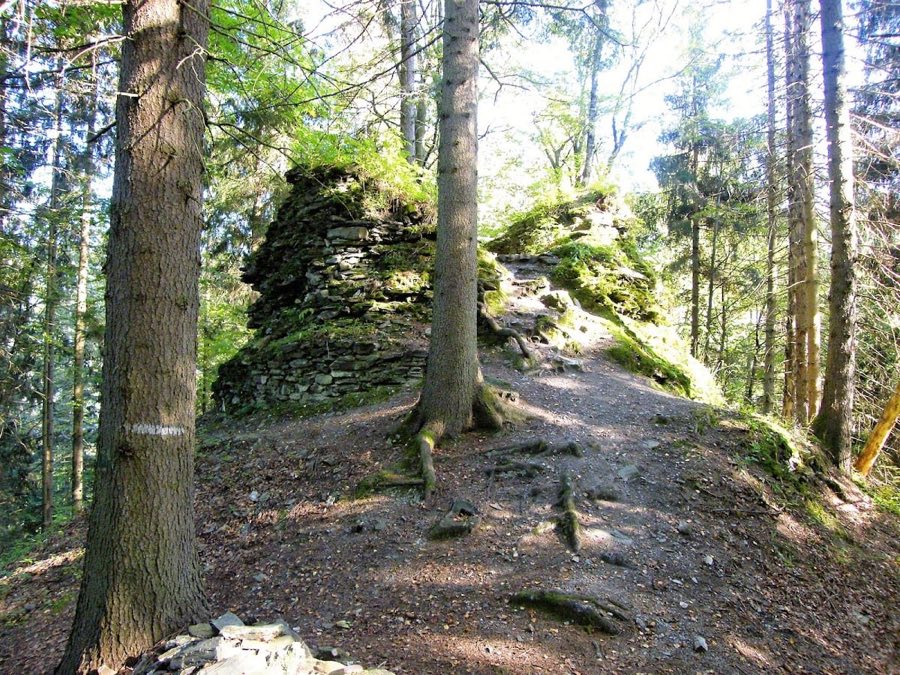
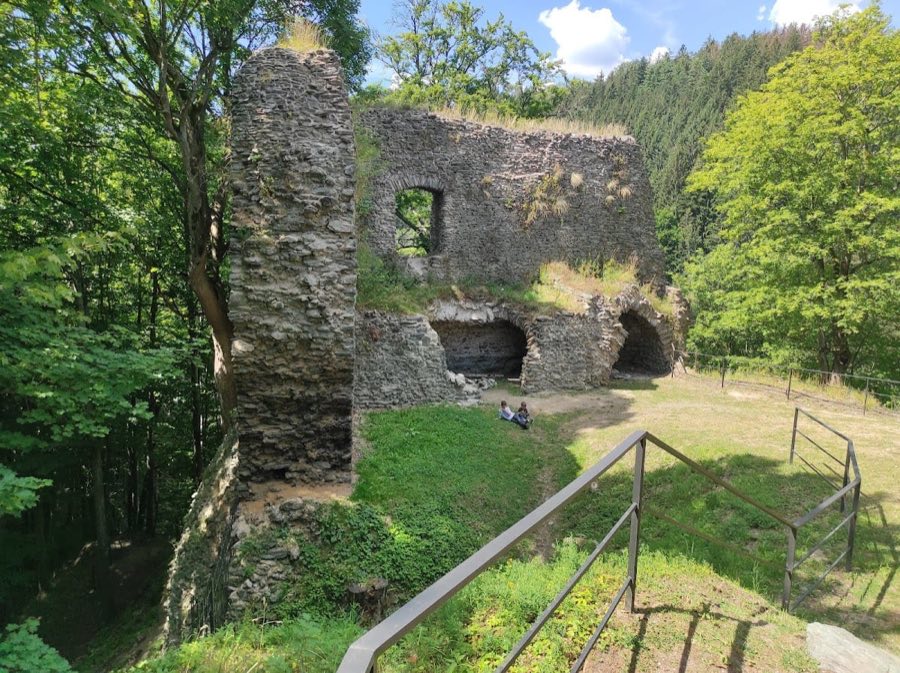
Hrad Návarov was a rock castle strategically positioned above the meeting point of the Zlatník stream and the Kamenice river. Its design evolved over time, though it likely began as a residence without a central tower, protected instead by a strong shield wall. The oldest surviving part consists of a thick perimeter wall encircling the core area, constructed directly on a natural rock outcrop in the northern section of the site. Access to this core was probably controlled through a gate equipped with a portcullis, a heavy, vertically sliding grille; traces of the portcullis mechanism remain visible on the southern side.
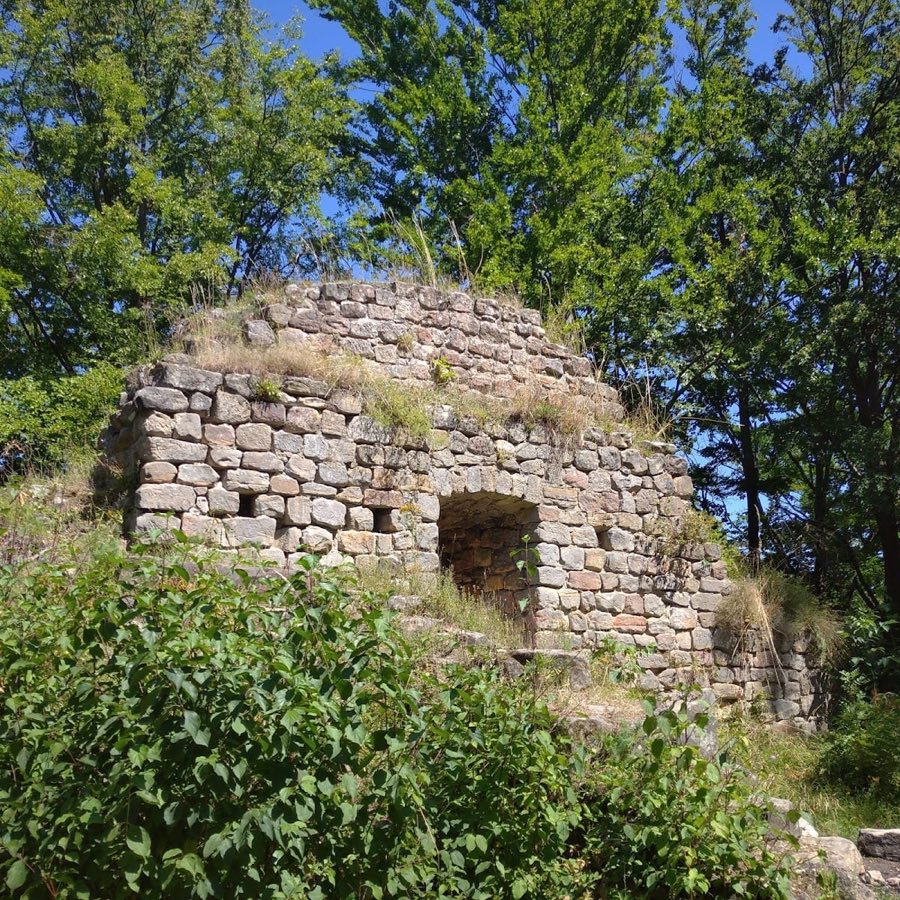
Inside the main courtyard, two buildings once stood. The western building contains remnants of two vaulted rooms. One of these vaults features a pointed barrel shape, an architectural element common in medieval construction, located in the northwest corner and evidently older. A second vaulted space was added at a later stage. A large window once illuminated the upper floor of this western structure. The eastern building comprised two rooms, though the full extent of this section is not clearly known. At some point, the northern wall of the core collapsed and was replaced by a thinner version, indicating repairs or changes after structural damage.
A barbican, an outer defensive work located to the south, originally protected the core, though its walls have since disappeared. This barbican controlled entry to the castle’s core or to a broad outer ward situated on the west side of the site. Here, a platform with a bastion-like projection provided a vantage point overlooking the valley below. Along the southern side of the core runs a neck ditch, a defensive trench designed to give attackers a difficult approach. Beyond this ditch stands an outer defensive wall, which ingeniously incorporates the natural rocky terrain, and is fronted by a partially filled moat.
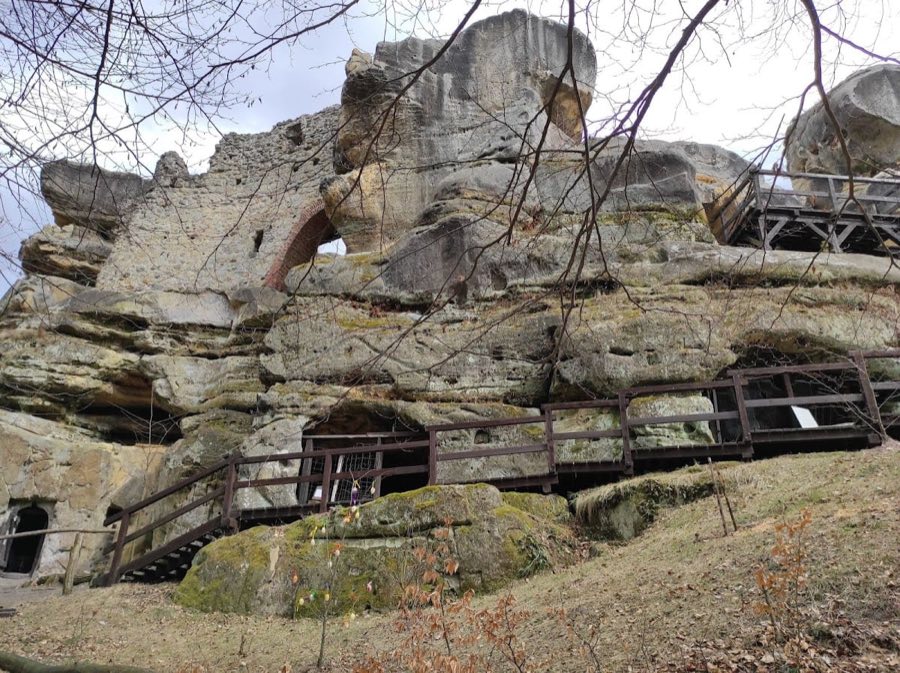
Following the castle’s capture in 1469, an additional outer defensive line was constructed. This new fortification also made use of natural rock formations and included two semicircular bastions reinforcing the wall at its midpoint and eastern end. Among these defenses is a large rock to the west capped by an unidentified structure. Access to this outer wall was restricted by another ditch, further complicating any assault.
Overall, the castle complex included a western palace and other buildings to the south, though detailed dimensions and information about the intended use or size of audience spaces are not preserved. The remains today comprise fragmentary walls and foundational elements, some stabilized and conserved to maintain their current state and support ongoing study.
No. 49582
No. 32350

No. 58100
No. 23518
Comments
Comments for Hrad Návarov will require a verified account before posting.
We'll send a verification link before your first comment is published.