No. 33561
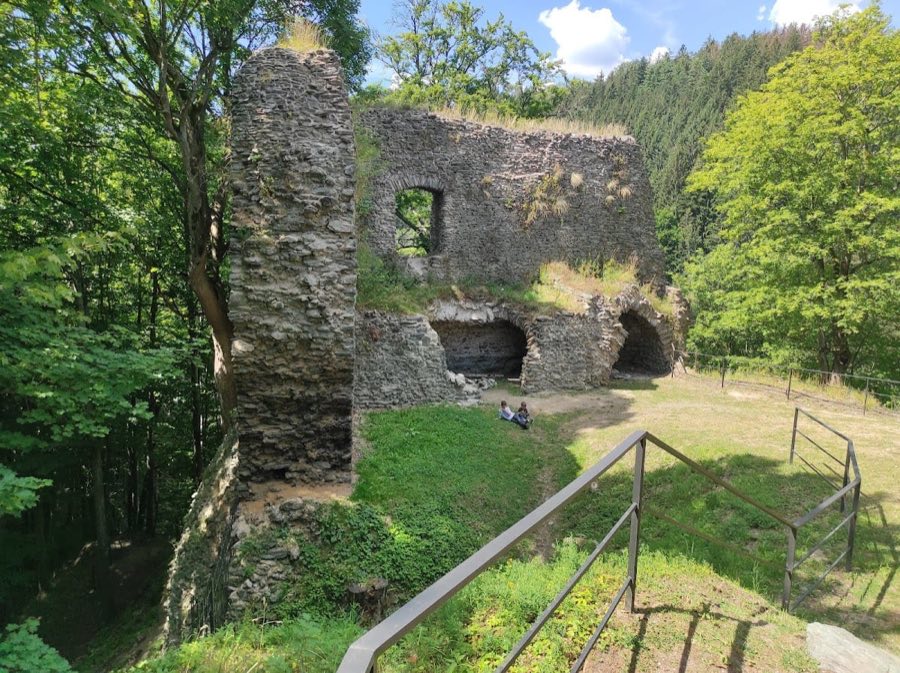
Hrad Návarov
Czechia
CastleRuin14th century
No. 49582
Castle · Czechia
No. 49582 · 50.674 N, 15.448 E
Quick summary
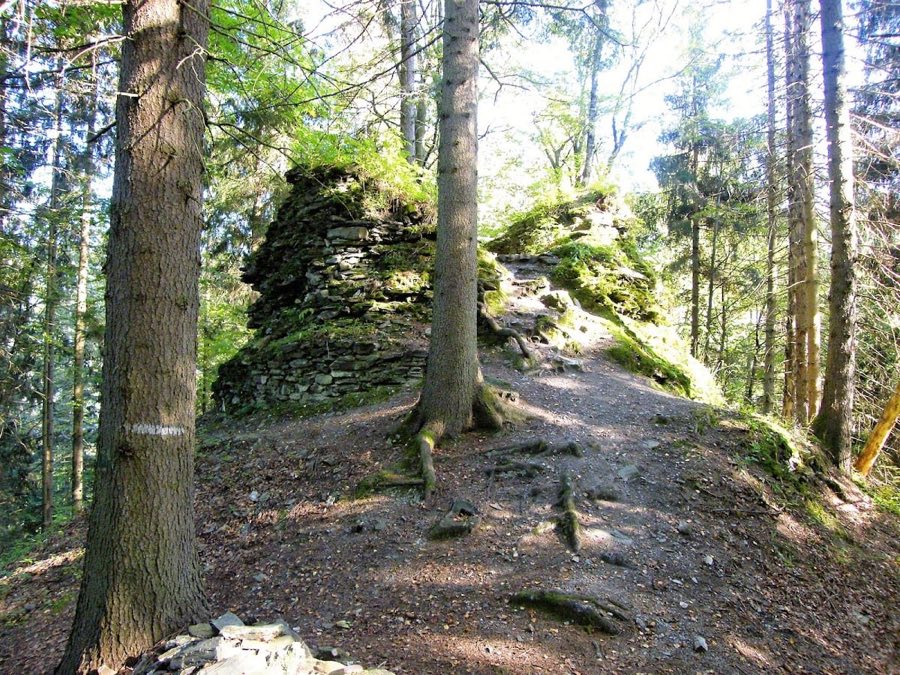
Nístějka Castle is a castle in Czechia with origins associated with the 14th century.
See all castles in CzechiaNístějka is a medieval castle ruin situated in the municipality of Vysoké nad Jizerou, Czechia. It was established by members of the Bohemian nobility during the Middle Ages, likely originating in the first half of the 14th century.
The earliest written mention of Nístějka dates from 1369, naming Heník of Valdštejn as the castle’s resident and probable founder. The stronghold was constructed primarily to control and protect the land route running through the Jizera valley. Through the late 14th and early 15th centuries, ownership of Nístějka passed among various branches of the Valdštejn family, including Hynek and Jindřich of Valdštejn. After 1407, the castle came into the possession of Jindřich of Vartenberk and later transferred to the lords of Jenštejn, with Václav and Mikuláš of Jenštejn as known owners.
The death of Mikuláš of Jenštejn in 1459 marks a turning point for the castle’s fate, as documentary records become scarce afterwards. Archaeological work conducted centuries later indicates that the castle suffered a significant fire in the latter half of the 15th century, which led to the collapse of all the palace floors. By 1492, Nístějka no longer appeared as an active fortress in historical texts; instead, references shift toward the associated estate, signaling that the castle had fallen into ruin. A source from 1519 clearly describes Nístějka as deserted. This evidence supports the conclusion that after the fire—possibly connected to the period around Mikuláš of Jenštejn’s sudden death—the castle was abandoned and ceased to function as a residence or stronghold.
Nístějka castle occupies a narrow rocky outcrop overlooking the meeting point of the Jizera River and Farský Creek. Its defensive position was enhanced by natural terrain and man-made barriers. The approach to the castle was protected by a neck ditch, a deep trench carved across the narrow land leading to the site, with a surviving piece of a front wall visible above it, demonstrating purposeful fortification.
At the highest point of the site stood a round bergfried, a tall defensive tower common in medieval castles, designed as the last refuge and lookout. Behind this tower, archaeological traces suggest the existence of a wooden structure, though the exact layout remains uncertain. Evidence includes minor changes to the landscape and marks carved into the rock beneath, hinting at timber construction attached to the stone fortifications.
Entry into the castle’s central area was restricted by a narrow passage carved over exposed rock and a secondary ditch. This passage was partially sealed off by a transverse wall segment, emphasizing controlled access to the inner defenses. The courtyard within was compact and irregular in shape, containing the sunken entrance to the palace’s ground floor. Near this entrance, there is a distinctive bottle-shaped cavity cut into the rock, believed to have served as a cistern for water storage or possibly a pit for storing grain.
The main residential building was a two-roomed stone palace with a rectangular footprint, supported internally by two pillars. Its interior featured a flat ceiling and was designed as a single large room on the upper floors, which likely served various domestic and administrative functions. Heating was provided by tiled stoves, fragments of which were discovered during excavations. Decorative ceramic tiles with ornamental designs found among the ruins suggest both practical use and attention to interior detail.
Small iron objects, such as nails and staples, were also unearthed on the site, indicating routine maintenance or construction activities. Before its destruction by fire, the palace probably rose two or three stories high, though all floors collapsed as a result of the blaze detected by archaeological investigations. The remains observed today are primarily foundation walls, rock-cut features, and scattered masonry, preserved within the natural monument area that protects the site.
No. 33561
No. 23518
No. 32350

No. 58100
Comments
Comments for Nístějka Castle will require a verified account before posting.
We'll send a verification link before your first comment is published.