No. 78435
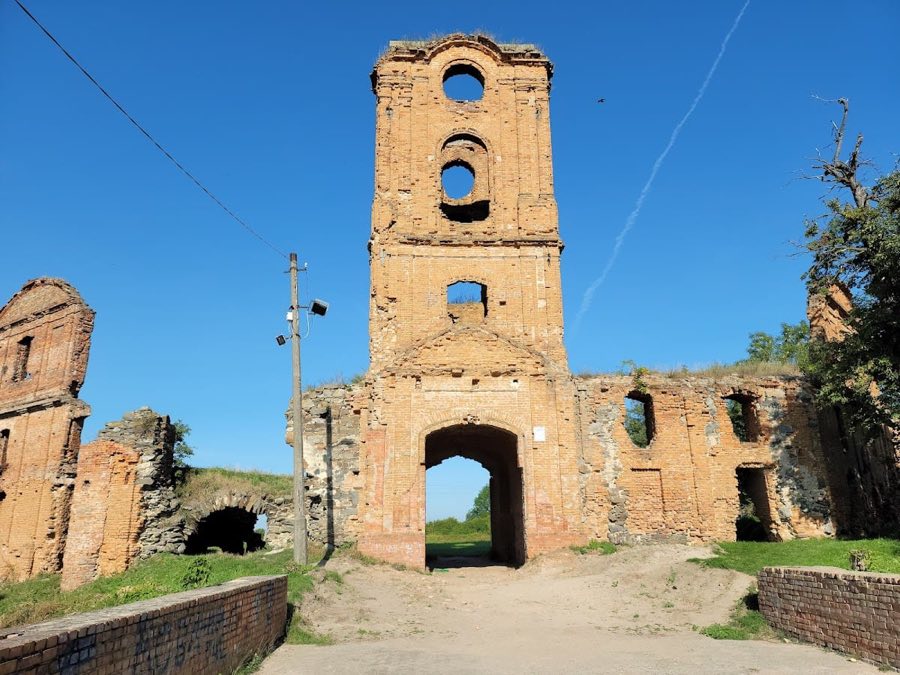
Korets Castle
Ukraine
CastleRuin14th century
No. 15407
Castle · Ukraine
No. 15407 · 50.831 N, 27.051 E
Quick summary
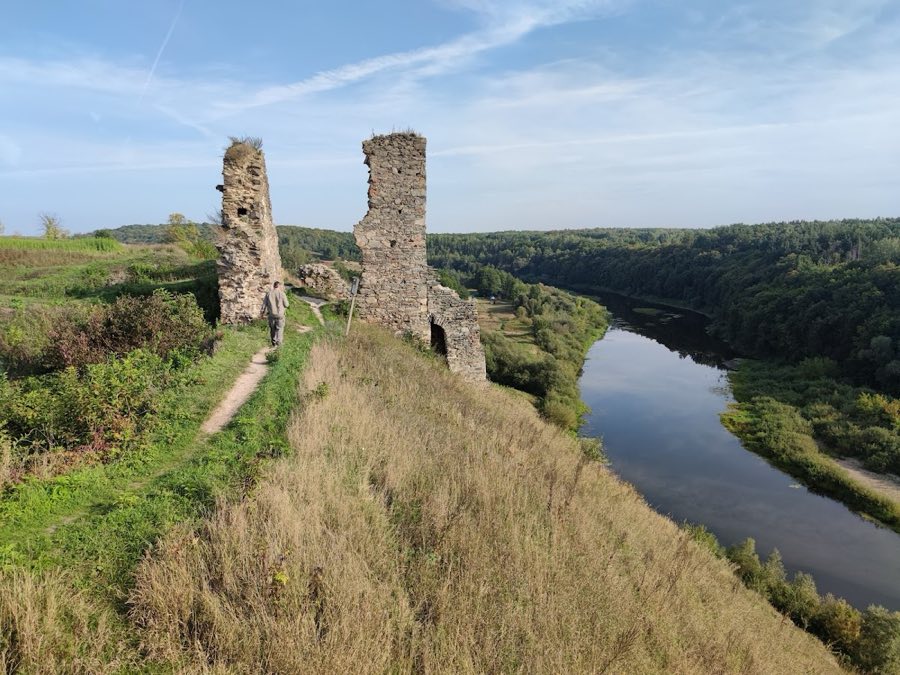
Hubkiv (Gubkiv) Castle is a castle in Ukraine with origins associated with the 16th century.
See all castles in UkraineGubkiv Castle stands in the municipality of Hubkiv, Ukraine.
Archaeological work in 1974 uncovered traces of an early wooden fortification on the site that dates to the tenth through thirteenth centuries, and that settlement and timber defenses were destroyed during the Mongol–Tatar invasion. A stone stronghold was established on the hill in the fifteenth century. The place is first recorded in 1504, when contemporary documents state that the settlement, the castle, and the nearby church had been completely destroyed by Tatars.
From the early sixteenth century the castle belonged to the Siemaszko (Semashko) family. The earliest named Siemaszko was Bohdan Mykhailovych, who died in 1545. Alexander Siemaszko is recorded fighting at Dubno in 1537 and later converting to Catholicism with support from the Jesuit Herbst. In 1596 formal acts concerning the area include testimony that a unit of Hryhoriy Loboda’s forces captured the castle during the Nalivayko uprising.
Ownership passed in the seventeenth century to the Daniłowicz family and later to the Cetner family; during that period the settlement administered the castle through a burgomaster and local officials known as lavniki. A Polish account records a Renaissance castle erected in 1613 by Konstanty Siemaszko, and it lists subsequent owners as Stanisław Daniłowicz in 1629, Jan Cetner in 1676, and later Teofila, wife of Józef Felicjan Potocki. In 1704 troops of Peter I of Russia passed through the locality and pillaged the town and its fortifications, and in 1708 Swedish forces carried out a final destruction of the castle. The Potocki family did not rebuild the fortress after the 1708 devastation. The hill that supports the ruins is part of the Nadsluchansky Regional Landscape Park.
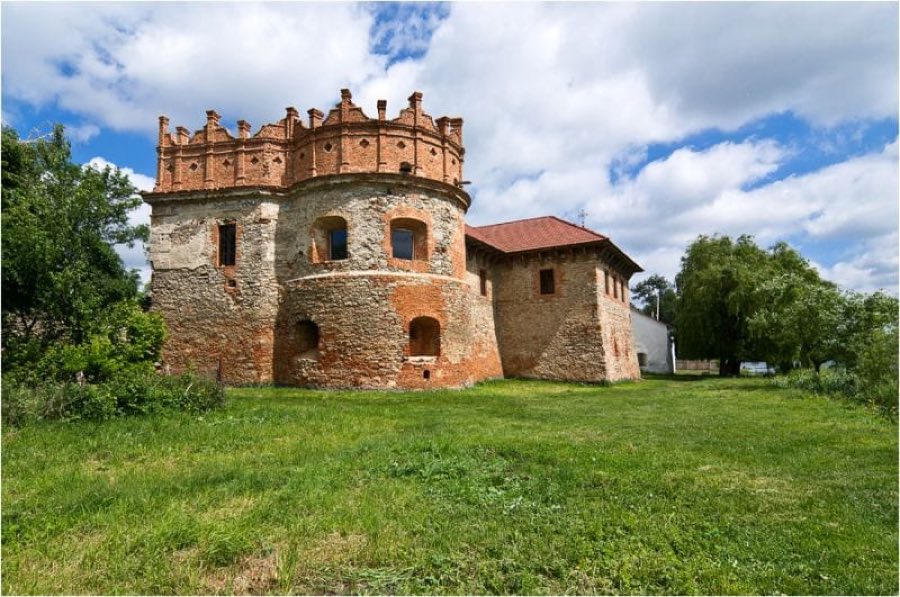
The castle occupies a trapezoidal plan on a steep river-facing hill and was constructed principally of stone. The defensive layout included four corner towers fitted with firing openings, an entrance gate approached by a drawbridge, and a surrounding curtain of walls. Within the enclosed courtyard there were domestic and economic buildings clustered around a deep well whose shaft was faced with stone. Today sections of the curtain and a number of towers survive in ruined condition.
Beneath the courtyard the castle contained vaulted cellars and a prison space built in masonry. Polish descriptions record solid stone cellars extending under the buildings and possibly forming a passage that led toward the river. The surviving substructure is noted for its vaulted forms and for the way chambers continue beneath the surface plan.
The site stands on a prominent Castle Hill above the Sluch River, with the slope rising roughly thirty metres above the water, a relative height recorded as more than thirty-two metres and an absolute elevation near two hundred metres. Nineteenth-century observations mention fragments of a bastion, parts of the circuit wall showing traces of embrasures, and remnants of residential chambers. The castle well has been reported as filled, and at present only portions of walls and several towers remain in situ on the hill.
No. 78435
No. 96492
No. 91671
No. 14577
Comments
Comments for Hubkiv (Gubkiv) Castle will require a verified account before posting.
We'll send a verification link before your first comment is published.