No. 89855
Klamorna
Czechia
CastleRuin3rd century
No. 43904 · 50.522 N, 15.065 E
Quick summary
Hynšta is a castle in Czechia with origins associated with the 13th century.
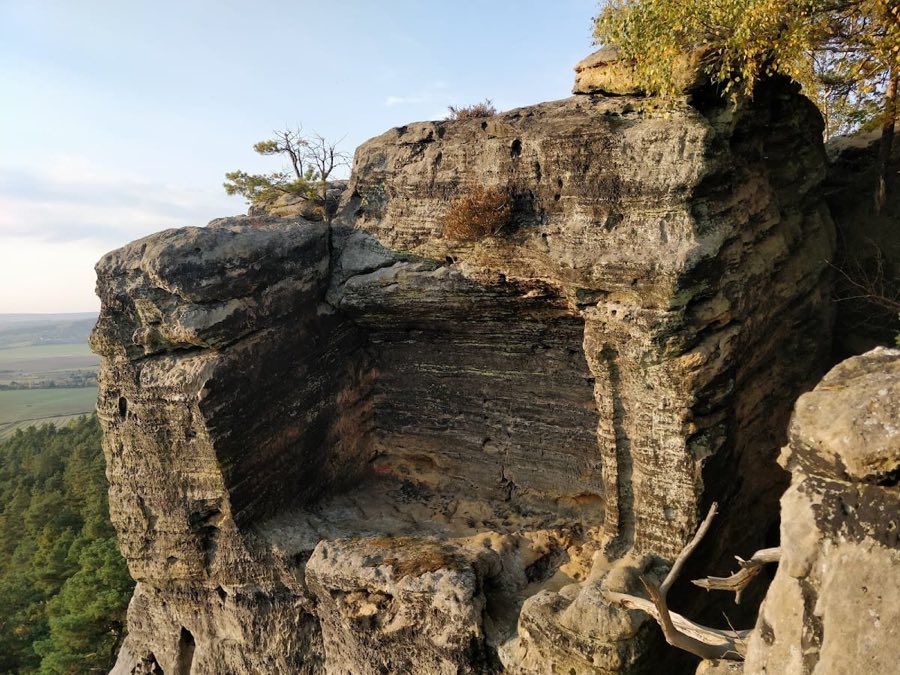
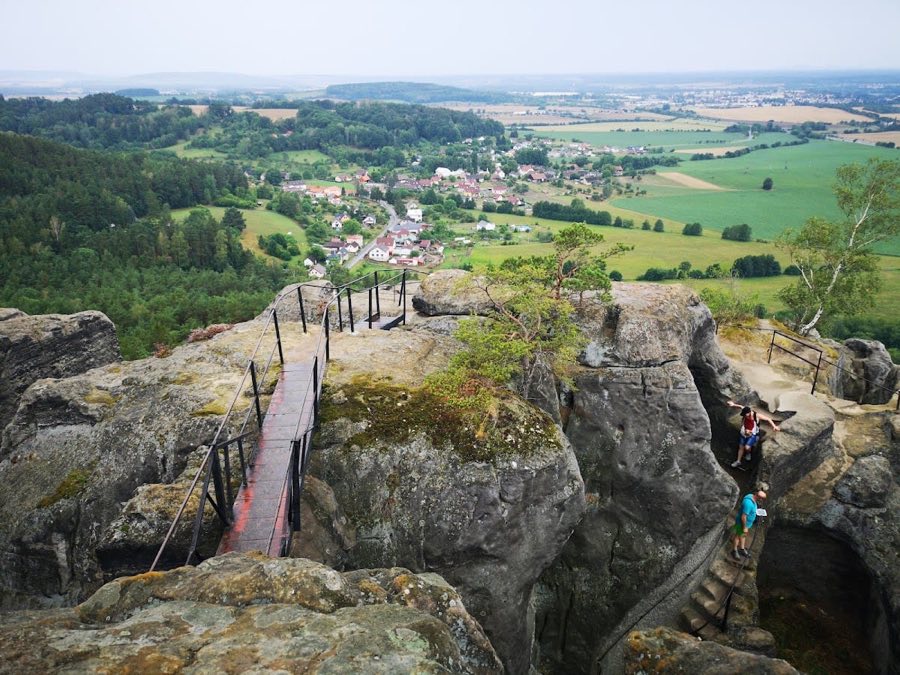
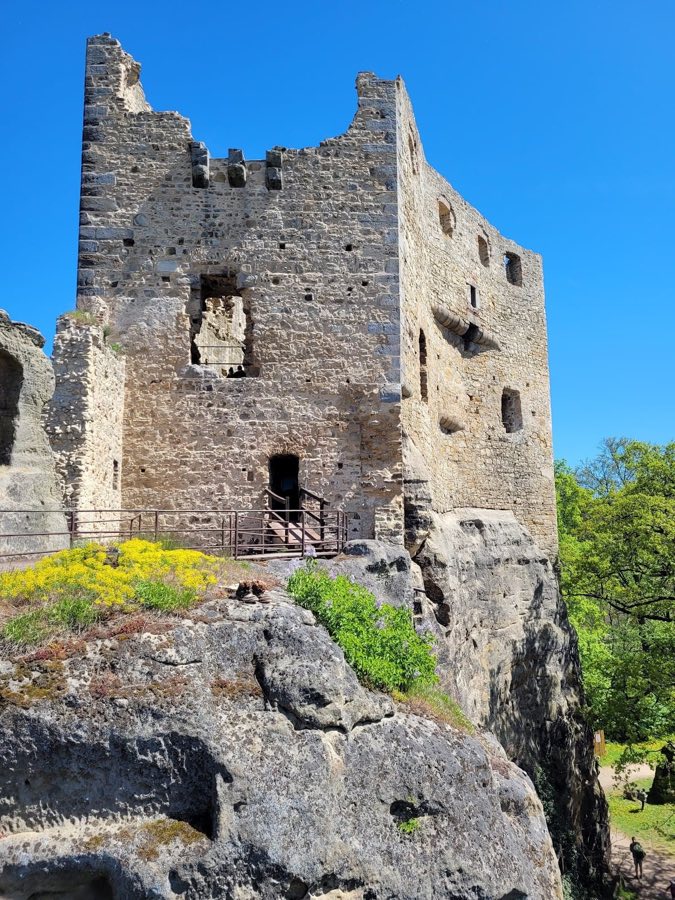
See all castles in CzechiaHynšta is a rock castle situated near the village of Branžež in Czechia. It was constructed during the 13th century, although the identity of its original builders remains unknown. No historical documents mention the castle under any name, and its original designation has not been preserved in written records.
Throughout its history, the site served as a small fortified refuge built atop a distinctive sandstone formation. In later centuries, local tradition connected Hynšta with the Czech Brethren, a Protestant group that emerged in the wake of the Hussite movement. According to this tradition, the castle’s rock chambers were adapted into a prayer room during the 17th century, possibly providing a clandestine place of worship. Legend also holds that a notable inscription bearing the name of J. A. Komenský, a prominent Czech educator and theologian from the same period, appears on the eastern rock face. However, the historical validity of this inscription and the use of the site by the Czech Brethren are not confirmed by archaeological or documentary evidence.
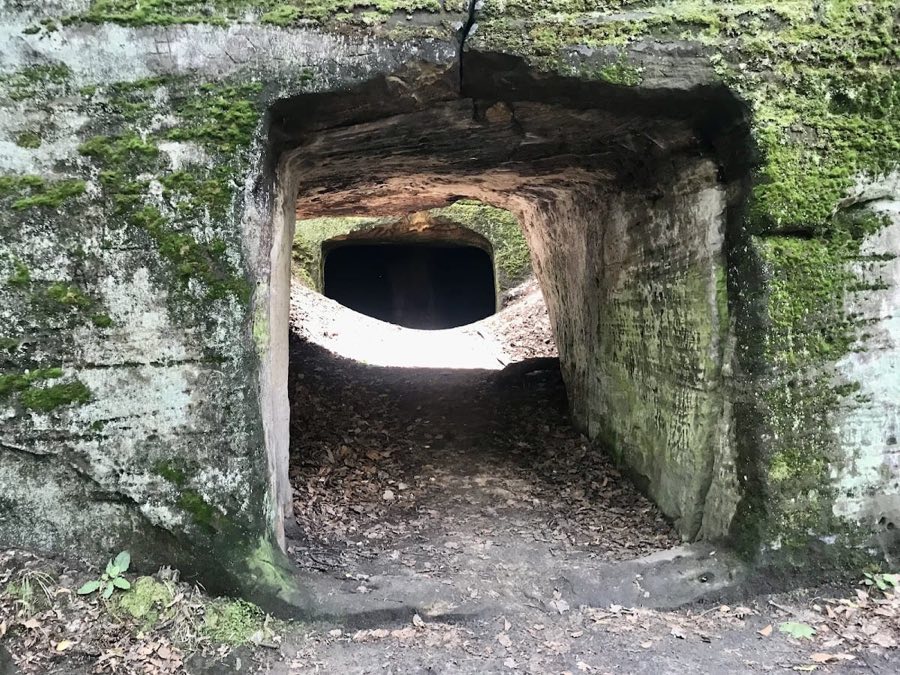
Hynšta consists primarily of a small core formed from a single block of sandstone rising among the surrounding rock formations. The castle did not feature stone walls or external fortifications; instead, a wide outer courtyard was enclosed separately, segmented from the main rock block by a moat. This defensive ditch created a physical boundary between the core and the outer bailey.
At the base of the central rock, an underground water cistern was constructed, designed to securely collect and store water. This feature suggests an intentional effort to sustain inhabitants during periods of isolation or siege. The most striking surviving element within the main rock is a chamber known as a světnička, essentially a small room hewn directly into the stone. This space was enlarged in the 17th century, adapted into a chapel or prayer room. This modification reflects a shift in the site’s use from purely military to potentially religious functions, consistent with the oral traditions surrounding its later history. Today, these rock-cut remains are preserved as evidence of the castle’s unique structure and layered past.
No. 89855
No. 49950
No. 35240
No. 70101
Comments
Comments for Hynšta will require a verified account before posting.
We'll send a verification link before your first comment is published.