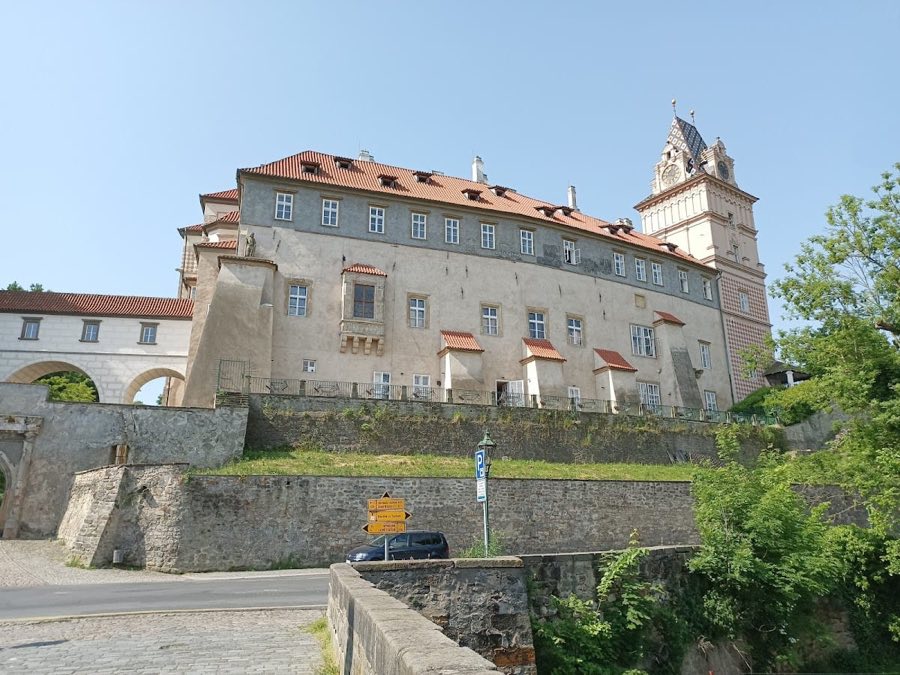
No. 60641
Brandýs nad Labem Castle
Czechia
PalaceRestored15th century
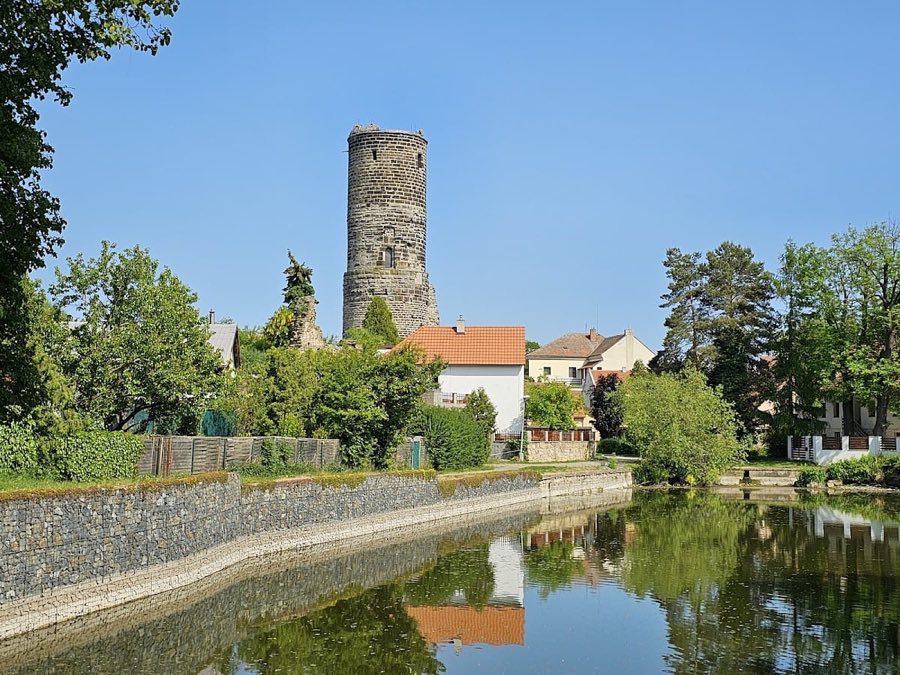
No. 69825
Castle · Czechia
No. 69825 · 50.154 N, 14.611 E
Quick summary
Jenštejn Castle is a castle in Czechia with origins associated with the 14th century.
See all castles in CzechiaJenštejn Castle is located in the municipality of Jenštejn in the Czech Republic. It was constructed by the medieval Bohemian civilization during the early 14th century.
The castle’s origins trace back to the 1330s when Jenc of Janovice, a senior court official, founded the fortress. Its name, originally “Jenc’s stone” (Jencenstein), derived directly from its founder’s name. This association extended to the local noble family, which adopted the Jenštejn name along with a coat of arms featuring two vulture heads.
The earliest written reference to the castle dates to 1341, although some records suggest 1368. At that time, royal chamber notary Pavel of Vlašim acquired the property. Pavel was the brother of Jan Očko of Vlašim, who served as the Archbishop of Prague. The castle passed to Pavel’s son, Jan of Jenštejn, who became Archbishop in 1380. Jan undertook significant renovations to upgrade the castle’s appearance and stature. His work incorporated stylistic features typical of royal residences, such as carefully shaped stone blocks known as Štauf bossage and profiled doorways, reflecting his high ecclesiastical rank.
Following disagreements with King Wenceslaus IV, tensions culminated in 1390 when the castle was attacked and seized. Control was subsequently transferred to Sigismund Huller, marking the beginning of a period of frequent changes in ownership throughout the 15th and 16th centuries. Among those who possessed Jenštejn were Oldřich of Černice of Kácov, Aleš Škopek of Dubé, and Jan Dobřichovský of Dobřichov. By 1583, the castle was no longer inhabited, and in 1587 it became part of the Brandýs estate.
By the early 17th century, records describe the structure as old and dilapidated. The Thirty Years’ War brought further damage when the Swedish army set the castle ablaze in 1640. For several centuries after, the site remained in ruins, with some impoverished rural families living within the surviving tower from the late 1700s until the early 1900s. This occupation led to internal deterioration that was later addressed during restoration efforts.
Jenštejn Castle gained official cultural protection beginning in the mid-20th century, either 1958 or 1966. Following extensive reconstruction, it was opened to the public in 1977. Since then, the castle has housed exhibitions managed by the Regional Museum of Prague-East, focusing on medieval castle life. A significant preservation project launched in 2016, funded by the Ministry of Culture, included erecting wooden scaffolding around the tower to protect the structure and support ongoing repairs. As of 2019, restoration and stabilization work continues to ensure the castle’s longevity.
Jenštejn Castle was originally built as a small water castle positioned on a low sandstone outcrop within a valley. This strategic placement was enhanced by a deep moat carved into the rock, which could be flooded by nearby lakes fed from the Vinoř Creek. Today, the moat area has been filled in and
No. 60641
No. 74478
No. 67889
No. 71414
Comments
Comments for Jenštejn Castle will require a verified account before posting.
We'll send a verification link before your first comment is published.