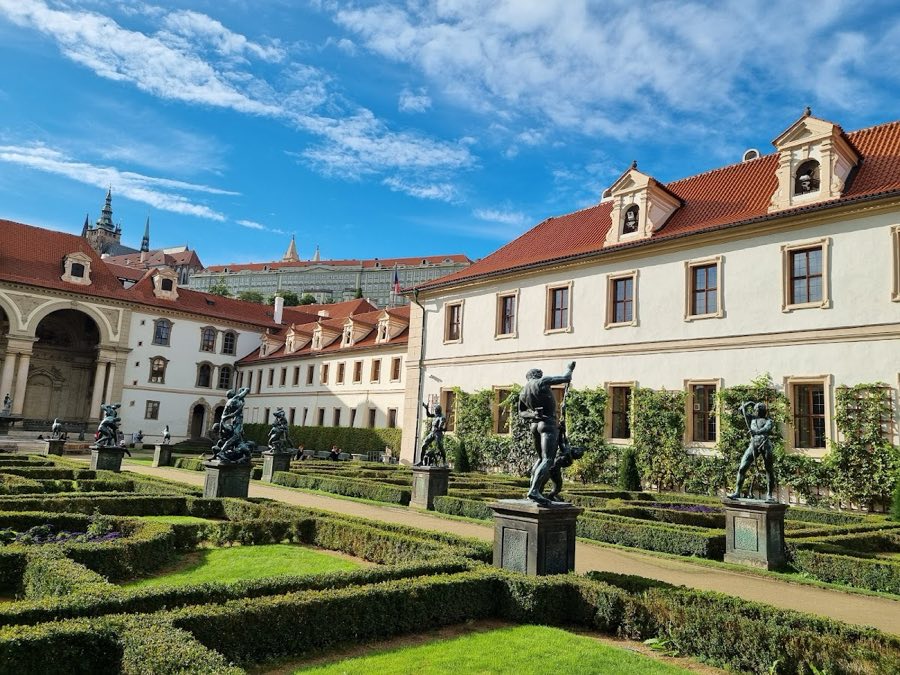
No. 56491
Wallenstein Palace
Czechia
PalaceRestoredFor events17th century
No. 74478
Palace · Czechia
No. 74478 · 50.116 N, 14.413 E
Quick summary
Troja Palace is a palace in Czechia with origins associated with the 17th century.
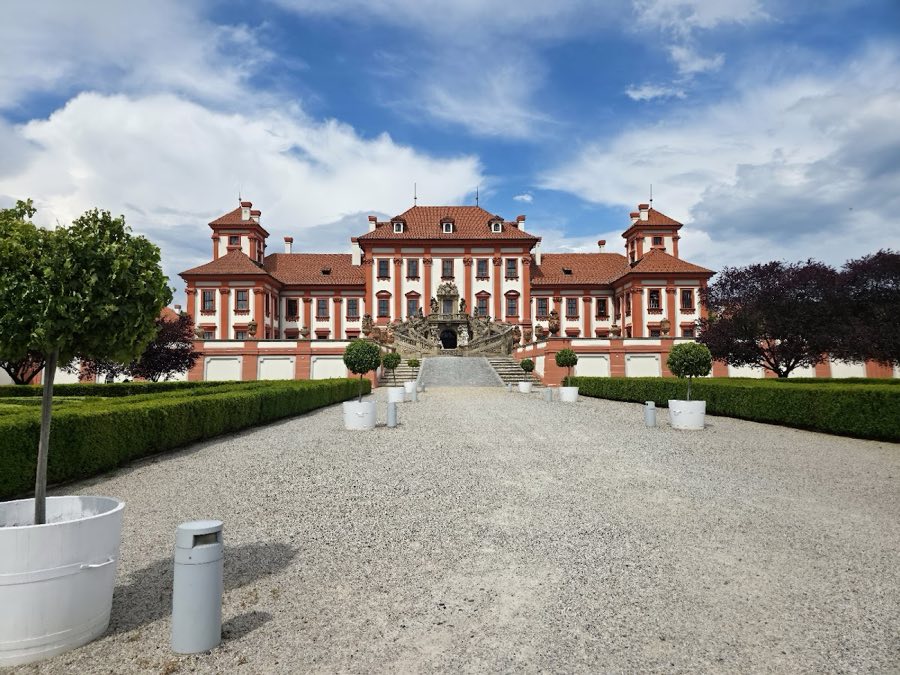
See all castles in CzechiaTroja Palace in Prague, Czechia, is a late 17th‑century Baroque summer residence built for the Sternberg counts, members of the Bohemian nobility. Erected between 1679 and 1691, the palace became notable for its ambitious program of fresco and sculptural decoration that celebrates dynastic and imperial themes, and for the extensive formal gardens laid out beside the Vltava River.
Construction began in the last quarter of the 1600s under the commission of the Sternberg family. Work on the house and its grounds continued through the 1680s into the early 1690s, when major painted cycles and sculptural ensembles were installed to complete the interior and the terraces. The main reception room received its large ceiling and wall paintings around 1690 that proclaim the house’s political and dynastic links, and the garden terraces were set out in a formal French manner at the same time.
Decoration and completion of secondary interiors and the private chapel took place in the same period, with a series of painters and sculptors finishing oil canvases, mural painting and sculptural figures for stairways and terraces. A sequence of terracotta garden vases and other architectural ornaments was added to the terrace and garden walls, while the stepped connection between the palace and lower parterres was given dramatic sculptural treatment.
In 1922 the state acquired the palace and at that moment the building was in poor condition. A conservation and repair campaign was started in the 1970s. Ownership later passed to the city of Prague, and the restored palace has since been adapted to house museum and gallery displays. Nineteenth‑century Czech paintings were installed in several rooms, and part of the interior has been arranged as a wine museum while other rooms retain the historic frescoes and decorative schemes.
The palace sits on the Vltava’s bank and faces a terraced French garden that rises behind the main building. The ensemble combines a central apartment block with lower garden terraces and flanking wings, and the landscape axis of the garden is aligned toward the towers of St. Vitus Cathedral on Prague Castle. The garden complex includes a terraced slope, an adjacent orchard, an orangery, a planted labyrinth, multiple fountains and statues, and a vineyard known as Sainte‑Claire. The terrace area measures about 3.35 hectares, the orchard about 4.32 hectares, and the vineyard about 3.5 hectares.
The palace exterior displays a contrasting red-on-white painting scheme that articulates structural elements against white wall surfaces. The roofline is punctuated by two towers on the lateral wings that rise slightly above the central roof. A broad, two‑flight stone staircase links the main building with the terraced gardens; the stair is populated with sculptural groups representing a combat between gods and giants executed for this setting.
Terrace ornament includes a notable series of terracotta vases modelled with festoons, heraldic motifs and imperial portrait busts, and matching vases also appear along parts of the garden walls. These terracotta pieces form a decorative belt along the principal terrace and the retaining walls that frame the lower parterres.
Inside, the principal reception chamber is entirely covered with illusionistic Baroque painting that stages an apotheosis of the ruling dynasty. The ceiling depicts the celestial realm with heavenly figures and protectors of the lands, while the walls show the terrestrial world, curved surfaces filled with angels and putti, and a long grisaille band that presents sculptural likenesses of rulers. Narrative scenes include a triumphal depiction of Emperor Leopold I’s victory over the Ottoman forces and a painted illusion of a falling Ottoman figure. Additional rooms carry oil paintings and murals by other hands from the same period, and the chapel ceiling and related canvases display a dramatic, Caravaggesque manner that celebrates the palace patron and his wife.
The complex survived into the 20th century in poor condition, was acquired by the state in 1922, and underwent restoration work beginning in the 1970s. The building now stands restored, its key frescoes, sculptures and terracotta terrace ornaments preserved in situ, while interior spaces serve as exhibition rooms for 19th‑century Czech paintings and for a wine museum in several halls.
No. 56491
No. 76144
No. 19529
No. 98064
Comments
Comments for Troja Palace will require a verified account before posting.
We'll send a verification link before your first comment is published.