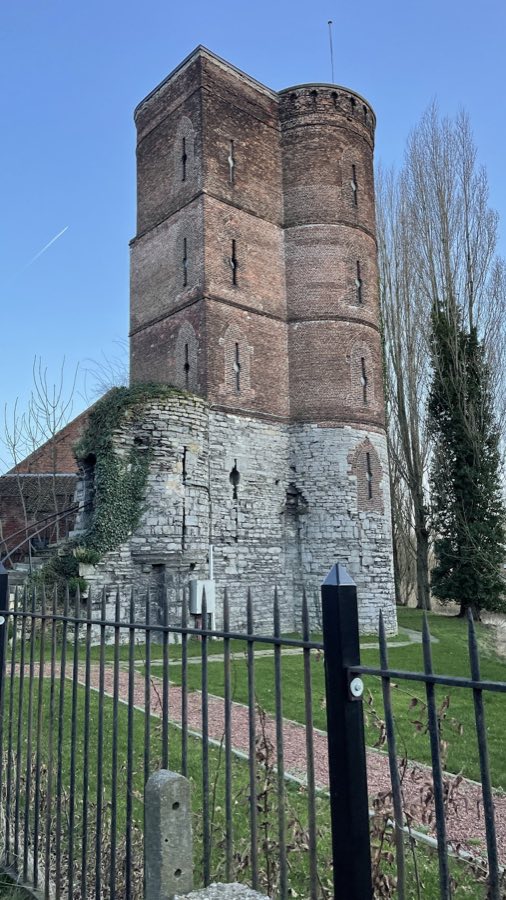
No. 58598
Graventoren
Belgium
CastleRuin12th century
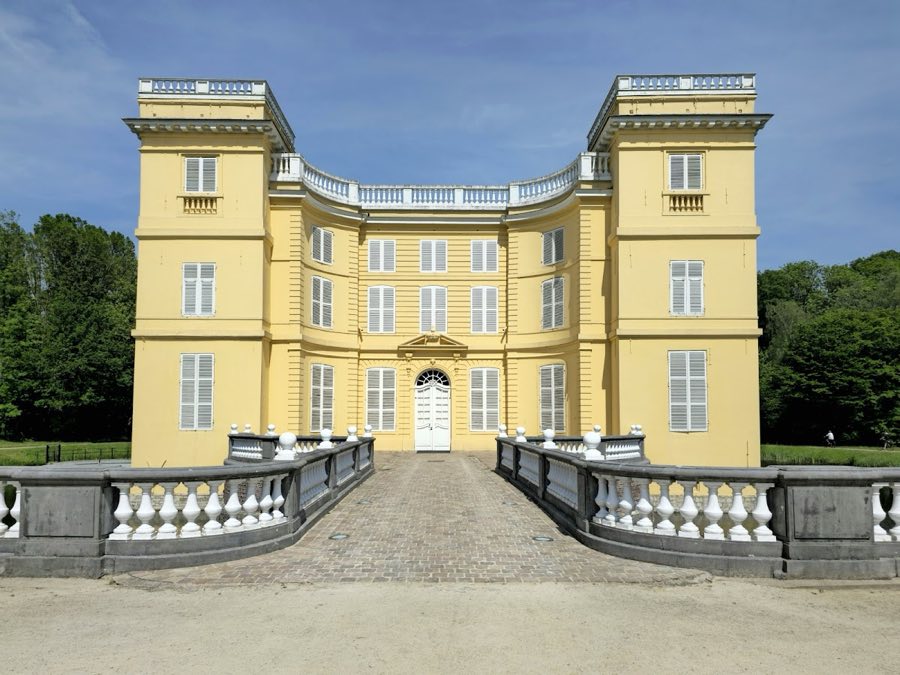
No. 77965
Château · Belgium
No. 77965 · 51.104 N, 4.271 E
For events
Kasteel d'Ursel is marked as a château or castle venue lead. Capacity, indoor/outdoor spaces, catering rules, and accommodation options are published only after public verification.
Event types: Private events, Cultural gatherings, Filming and photography
Quick summary
Kasteel d'Ursel is a château in Belgium with origins associated with the 18th century.
See all castles in BelgiumKasteel d’Ursel in Bornem, Belgium, is a country château whose present appearance dates chiefly to a mid-18th-century neoclassical remodelling. From the early 1600s the estate functioned as the summer residence of the family that became the Dukes of Ursel, and it remained their seasonal house for more than three centuries while the family kept its principal urban home in Brussels. The building and grounds were therefore an enduring centre of ducal social life and hospitality across several generations.
The site’s documentary trail begins in the 1500s with Diederik van Werve (1519–1598) recorded as its earliest known resident. In 1608 his descendants sold the property to Conrad III Schetz, who reworked the estate into a pleasure house. During the 17th century the property settled into use as the family’s rural retreat, occupying that role steadily as the household evolved into the ducal line.
In 1761–1765 Charles II, Duke of Ursel commissioned a comprehensive transformation that gave the château its neoclassical character. The remodelling established a formally balanced main frontage and an interior and exterior layout aligned with 18th-century tastes for symmetry and restrained classicism. After this work the house became particularly associated with large social entertainments: in the 18th century it hosted banquets and balls and attracted visitors from across the region, and later guests included visiting sovereigns and princes in the 19th century.
Through the 20th century the estate’s role changed. A television drama was filmed on the grounds in 1965. In March 1972 the municipality of Hingene offered a purchase sum that the ducal family accepted, and the château was largely unoccupied from about 1973. After local government reorganisation in 1977 the property passed to the municipality of Bornem, while the ducal household retained its movable inventory and transferred family archives to the National Archives in Brussels. The building received legal protection as a monument in July 1984, and festivals held on the grounds in the 1980s kept public attention on the site.
The Province of Antwerp bought the estate in 1994 and carried out series of interior and exterior restorations aimed at restoring the mid-18th-century appearance established under Charles II. A management director was appointed to renew links with the ducal family and to oversee cultural initiatives. A quarterly magazine devoted to the château began publication in 2005. In 2018 the former painting studio of Duchess Antonine De Mun, dated 14 January 1879, was comprehensively restored and given a new function as a holiday accommodation. In July 2022 the municipality sold the Casteleyn building, historically a coach house in 1804 and later a porter’s house in 1906, to the provincial authorities; during works the worn gates were replaced with new gates modelled on the 1804 design using an historic photograph.
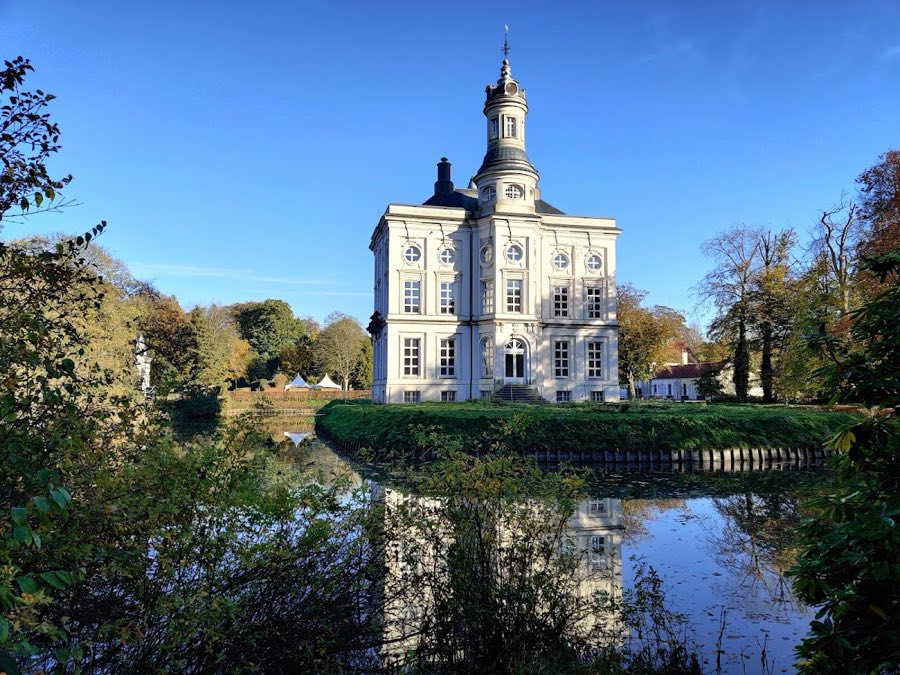
The château stands at the heart of a large landscaped domain. Its principal elevation reflects the mid-18th-century transformation into a neoclassical residence, with a carefully ordered front set around a clear central axis and formal balance typical of that period. Extensive restoration after acquisition by the provincial authorities returned many interior and external elements to their 18th-century configuration.
The grounds include gardens that began as a formal French layout and later developed into an English-style landscape with arboretum plantings. The park stretches down to the Scheldt River, where a riverside hunting pavilion known as De Notelaer occupies the riverbank. The estate supports a large park area and includes a youth accommodation centre; the park, the youth centre and the De Notelaer pavilion form linked components of the domain and are maintained as part of the overall property.
Several service buildings and later additions survive. The Casteleyn building, recorded as a coach house in 1804 and later used as a porter’s house in 1906, stands within the estate and underwent ownership transfer in 2022; its gates were replaced with a new pair modelled on an 1804 photograph. The former painting studio belonging to Duchess Antonine De Mun, carrying a date of 14 January 1879, was fully restored in 2018 and repurposed as short-term accommodation. These components, together with the restored château and the riverside pavilion, form the principal preserved elements of the Kasteel d’Ursel domain.
No. 58598
No. 10733
No. 14019
No. 69383
Comments
Comments for Kasteel d'Ursel will require a verified account before posting.
We'll send a verification link before your first comment is published.