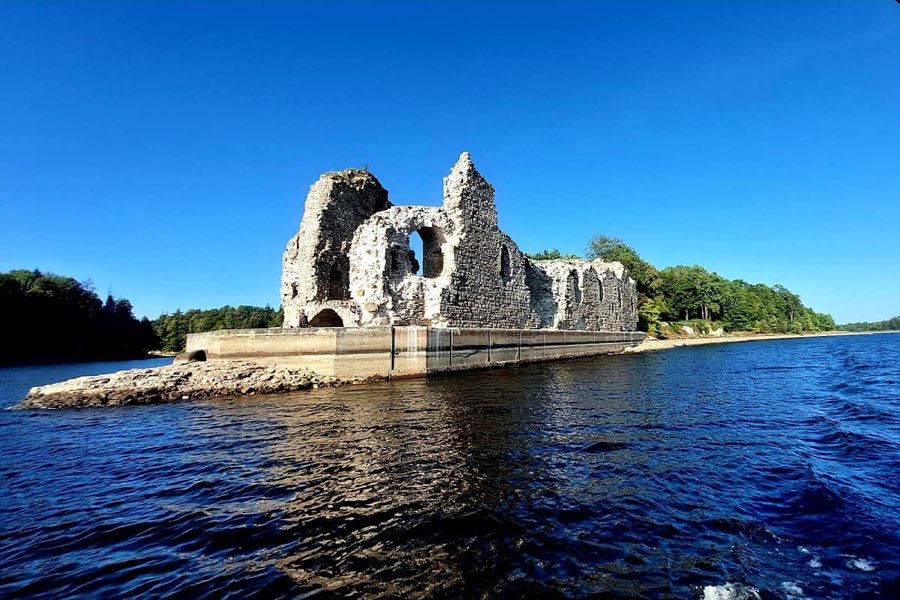
No. 10236
Koknese Castle
Latvia
CastleRuin17th century
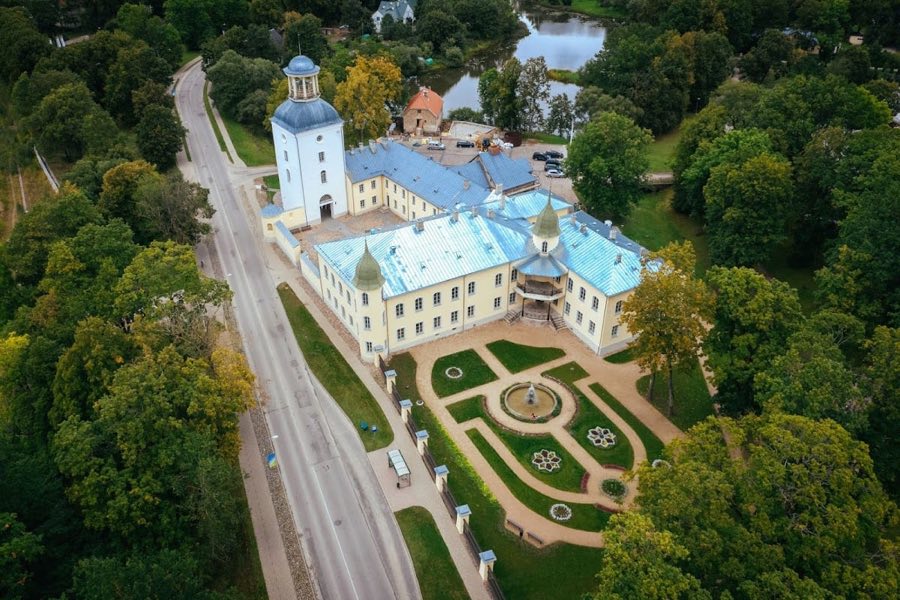
No. 93413
Castle · Latvia
No. 93413 · 56.511 N, 25.859 E
Quick summary
Krustpils Castle is a castle in Latvia with origins associated with the 13th century.
See all castles in LatviaKrustpils Castle is situated in Jēkabpils, Latvia, and was originally constructed by the Riga Archbishopric during the 13th century. Its beginnings date back to a period between 1231 and 1297, likely under the leadership of Archbishop Nicolaus von Nauen. Although the earliest written record mentioning the castle is from 1318, it served as a bishop’s stronghold guarding important trade routes and marked the eastern boundary of the archbishopric along the Daugava River.
During the Middle Ages, the castle’s strategic position led to frequent conflicts, especially between the Riga Archbishopric and the Livonian Order, a military and religious brotherhood in the region. Control over Krustpils changed several times. The Livonian Order occupied it in the years 1297, 1359, the decade from 1416 to 1426, and again in 1479. In addition, the castle endured a Lithuanian raid in 1375 led by Prince Kęstutis. These military confrontations reflected the shifting power dynamics in Livonia during this era.
With the collapse of the Livonian Confederation in the mid-16th century, Krustpils Castle became part of the Polish–Lithuanian Commonwealth from 1561 until 1772. In 1585, King Stephen Báthory granted the castle and its surrounding estate to Nikolai von Korff, a high-ranking Polish-Lithuanian military commander. The von Korff family retained ownership and stewardship of Krustpils for more than three centuries, significantly influencing its development.
By the 1600s, Krustpils Castle had lost its role as a military fortress and was gradually transformed into a noble residence. This change led to renovations reflecting Baroque architectural styles, such as the installation of large windows, elegant mansard roofs, and decorative towers replacing some of the original defensive elements. Over the 18th and 19th centuries, the estate was expanded further with additional wings, small Baroque corner towers, and the introduction of modern conveniences like water supply systems and indoor toilets.
The castle’s history in the 20th century was marked by military use under various regimes. After Latvia regained independence in 1921, the Latvian Latgale artillery regiment was stationed at Krustpils. Later, during World War II, the castle served as an infirmary for the German army, while Soviet forces occupied it before and after the war, including air force units. Throughout the Soviet period, the castle gradually deteriorated until 1994, when it was transferred to the Jēkabpils History Museum. This transition initiated restoration efforts and archaeological investigations.
Notably, during the Russo-Turkish War of 1877–1878, Krustpils Castle held Turkish prisoners of war. Some of these prisoners eventually settled in the surrounding region, contributing to its local history.
Krustpils Castle is laid out as a quadrangular complex centered around a large inner courtyard. Three sides of this courtyard are lined with two-story buildings, while the fourth side features a prominent gate tower. The entire courtyard is enclosed by a sturdy stone wall. In the 19th century, this wall was altered to include large gates, adapting the space for agricultural and economic activities.
Among the castle’s medieval components, several key structures remain intact. The massive gate tower, originally designed for defense, stands as a testament to its fortress origins. Beneath parts of the complex are vaulted cellars featuring cross and barrel vaults — architectural terms describing different shapes of arched ceilings that supported the walls and roofs. Additional support came from wall buttresses, projecting structures that reinforced the thick stone walls. While the original defensive moat and outer fortifications have been removed over time, traces of their locations are still detectable around the site.
The main building within the southern wing houses an elongated hall with vaulted ceilings that partly survive within the current structure. Although a large square tower is a dominant feature today, it dates from the 18th century rather than the medieval period. During the 17th century, the castle’s appearance was altered to suit noble residences. Defensive walkways atop the walls were replaced by mansard roofs — roofs with two slopes, the lower steeper than the upper — and towers were crowned with Baroque-style lanterns and slender sheet metal spires.
In the 18th century, renovations integrated medieval walls into a manor house design while maintaining the characteristic enclosed courtyard typical of medieval castles. Small round corner towers with Baroque domes were added at this time, enhancing the decorative aesthetic. The 19th century saw practical transformations, such as converting the castle tower into a water tower and installing modern conveniences like a water supply network, flush toilets, and a telephone line established in 1902.
Inside, fragments of decorative wall paintings are preserved, including coats of arms belonging to the von Korff and von Rosen families. These heraldic symbols reflect the noble families who occupied and managed the castle.
Historically, the castle complex extended beyond the main buildings to include a large economic yard surrounded by up to 46 auxiliary structures. These outbuildings housed stables, servants’ quarters, a riding hall, an orangery (a greenhouse for citrus trees), and a brewery. Today, about 29 of these buildings survive, though often altered from their original form.
Recognized as one of Latvia’s best-preserved medieval stone castles, Krustpils retains much of its imposing mass and original layout despite centuries of rebuilding and adaptation. Its combination of medieval defensive features and later noble residence elements offers a layered architectural narrative visible in its surviving structures.
No. 10236
No. 12953

No. 16496
No. 44823
Comments
Comments for Krustpils Castle will require a verified account before posting.
We'll send a verification link before your first comment is published.