No. 43690
Templštejn Castle
Czechia
CastleRuin13th century
No. 69153
No. 69153 · 49.139 N, 16.240 E
Quick summary
Levnov Castle is a castle in Czechia with origins associated with the 13th century.
See all castles in CzechiaLevnov castle is a medieval fortress ruin situated in the municipality of Ketkovice, in the modern Czech Republic. Its origins trace back to medieval European civilization, with architectural and historical ties to the Knights Templar and several noble families.
The earliest known record of Levnov dates to 1358, when it was owned by Lev of Levnov, regarded as the principal founder who established the castle as a significant seat for the Lords of Löwenau. However, archaeological and historical evidence suggest the castle’s foundation likely occurred earlier, in the mid-13th century, built originally by the Knights Templar. This places Levnov within the wave of fortified sites constructed in Central Europe during the period, serving military and administrative purposes. Following the end of the Levnov family, ownership passed by the late 14th century to the Lords of Leipa, another prominent noble house.
During the late 14th and early 15th centuries, Levnov’s control changed amid regional conflict. The Moravian Margrave Wars, fought between rivals Jobst and Prokop, saw the castle taken into possession by various influential patrician families from Kuttenberg before ultimately reverting to the Lords of Leipa. This period reflects the castle’s strategic importance in local power struggles.
After the Hussite Wars, a series of religiously influenced conflicts throughout Bohemia and Moravia, Levnov fell into the hands of a mercenary group under Burghart Kienberger. These soldiers used the fortress as a base from which they carried out raids across the surrounding lands. The widespread disruptions prompted intervention by the Moravian Landtag (the regional assembly), which ordered Levnov to be redeemed by Bertold of Leipa. Following this action, to prevent further lawlessness, the castle was deliberately demolished in 1442.
Over time, knowledge of the castle’s original name faded, and its location was misidentified until 1970. That year, historian Vladimír Voldán uncovered archival evidence that confirmed the site as the long-lost Levnov, ending earlier confusion and restoring the castle’s historical identity. Today, Levnov is legally protected as a cultural monument by the Czech Republic.
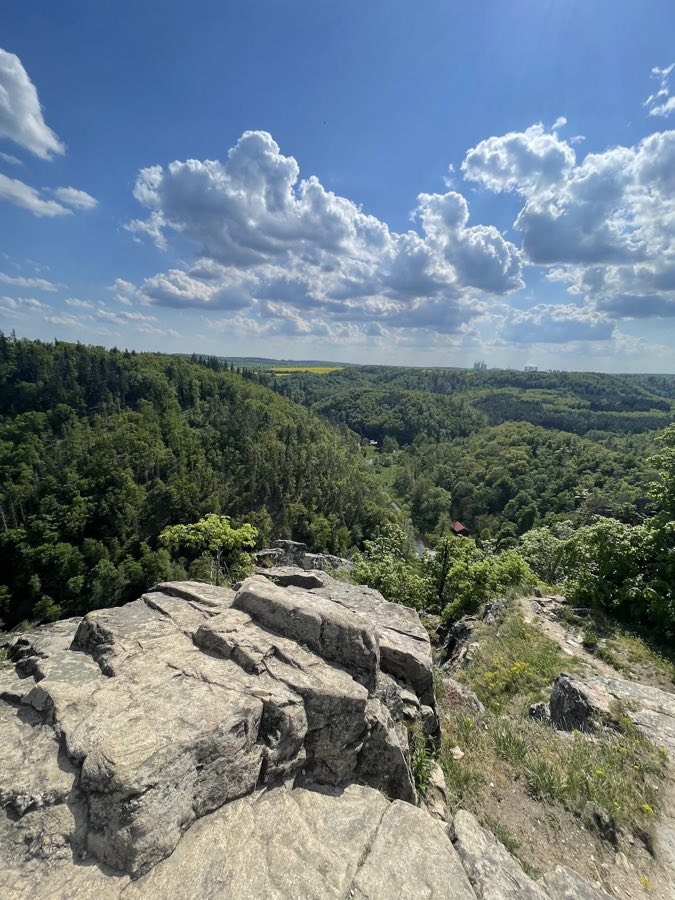
Levnov castle’s ruins occupy a rocky hill approximately 120 meters above the meeting point of the Oslava and Chvojnice rivers. Its siting took advantage of natural topography to create strong defensive conditions. Approached only from the northeast by a narrow land strip connecting to the nearby highlands, the castle relied on steep cliff faces and deep river valleys for most of its protection, limiting access from other directions.
The fortress included a moat and a gate tower guarding the entrance to an outer courtyard or bailey. This arrangement was typical of medieval fortifications, combining man-made and natural defenses. The main residential complex, known as the palas, stood on the western side of the castle grounds. This building was divided longitudinally into two parts, with substantial stone walls around 2.5 meters thick, indicating its role as a fortified living space for the lord and his household.
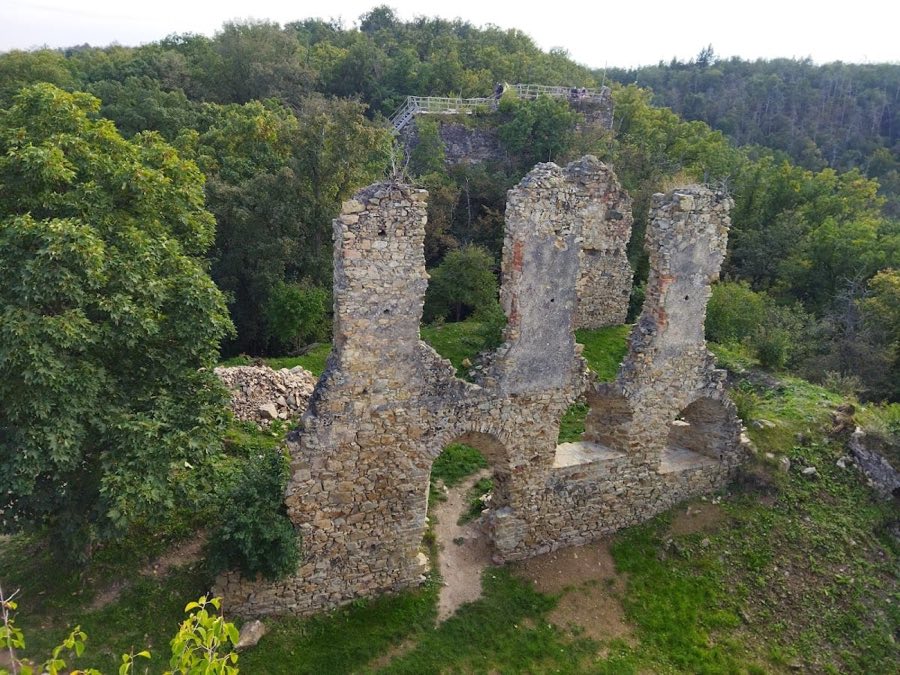
Today, what remains visible of Levnov are mainly the thick defensive walls and strengthened earthworks that once formed the castle’s ramparts. These structural elements give a sense of the fortress’s original scale while lacking finer architectural details or decorative features, which are not preserved or recorded.
The castle’s surroundings include historical elements like the Ketkovský mill situated beneath the hill in the valley and the ruins of another fortress, Kraví Hora, located across the Chvojnice river. The entire site lies within the protected Oslava and Chvojnice valley nature reserve, which encompasses both natural and cultural heritage features.
No inscriptions, mosaics, or other ornamental details have been documented at Levnov. Interpretations of the site rely principally on its defensive structures and the challenging landscape to understand its former strategic importance.
No. 43690
No. 10887
No. 99766
No. 31818
Comments
Comments for Levnov Castle will require a verified account before posting.
We'll send a verification link before your first comment is published.