No. 43690
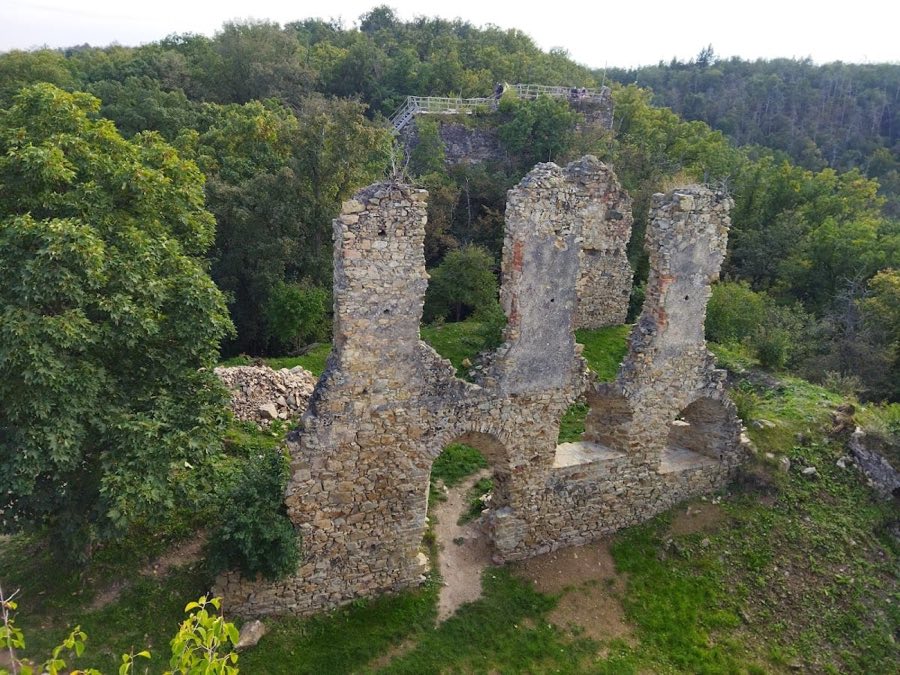
Templštejn Castle
Czechia
CastleRuin13th century
No. 10887
Château · Czechia
No. 10887 · 49.049 N, 16.307 E
Quick summary
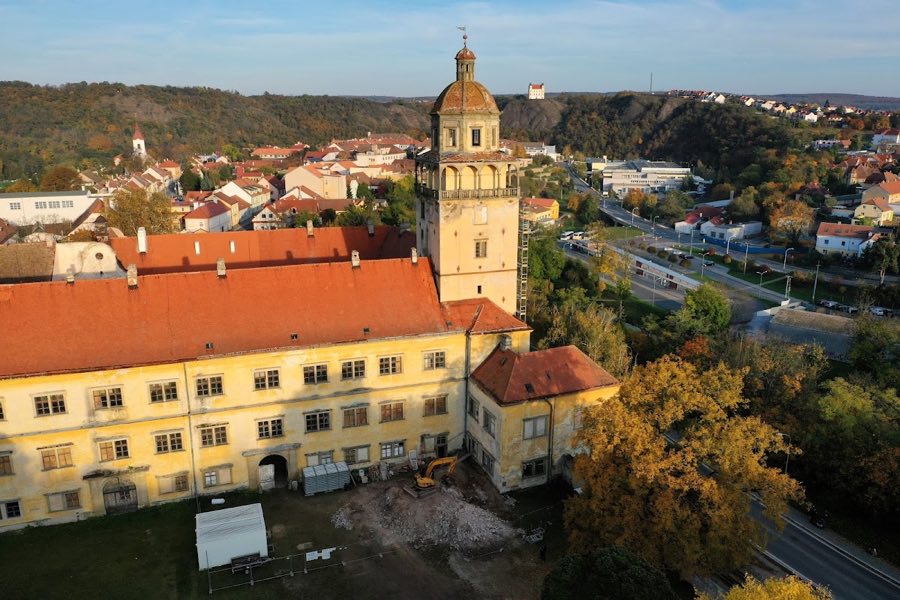
Moravský Krumlov Castle is a château in Czechia with origins associated with the 13th century.
See all castles in CzechiaMoravský Krumlov Castle in Moravský Krumlov, Czechia, is a medieval stronghold originally raised between 1238 and 1240 by the burgrave of Znojmo, Boček of Jaroslavice and Zbraslav, on behalf of King Wenceslaus I of the Kingdom of Bohemia. The site dates from the 13th century and was transformed into a Renaissance chateau in the 16th century, making it a long‑standing residence and administrative centre for successive regional lords and a focal point in local noble inheritance arrangements. Its long sequence of ownership and rebuilding connects it to major political shifts in Bohemia and Moravia.
The castle first appears in documentary record in 1277 under the place name rendered as Chrumenaw during a peace agreement signed in Vienna between King Ottokar II of Bohemia and King Rudolf I of the Romans. After Ottokar II’s death at the Battle on the Marchfeld, Boček’s son Gerhard of Zbraslav and Obřany took control of the castle and town; King Wenceslaus II confirmed the property to him, and Gerhard is named as owner in 1289. When the line of the Lords of Obřany ended, the stronghold returned to the territorial lord and, after 1312, Margrave John granted it to his marshal, Heinrich of Leipa. The lordship changed hands again in 1368 when Heinrich III of Leipa sold it, and it later returned to the Leipa family in 1434.
In the early modern period the site was converted from a medieval fortress into a Renaissance residence. Work to adapt the building began after 1513 and intensified in the mid‑1500s; tree‑ring dating of structural timbers places part of the west wing to 1562, and a portal on the eastern forecourt bears the year 1593, which likely marks the end of major rebuilding and the completion of new stables. The physician Paracelsus was summoned in 1537 to treat a member of the Leipa family, found the condition worse than expected, and withdrew from care. Major campaigns of construction and the insertion of an arcaded court during the sixteenth century gave the complex its characteristic Renaissance appearance.
The castle’s possessions became entangled with the wider political upheavals of the seventeenth century. After the Battle of White Mountain and its aftermath, the goods of Berthold Bohuslaw (Bohubud) of Leipa were seized in 1621. Gundaker of Liechtenstein purchased the lordship in 1624 and in 1633 his holdings, including Krummau and Ostroh, were raised to a princely status with residence in the town called Liechtenstein (Krummau), a designation that lapsed by 1647 and was revived later as the family acquired other territories. In 1634 Gundaker created a family fideicommiss (an entailed estate kept intact for inheritance), the so‑called Smaller Majorat; this and related majorats passed through Liechtenstein hands and were reshaped by exchanges and inheritances in the eighteenth century, including a swap of lordships in 1751 and continued succession within the Karl line after 1771. By 1835 the primogeniture estate of Moravský Krumlov, together with its towns and thirty‑five villages, supported about 22,500 inhabitants.
The Liechtenstein male line holding the property ended with the death of Rudolf von Liechtenstein in 1908, and the castle passed to Ferdinand Rudolf Kinsky of Wchinitz and Tettau, whose son Rudolf Anton succeeded in 1919. After the Second World War, the property of Rudolf Anton Kinsky was confiscated under the Beneš Decrees because he had actively supported the 1938 annexation of Moravský Krumlov to the Greater German Reich. In the later twentieth century the building served as offices and was used by the Czechoslovak Army. The castle changed hands in 1992 when it was sold for a symbolic one crown to a private company, and then at auction in 2004 it was acquired by Incheba Bratislava. Declared run down and placed on a register of endangered monuments, it was offered again in 2016 and purchased by the town of Moravský Krumlov. From 1963 until 2012 the Knights’ Hall housed the Alfons Maria Mucha painting gallery, presenting twenty panels of The Slav Epic, a monumental cycle in which half the paintings focus on Bohemian history.
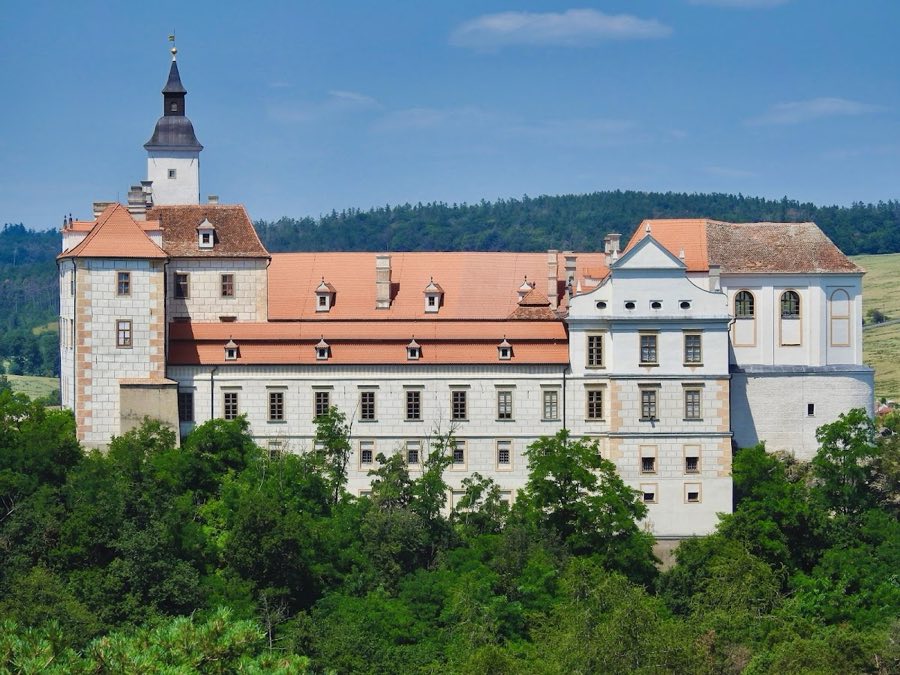
The castle occupies the narrowest neck of a meander formed by the Rokytná River, which flows around the town, and sits within a park of about twelve hectares. It presents the arrangement of a Renaissance chateau centered on a three‑sided arcaded court. An arcade (a covered walkway with a row of arches) frames that courtyard on three sides, and the arcade pillars carry relief ornament in an Italianate vocabulary, the capitals following Tuscan, Ionic and Corinthian orders (classical column styles). These arcade details are visible as late Renaissance decorative work surviving in the courtyard.
Parts of the west wing retain timber‑framed construction whose wooden members have been dated by tree‑ring analysis to 1562, showing the use of large structural beams typical of mid‑sixteenth‑century rebuilding. The eastern forecourt contains stables whose portal bears the year 1593, indicating the completion of service buildings at the close of the conversion to a residence. The stables and the west wing are integrally linked to the Renaissance reworking, and both features show the reuse and adaptation of the older medieval fabric for domestic and service functions.
Stonework and arcade sculpture display Italianate relief work surviving on the pillars, and the overall layout preserves the sequence from fortified entrance through forecourt to the inner arcaded court, a plan generated during the sixteenth‑century transformation. The castle stands as one of the earliest arcaded residences in Moravia, combining medieval massing with Renaissance arcades and ornament. The park surrounding the complex is laid out in the English landscape manner and forms part of the site’s historic setting.
Internally, the Knights’ Hall became the principal space for display of Alfons Mucha’s cycle, and between 1963 and 2012 the gallery presented twenty paintings that together make up The Slav Epic, a series in which ten canvases are devoted to Bohemian themes. The overall condition of the building in recent decades was assessed as dilapidated, a state that led to its inclusion on a list of endangered monuments and prompted later sale and municipal acquisition aimed at its preservation.
No. 43690
No. 69153
No. 99766
No. 64128
Comments
Comments for Moravský Krumlov Castle will require a verified account before posting.
We'll send a verification link before your first comment is published.