No. 99930
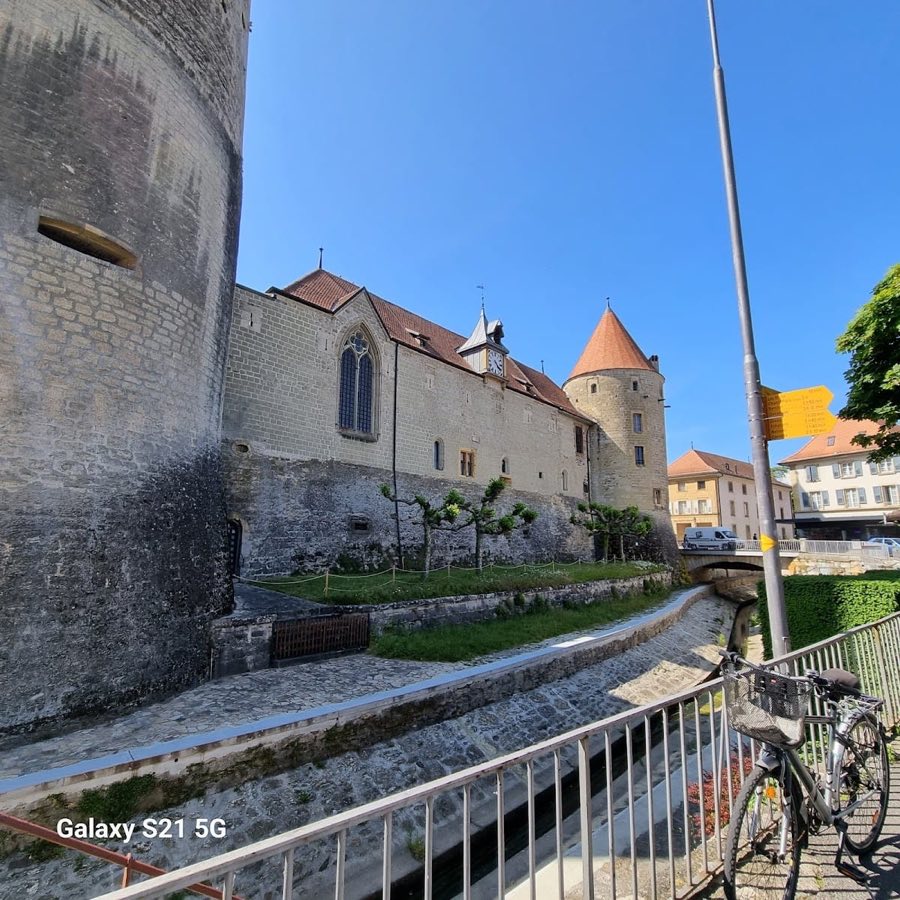
Yverdon-les-Bains Castle
Switzerland
CastleRestoredFor events13th century
No. 37005
No. 37005 · 46.766 N, 6.566 E
Quick summary
Mathod Castle is a palace in Switzerland with origins associated with the 18th century.
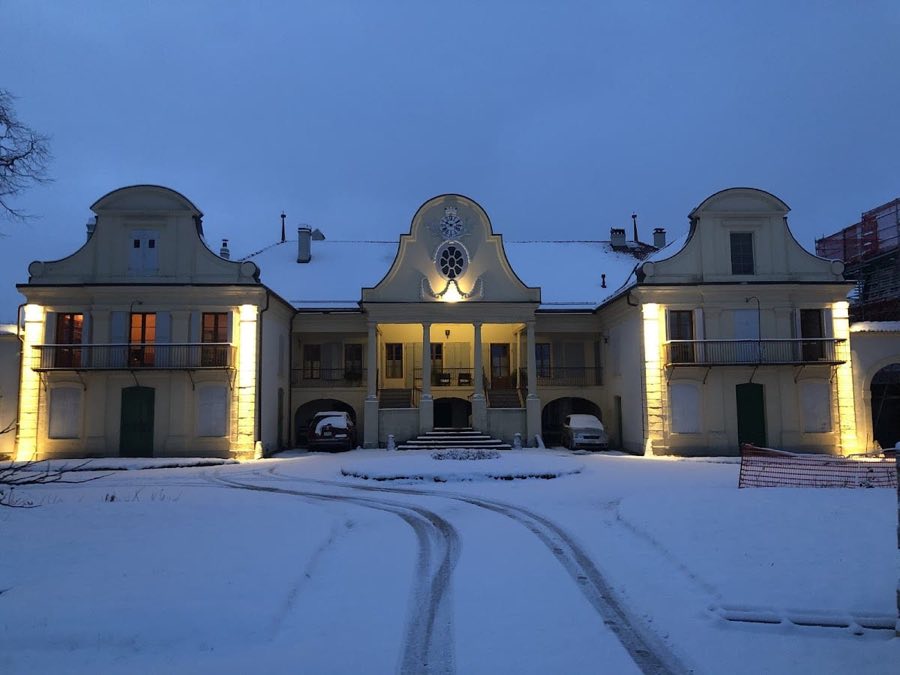
See all castles in SwitzerlandMathod Castle stands in the municipality of Mathod, Switzerland, and was constructed during the 18th century in a style reflecting the tastes and influences of that era. Built originally by local nobles within the region that became the modern Swiss Confederation, the castle has witnessed a series of ownership changes reflecting broader social and cultural shifts over time.
In the early 1700s, the property served as a large, rectangular manor house with minimal decorative features. At this time, it belonged to notable Bernese patrician families, including the Wyss family, followed later by Hieronymus Thormann. Their stewardship represents the castle’s initial phase, during which it functioned primarily as a residence within aristocratic circles.
A significant transformation occurred around 1775 when Gaspard Burman (also spelled Brumann), originally from the Netherlands and formerly an equerry to King Louis XV of France, acquired the estate. Burman commissioned a major renovation inspired by the work of Andrea Palladio, an architect renowned in the Renaissance period, particularly referencing Palladio’s Villa Barbaro near Maser, Italy. This redesign introduced characteristic three pedimented sections to the façade, uniquely adapted with Dutch stylistic elements, reflecting Burman’s heritage and artistic preferences.
The 19th century saw the estate’s sale to André Robert, a merchant from Marseille. He later passed the castle on to his daughter, Madame Casimir de Rham. By 1919, the property was inherited by Julie Rivier de Rham, Robert’s granddaughter, who, together with her husband Louis Rivier, a Swiss painter, moved into the castle in 1939. Louis Rivier used the castle as his artistic studio until his death in 1963, marking the final well-documented phase of personal residence and creative use.
Throughout these centuries, Mathod Castle evolved from a simple manor house into a refined, architecturally notable residence. It remains recognized today as a cultural property of national importance in Switzerland.
Mathod Castle is primarily an 18th-century residence characterized by a blend of Baroque and early Classical styles, with distinct Palladian influences evident in its layout and decorative elements. The building’s core design follows a rectangular plan, enhanced by three projecting sections on its main façade, known as risalits, each crowned with curved pediments that reflect a Dutch architectural influence.
The central risalit serves as a prominent portico, supported by a sequence of Tuscan columns—an order marked by its simple, unadorned capitals and sturdy appearance. This central projection is topped by an upper floor featuring delicate sculptural decorations around a clock and a circular window known as an oculus. The sides of the building are accentuated by pilasters of the Ionic order, recognizable through their scroll-shaped capitals, visually articulating the side wings and adding to the building’s classical vocabulary.
Situated at the eastern entrance of the village of Mathod toward Treycovagnes, the castle is set within a park notable for a fountain crowned by an obelisk, adding a formal outdoor element to the estate. Although specific building materials and exact measurements are not recorded, the structure’s overall silhouette stands out within the artistic heritage of French-speaking Switzerland, demonstrating a refined interpretation of 18th-century architectural trends and cross-cultural influences.
The estate’s dependencies and the castle itself are officially recognized and protected as cultural properties of national significance, reflecting their well-preserved state and importance within Swiss heritage.
No. 99930
No. 83519
No. 89356
No. 34323
Comments
Comments for Mathod Castle will require a verified account before posting.
We'll send a verification link before your first comment is published.