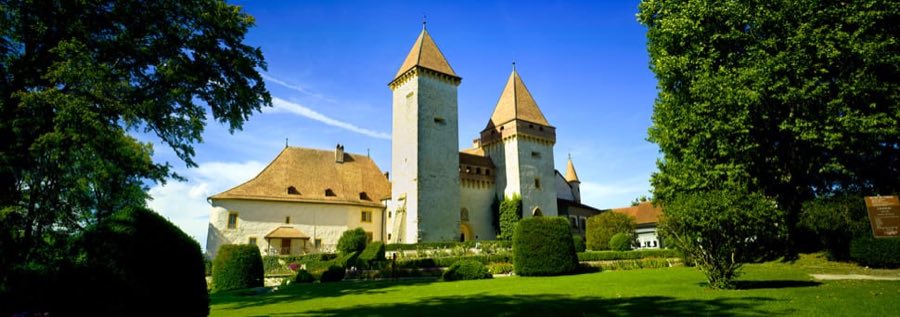
No. 34323
La Sarraz Castle
Switzerland
CastleRestoredFor events12th century
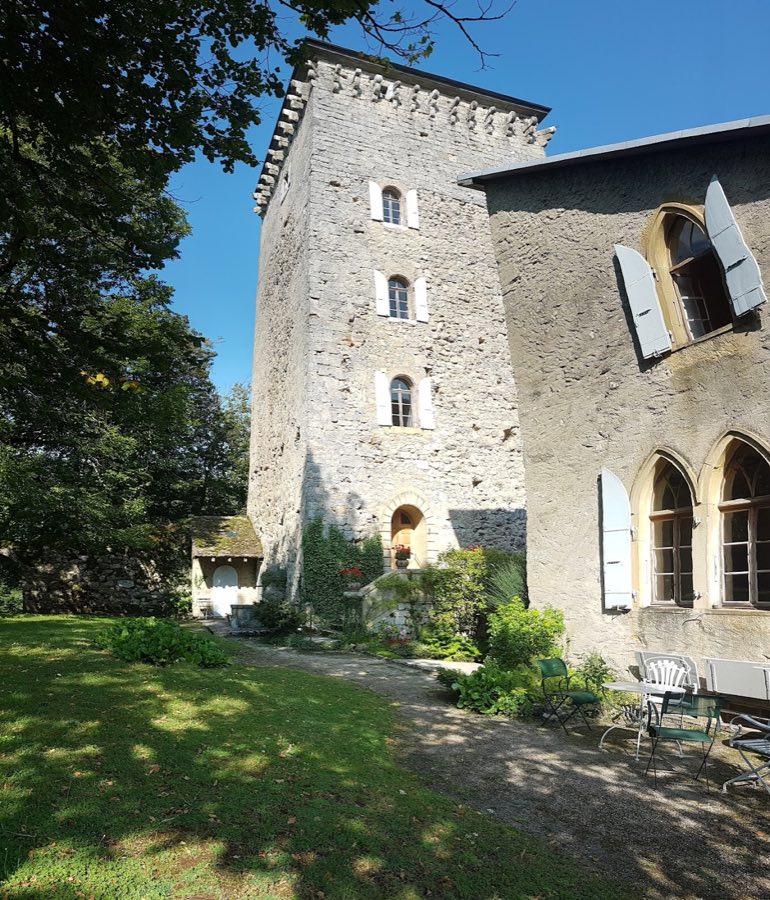
No. 89356
Castle · Switzerland
No. 89356 · 46.731 N, 6.463 E
Quick summary
Les Clées Castle is a castle in Switzerland with origins associated with the 12th century.
See all castles in SwitzerlandLes Clées Castle is situated in the municipality of Les Clées in Switzerland. It was originally constructed by medieval European builders, serving both military and administrative purposes.
The castle’s earliest known phase was under the authority of the Counts of Geneva. Its position on a rocky outcrop allowed control over a narrow passageway through the Jura region, making it an important center for trade regulation and toll collection. By the 12th century, however, this strategic location had also become notorious as a refuge for bandits who ambushed travelers and intercepted goods. Around 1130, Pope Innocent II intervened by instructing the Bishop of Lausanne to excommunicate those residing in the fortress, reflecting its problematic reputation at the time.
In the early 13th century, specifically in 1232, Guillaume II de Genève held the castle as a fief under Count Hugh of Burgundy. Later, by 1262, official arbitration recognized Count Peter II of Savoy as its possessor, marking the start of Savoy control, which expanded further in the 14th century. The House of Savoy incorporated Les Clées Castle within an extensive jurisdiction that included protection of religious sites such as the abbey of Romainmôtier and nearby territories like Vallée de Joux. In 1344, the Savoy family bolstered their presence by acquiring additional lands in the Vallée, and formal franchises were granted to the settlement at Les Clées in 1359.
Throughout the 14th century, local bourgeois families gained specific rights tied to commerce and the castle’s upkeep. In 1326 and again in 1351, they were granted privileges such as weighing wool bales and collecting tolls, while also being responsible for maintaining the main hall of the castle and securing its gates and windows. This arrangement shows a balance between military defense and economic activity centered around the site.
A significant renovation occurred in 1444 under Duke Louis I of Savoy, who oversaw repairs and fortification of the castle walls. However, the military importance of Les Clées Castle was tested in 1475 when the Swiss Confederates advanced into the Vaud region and seized the fortress. Following the capture, the castle’s captain and lieutenant were executed, and the town itself was set ablaze, marking a violent shift in regional control.
Although the castle continued to be used for toll collection after the Bernese invasion of 1536, its prominence declined over time as traders preferred alternate routes crossing the Jura mountains. By the early 19th century, Les Clées Castle had fallen into ruin. In 1831, Reverend Walter Holiday purchased the site and adapted the remains into a residential building. Rather than accepting plans from local architects, he remodelled the castle based on a design by an English builder, reflecting an early example of transforming a medieval ruin into a picturesque home.
Today, Les Clées Castle is recognized as a Swiss heritage site of national importance, preserving its legacy through this layered history of military significance, economic control, and architectural transformation.
Les Clées Castle occupies a prominent rocky promontory that overlooks the village below and the narrow passage it once controlled. Its layout reflects typical medieval fortification principles, designed to secure the strategic route through the region.
The site includes the remains of defensive walls, which were notably renovated in the mid-15th century under Duke Louis I of Savoy. These stone fortifications formed the outer limits of the stronghold, providing protection against military assault. Within the walls stood a main hall, known in medieval terms as a halle, that served as a central space for administrative and possibly social functions. During the 14th century, this hall was maintained by local toll collectors who also had the responsibility of locking and safeguarding the castle’s gates and windows, a fact that underscores the castle’s role in controlling commerce and security.
Visible today are features typical of a medieval fortress, including the remains of a keep, known in German as a Burgfried, which functioned as the main tower and last line of defense. The castle hill, or Burghügel, along with entrance gates, is also recognizable in the surviving structures. These elements illustrate the castle’s organization around a core fortified tower and enclosed courtyard, providing multiple layers of defense.
By the 19th century, the castle had deteriorated significantly. When converted into a residence by Reverend Walter Holiday, its form was adapted from a sketch by an English builder, diverging from regional architectural tradition. This conversion reflects a 19th-century appreciation for romanticized ruins, turning fortification remnants into habitable spaces. Despite this adaptation, the castle remains predominantly in a ruinous state, with parts of the walls and key structural elements still extant.
The surviving fabric of Les Clées Castle offers insight into its medieval military functionality combined with later historic uses, preserving key features such as defensive walls, the great hall, gates, and the keep. These remnants continue to mark its commanding position above the village and its historical role overseeing passage and trade.
No. 34323
No. 37005
No. 62177
No. 99930
Comments
Comments for Les Clées Castle will require a verified account before posting.
We'll send a verification link before your first comment is published.