
No. 87605
Château Pèlerin (Atlit)
Israel
ChâteauRuin13th century
No. 34531
Castle · Israel
No. 34531 · 32.081 N, 34.957 E
Quick summary
Migdal Afek is a castle in Israel with origins associated with the 12th century.
See all castles in IsraelMigdal Afek, situated near the city of Rosh HaAyin in Israel, began as an ancient Jewish settlement during the Second Temple period. It played a significant role in this era before being destroyed in 67 CE amid the turmoil of the First Jewish–Roman War, when Roman forces suppressed the Jewish rebellion. Archaeological evidence reveals that the site’s human activity stretches back even further, with remains from the Bronze and Iron Ages indicating early habitation. During the Hasmonean period, a Jewish village flourished here, as shown by burial caves designed in the Jerusalem style and various artifacts from both Roman and Byzantine times, demonstrating continuous occupation and cultural influences.
In the early 12th century, the Crusaders incorporated the site into their kingdom, establishing a fortress they called Mirabel. Built atop earlier Roman-Byzantine ruins by the influential Ibelin family, this stronghold was strategically located on a hilltop overlooking the Afek Pass along the Via Maris, a key trade route connecting the coastal plain to the inland. Mirabel became a focal point in regional power struggles, notably involving Queen Melisende and her son Baldwin III during their rivalry for control within the Crusader Kingdom of Jerusalem.
The fortress changed hands in 1187 when Muslim forces captured it amid Saladin’s campaigns, marking a shift in regional power. It suffered destruction in 1191 during the Third Crusade but was later reconstructed by the Mamluks, indicating its ongoing strategic importance. Under Ottoman rule, the site saw intermittent use, including the 17th-century construction of a manor house by the Rayyān family, who built upon the Crusader remains.
An Arab village known as Majdal Yaba, or Majdal Ṣādiq, developed adjacent to the site, thriving from at least the 16th century until 1948, when it was depopulated during the military actions following the establishment of the State of Israel. In the 20th century, Migdal Afek played a role in World War I battles and later served as a base for clandestine Jewish arms manufacturing during the 1940s. Designated a national park in 1994 and expanded in 2005, the site has undergone periods of closure and restoration, reopening in 2021 to preserve its rich historical legacy.
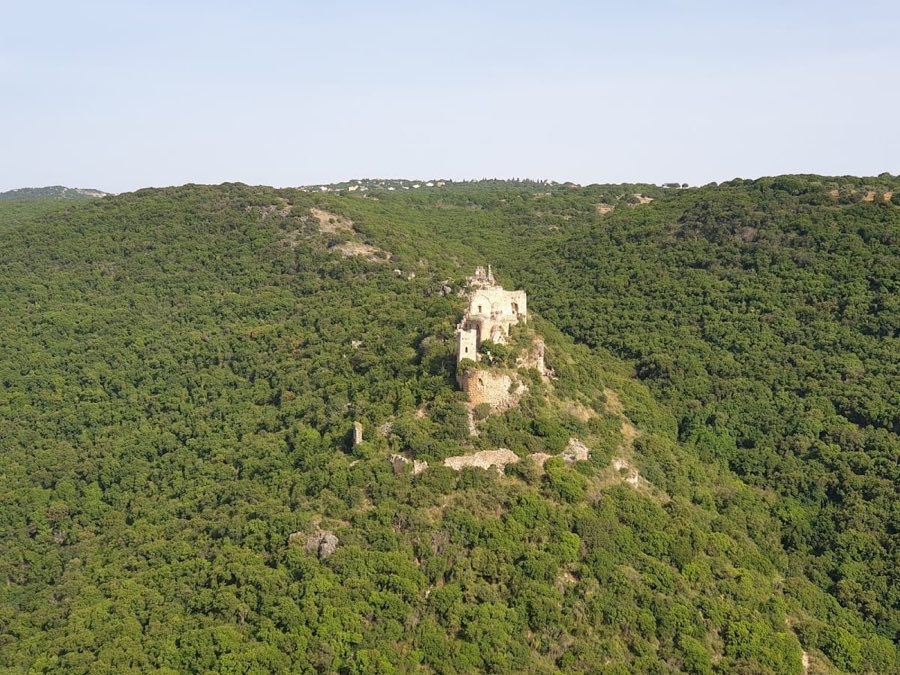
Migdal Afek’s layout centers on the remains of a Crusader fortress constructed on a hill overlooking the narrow Afek Pass, an important corridor on the ancient Via Maris trade route. The castle originally featured a ring wall approximately two meters thick, encircling a central tower known as a donjon. Although later Ottoman construction altered parts of the structure, much of the Crusader masonry survives, allowing the overall form and defensive purpose of the fortress to remain visible. This hilltop positioning provided commanding views and control of movement through the pass.
One remarkable element within the fortress is a reused stone lintel bearing a Greek inscription dating to the 4th or 5th century CE. This lintel, carved with the dedication “Martyrion of Saint Kyrikos,” signifies that a Byzantine-era shrine honoring a Christian martyr once stood here. The Crusaders incorporated this stone into their castle’s doorway, demonstrating the practice of repurposing earlier building materials while preserving a tangible connection to the site’s Byzantine past.
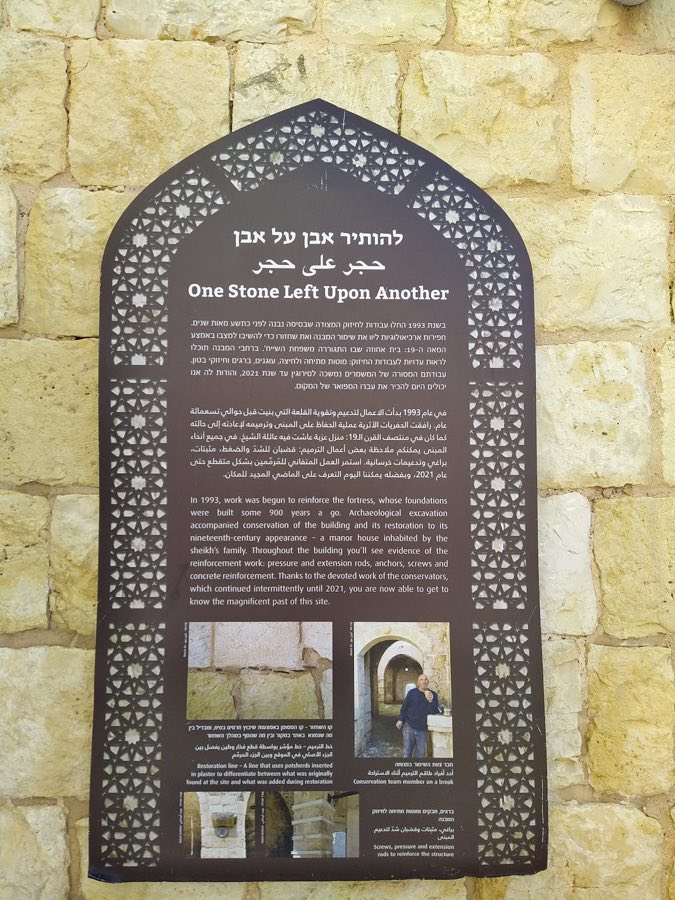
In addition to the Crusader fortress, the site contains remnants of a two-story manor house dating from the 17th century. Built by the local Rayyān family during Ottoman times, this residence sits directly atop the earlier castle ruins, illustrating a continuity of occupation and adaptation over centuries. The manor’s remains are integrated with the underlying medieval masonry, reflecting changes in regional architecture and habitation patterns.
The surrounding area of Migdal Afek holds further archaeological features, including burial caves linked to the Jewish village of the Second Temple period. These caves exhibit stylistic characteristics similar to those found in Jerusalem, underscoring the cultural connections of the ancient inhabitants. Excavations have also uncovered decorated stones, inscriptions, and pottery fragments from Roman and Byzantine phases, providing insight into the diverse civilizations that once occupied the site.
Today, the national park encompassing Migdal Afek covers approximately 1,700 dunams, including both the castle ruins and lands formerly associated with the adjacent village of Majdal Yaba. Preservation efforts completed by 2021 have stabilized the fortress remains and Ottoman additions, allowing visitors to observe the layered history embedded in the stonework. The visible combination of Crusader fortifications, Byzantine elements, and Ottoman structures encapsulates the site’s long and varied past.
No. 87605
No. 21974
No. 16852
No. 82558
Comments
Comments for Migdal Afek will require a verified account before posting.
We'll send a verification link before your first comment is published.