No. 89953
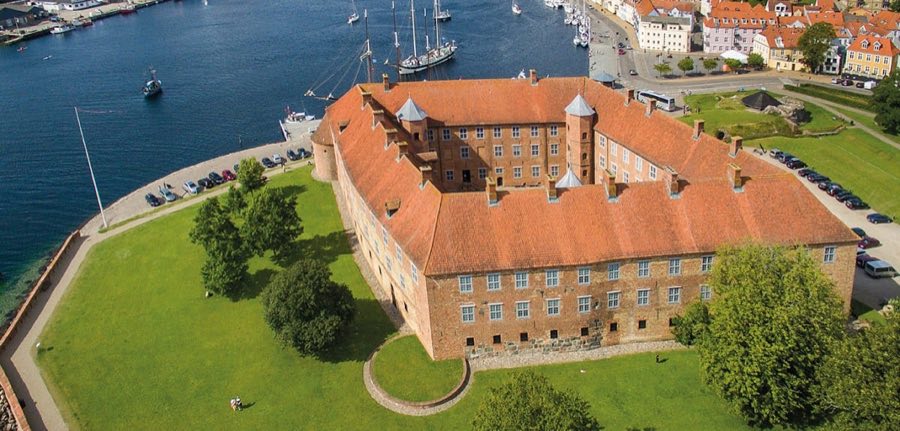
Sønderborg Castle
Denmark
CastleRestoredFor events12th century
No. 67402
Castle · Denmark
No. 67402 · 55.059 N, 9.748 E
Quick summary
Nordborg Castle is a castle in Denmark with origins associated with the 12th century.
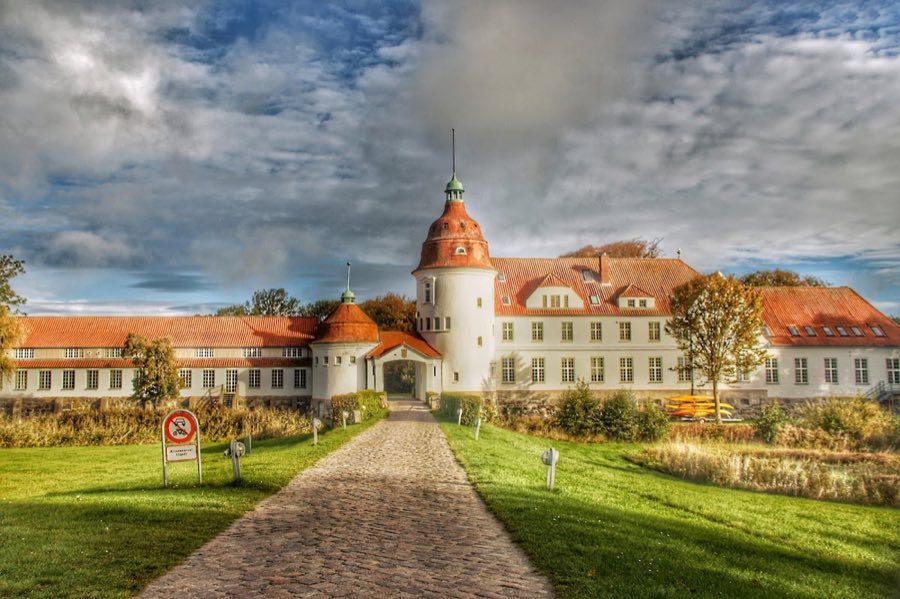
See all castles in DenmarkNordborg Castle in Nordborg, Denmark is a medieval Danish fortress first founded around 1150 and rooted in the high Middle Ages; the present exterior largely reflects later 19th‑century German Historicism. The site began as a defensive stronghold meant to give warning of coastal raids and to shelter local people, and it remained an asset connected to royal and ducal authority for many centuries.
The earliest phase began with construction under King Svend Grathe around 1150, when the Wends still controlled parts of the Danish shoreline. By the late twelfth century the place is named in records and Bishop Valdemar of Schleswig was held there as a prisoner between 1192 and 1197. After the establishment of Sønderborg Castle the fortress became known as Nordborg and for much of the medieval period it formed part of crown property, at times providing income for widowed members of the royal household.
Across the later Middle Ages Nordborg appears repeatedly in royal affairs. A king was briefly confined there in the thirteenth century, it passed into the hands of King Waldemar IV following capture in 1358, and Queen Margaret I lodged there in 1412 shortly before she travelled to Schleswig where she died of plague. In 1571 Hans the Younger inherited the estate from his mother, Queen Dorothea, and over the following fifty years he undertook extensive building works and expanded the surrounding holdings.
After Hans the Younger died in 1622 his lands were divided into ducal territories. Nordborg went first to his son Hans Adolf and then, in 1624, to Frederik. During the wars of the seventeenth century the castle changed hands repeatedly; Swedish, Brandenburgian and Polish forces occupied it at different times, and Swedish troops returned before peace was concluded in 1660. A catastrophic fire in 1665 destroyed the fortress. Financial collapse by Duke Hans Bogislav forced the estate away from him, and ownership passed to August, Duke of Schleswig‑Holstein‑Sonderburg‑Plön. Rebuilding on the burned site began in 1678 and the ducal coat of arms was installed above the main entrance as part of that work.
On the ruins a rural Baroque residence rose and was completed by 1688, incorporating surviving medieval fabric. The manor returned to royal hands in 1729; the estate at that time covered roughly 400 hectares but the land was gradually divided into farms and in 1766 the castle was sold to a private owner. Parts of the complex were demolished and the materials reused in local building work. During the nineteenth century many of the buildings fell into disrepair until, in the Prussian period, municipal leaders oversaw a programme of reconstruction that gave the complex much of its present exterior and envisaged an educational function.
In 1909 the town acquired the castle and restoration work followed, after which the premises were let to a German secondary‑school association in 1910. Following the 1920 reunification of Northern Schleswig with Denmark, merchant Johan Hansen purchased the property in 1921 and founded Stiftelsen Nordborg Slot. From 1922 the buildings have been used as a boarding school, Nordborg Slots Efterskole, and the site has served that educational role ever since.
The castle stands on an island in Nordborg Lake and presents as a two‑winged, L‑shaped complex that combines nineteenth‑century historicist rebuilding with older masonry carried forward from earlier phases. The layout keeps the islanded setting at its core, with the main entrance reached across the water. The overall plan reflects adaptation of pre‑existing fragments into a later coherent ensemble.
A towered gatehouse marks the primary approach to the island and serves as the principal entrance feature. The entrance was given a ducal coat of arms during the late seventeenth‑century rebuilding campaign, a deliberate display linked to the post‑fire reconstruction begun in 1678. Attached to the main block is a right‑angled former service wing, arranged for estate and household functions, and several outbuildings lie close by, reflecting the complex’s role as both residence and administrative centre.
The island preserves an avenue that once belonged to the Baroque garden, a surviving axis from the late seventeenth‑century landscape. The garden area has since been reshaped to meet the needs of the boarding school but the linear planting survives as a visible echo of the former park. The rebuilding after the fire of 1665 produced a rural Baroque house completed by 1688, and elements from earlier structures were incorporated into those seventeenth‑century walls.
The castle contained a chapel that probably received a small pipe organ around 1693 made by the Hamburg builder Arp Schnitger; by 1747 that instrument was described as decayed and its subsequent fate is unknown. After the sale of the estate in 1766 sections of the buildings were dismantled and the stone and timber reused elsewhere, a change that altered the complex’s fabric. The exterior appearance now seen dates largely to the nineteenth‑century reconstruction carried out during the Prussian era.
The buildings serve today as a boarding school and the interior is not open to visitors. The island, its surrounding garden and the central courtyard remain accessible to the public.
No. 89953
No. 40269
No. 13614
No. 46074
Comments
Comments for Nordborg Castle will require a verified account before posting.
We'll send a verification link before your first comment is published.