No. 79040
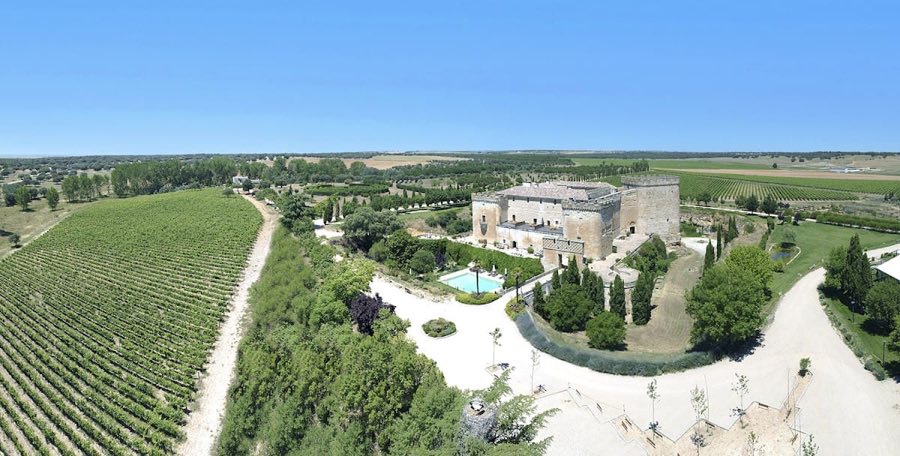
Villanueva de Cañedo Castle
Spain
PalaceRestored11th century
No. 73447
Palace · Spain
No. 73447 · 40.961 N, 5.666 W
Quick summary
Palacio de Anaya is a palace in Spain with origins associated with the 18th century.
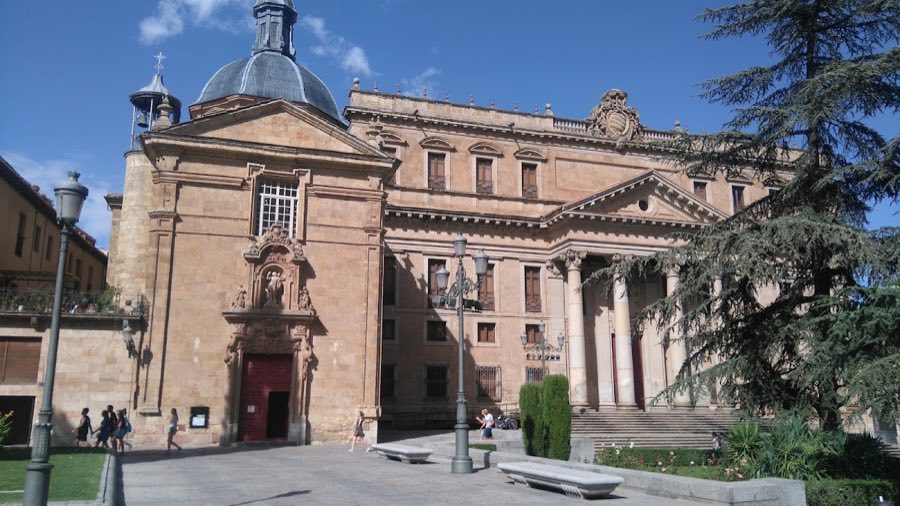
See all castles in SpainThe Palacio de Anaya in Salamanca, Spain, is a mid-18th-century Neoclassical building erected by Spanish builders as a replacement for an earlier collegiate foundation. It stands on the site of the Colegio Mayor of San Bartolomé, a college whose founding is linked to Diego de Anaya Maldonado, and it became an important part of the city’s university quarter during the modern era.
The original college suffered severe damage in the Lisbon earthquake of 1755. Construction of the present structure is dated to the mid-1700s: one chronology places the start of works in 1760, while another record gives a span of activity between 1697 and 1767. Design and execution are attributed to architects working in the Neoclassical idiom of that period, producing the compact, ordered composition seen today.
An adjoining hospedería, erected in 1715 in a Baroque manner, was built to lodge students who served wealthier pupils; over time it was adapted to hold classrooms and offices, and its former stables were converted into a faculty dining room. Following the later suppression of the university colleges, the main building passed through several civic uses, including housing the Civil Government, a role that led locals to refer to it as a “palace” despite its collegiate origin.
In the twentieth and twenty-first centuries the building returned to academic use. It now accommodates the University of Salamanca’s Faculty of Philology and contains a library. The complex, together with the neighbouring hospedería and the church of San Sebastián, received legal protection as a cultural property in 2011 (with one record giving the date 6 October 2011). The palace fronts Salamanca’s New Cathedral and sits adjacent to the Baroque church of San Sebastián, which served as the college chapel and today functions as a parish of the cathedral.
The ensemble presents a compact Neoclassical layout arranged around a central courtyard and oriented toward the cathedral. The street-facing composition is dominated by a broad portico supported by four columns and capped by a triangular pediment, reached by an external stair. A large heraldic shield crowns the façade, and the ground and upper floors are rhythmically punctuated by openings.
At street level there are ten windows set behind decorative iron grilles, while the upper story shows ten balconies aligned above them. Inside, a prominent imperial staircase (a wide double flight rising to the upper floor) structures the circulation and gives access to the main rooms. The courtyard is finished in Neoclassical fashion, with round columns supporting an open gallery that frames the interior space.
Sculpture and commemorative elements appear within the building, including a 1930 bust of Miguel de Unamuno made by Victorio Macho, placed in an interior location. The courtyard and surrounding rooms are in active institutional use: they contain administrative offices such as the secretariat and information services, teaching units for Spanish language and literature, Latin American literature, classical philology and Indo‑European studies, and practical services including printing and photocopying.
The neighbouring hospedería, built in 1715 in the Baroque style, now provides lecture halls and offices; its former stable block has been adapted as the faculty cafeteria. The church of San Sebastián, once the college chapel, remains next to the palace and functions today as a parish serving the cathedral. Overall the complex is maintained and occupied, with the palace continuing to serve educational and administrative roles.
No. 79040
No. 78444
No. 91989
No. 85849
Comments
Comments for Palacio de Anaya will require a verified account before posting.
We'll send a verification link before your first comment is published.