No. 86074
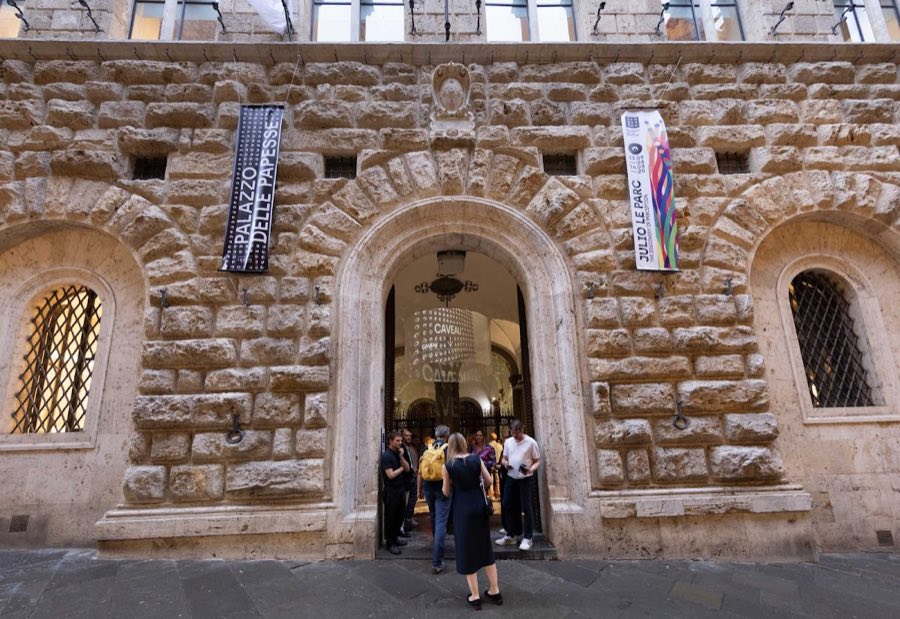
Palazzo delle Papesse
Italy
PalaceRestored15th century
No. 40041
Palace · Italy
No. 40041 · 43.318 N, 11.332 E
Quick summary
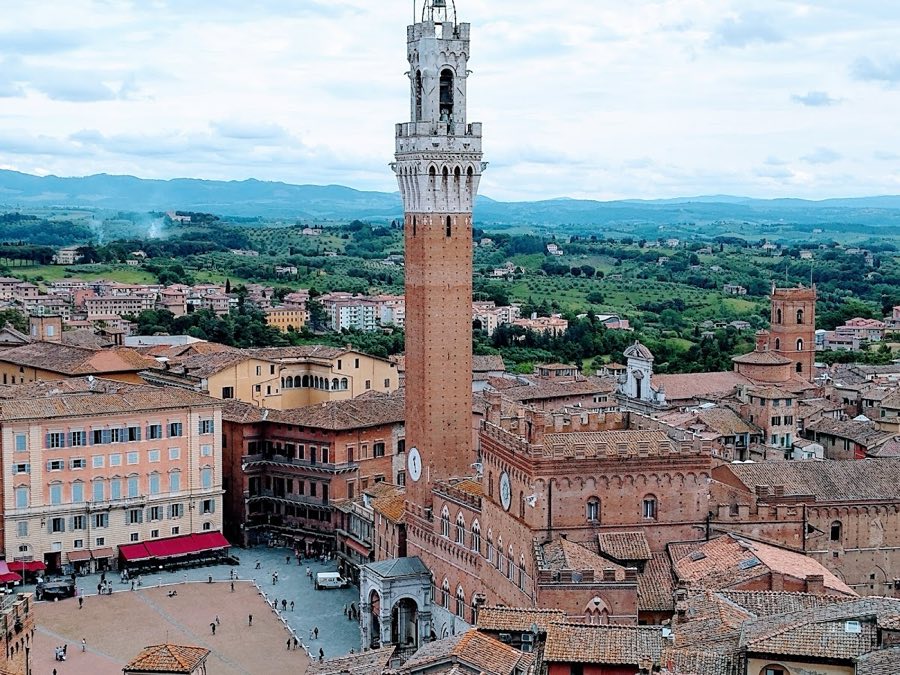
Palazzo Pubblico, Siena is a palace in Siena, Italy with origins associated with the 14th century.
See all castles in ItalyPalazzo Pubblico in Siena, Italy, is the city’s public palace erected by the medieval Sienese commune to house the Government of the Nine and the podestà (chief magistrate). Construction began around 1297 and continued into the early 14th century, giving the building its medieval public‑administrative character. From its earliest years the palace served as the centre of municipal government and civic ceremony, making it a focal point of Sienese political life throughout the later Middle Ages.
Work on the building started in 1297 on the stretch of ground between the market square and the main campo, and by about 1310 the Government of the Nine had moved in. The original composition placed a tall central block between two lower wings, with the podestà occupying rooms in one wing and the council in the other. By 1308 most of the structure had taken shape, though the podestà’s residential suite was not completed until the 1320s.
Major additions followed in the first half of the 14th century. A tower began rising beside the palace in 1325 and was finished by the mid-14th century; its stone upper section crowned the skyline and made the tower the tallest in Italy at the time of completion. Between about 1327 and 1330 the palace’s left side was enlarged to include ground‑floor prisons and a large council chamber above. A small chapel projecting from the tower’s base was built in the early 1350s, reportedly as a votive act after the plague of 1348.
Decoration and public function continued across the 14th and 15th centuries, as city rulers commissioned major painters to decorate halls and chapels. In the mid-14th century the council rooms received one of their most famous cycles, and later centuries added further paintings, carved choir stalls, and movable objects. In the late 15th century a Renaissance canopy was installed within the chapel beside the tower.
Political change in the 16th century brought new uses and emblems. After Florence asserted dominion over Siena, one great council chamber was converted into a theatre in 1560 and the Florentine ruler’s coat of arms was placed on the façade. The theatre suffered fires and rebuilding in the 18th century and underwent a major reconstruction in the mid-1700s.
From the later 17th century onward the building’s profile altered again when the two lateral wings were raised by an additional story around 1680. In the 19th century restorations sought to bring back a medieval appearance so civic rooms could be opened for display, and in the 20th century the palace took on a cultural role: municipal offices remained in place while the first floor came to house the city museum from the 1930s. The large council hall that had been adapted as a theatre was rebuilt after fire in 1753 and restored again in 1951.
The palace presents a clearly ordered layout: a taller central block set between two lower wings, the ground level completed in stone and the upper levels of brick. The main façade faces the central square with a gentle inward curve, and the lower floor is faced in travertine stone while the upper walls are built of brick. The ground story features a sequence of arches that frame doorways and large openings, and above these the façades display three‑arched windows whose white marble columns separate the arches and whose central spaces bear Siena’s black‑and‑white shields.
A large painted disk bearing the Christ monogram, dated to the early 15th century, occupies the centre of the façade; below it the Florentine ruling family’s coat of arms was placed after 1560. Sculpture decorates the entrance area: a small figure of Saint Ansano stands above the right door, and Roman she‑wolf figures flanked the civic emblem, with an additional she‑wolf set on a corner column in the mid-15th century. Small holes set across the masonry show where builders once lodged horizontal scaffold beams during construction.
The roofline is finished with battlements (crenellated parapet), and two small upper bell chambers sit at the summit, the left-hand chamber having been added in the 18th century to balance the appearance. The tall tower attached to the palace was constructed in the period 1325–1348 and is crowned in travertine; when finished it rose higher than any other civic tower in Italy at that time. At the tower’s base the Chapel of the Piazza projects from the façade; it was built in the early 1350s and later received a Renaissance canopy (ciborium, canopy) in the late 15th century. The chapel’s altar area holds a painted Holy Family with Saint Leonard from around 1530, and the choir was carved and inlaid in the early 15th century.
A paved internal courtyard, the podestà’s courtyard, was completed about 1325 and later restored in the early 20th century. The courtyard is surrounded on all four sides by terracotta arcades that rest on octagonal columns with semicircular arches, and large three‑arched windows rise above the arcade. From this courtyard visitors and officials gain access to the museum spaces and the stair that leads up the tower.
Inside, named rooms preserve important works and features. The Hall of the Mappamondo (world map) contains a famed early 14th‑century Maestà and a mounted fresco traditionally linked to a siege scene attributed to a leading Sienese master; a separate castle scene dated 1314 is ascribed to another prominent painter. Evidence remains of a later rotating world map (mappamondo, world map) that once stood in this hall, the mechanism traces still visible on the wall. The Hall of the Nine bears Ambrogio Lorenzetti’s great cycle of the Effects of Good and Bad Government painted in 1338–1339, the panel representing Bad Government showing markedly greater damage than the rest.
Additional painted cycles and movable items are distributed through several chambers: frescoes by Spinello Aretino and his son decorate one hall from the early 15th century, vaulted frescoes by Martino di Bartolomeo and later by Domenico Beccafumi appear in other spaces, and paintings by Sano di Pietro, Sodoma, Vecchietta, Lippo Vanni, Bartolo di Fredi and Taddeo di Bartolo survive in named rooms. The atrium contains bronze bells transferred from a nearby palace, and an organ built in the early 16th century was restored in the late 20th century. Many medieval and later frescoes remain in place, though some paint layers have been altered over time; the large council chamber was adapted into a theatre in 1560, rebuilt after mid-18th‑century fires, and restored in the mid-20th century. The first floor now accommodates the municipal museum while municipal offices and council rooms continue to occupy parts of the building.
No. 86074
No. 70147
No. 62943
No. 40602
Comments
Comments for Palazzo Pubblico, Siena will require a verified account before posting.
We'll send a verification link before your first comment is published.