No. 91285
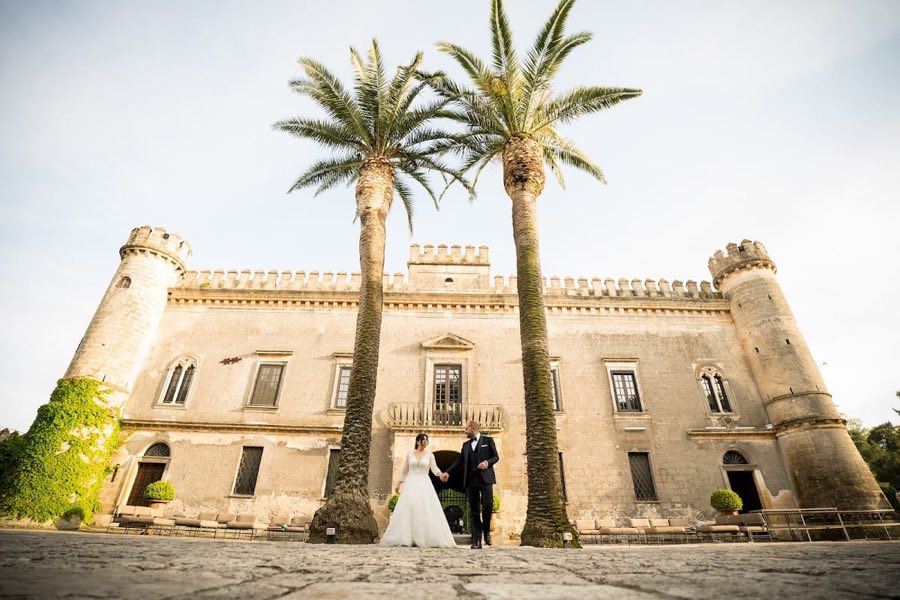
Castello Monaci
Italy
CastleIntact16th century
No. 43277
Palace · Italy
No. 43277 · 40.350 N, 18.170 E
Quick summary
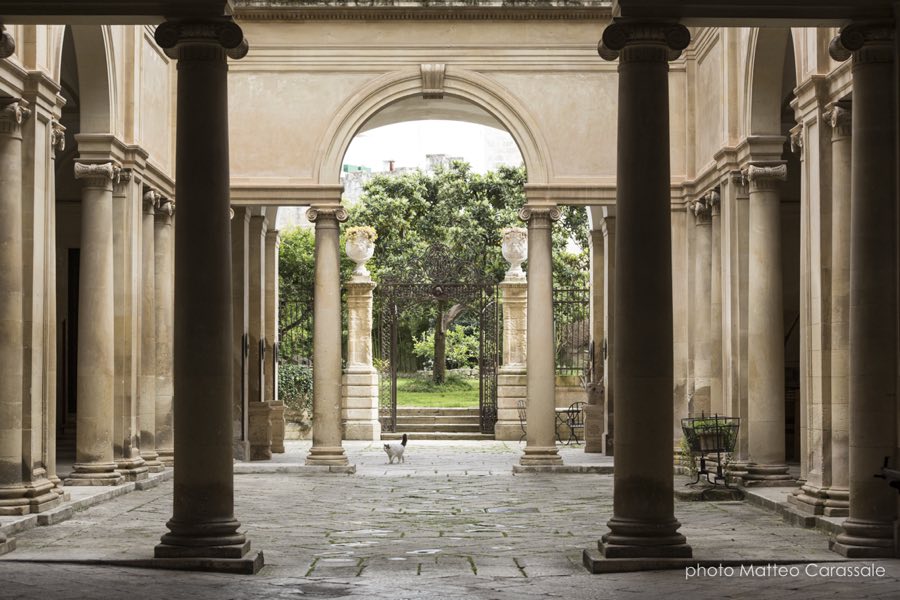
Palazzo Tamborino Cezzi is a palace in Italy with origins associated with the 16th century.
See all castles in ItalyPalazzo Tamborino Cezzi in Lecce, Italy, is an aristocratic urban residence erected in the mid-16th century by Giacomo Mele during the Italian Renaissance, and it preserves a late-Renaissance plan that anchors its later transformations. The palace matters historically for its long sequence of noble ownerships, its use by a religious order, its connection to a violent household murder in 1636, and its role in political and social life up to the modern era.
Construction began in the mid-1500s on top of an earlier subterranean oil mill, parts of which were later buried. In the early 1600s the building left the Mele family when members of the Genoese de’ Giudice family acquired it and carried out substantial enlargement and decorative work that made contemporaries call the house a sumptuous palace. On 13 July 1636 a homicide took place in the residence, the victim being Beatrice Moccia, killed by Don Fulvio di Costanzo, governor of the province of Terra d’Otranto. After that event Lucrezia de’ Giudici, who had no direct heirs and was married to Aurelio Bonvicino, gave the palace by testamentary gift to the Jesuits, who occupied the building for about fifty years.
Ownership changed again in the late 17th century when a family of Amalfi origin bought the property and then transferred it by notarial sale in 1693 to a member of the Capece family. During the 18th century the palace passed into the Paladini family, who used it as their principal urban residence from the first half of that century and remained there beyond the period of Italian Unification. The house is associated with political activity: it probably hosted meetings of the Academy of the Spies in the late 1600s and it sheltered Paladini family members who were active in the Parthenopean Republic of 1799, the short-lived republican government established in Naples under French revolutionary influence.
In the summer of 1879 Achille Tamborino of Maglie purchased the palace and made it his home, ordering consolidation and restoration work that largely defined the building’s present appearance. His great-nephew Vincenzo Tamborino completed later restructuring, furnishing, and finishing touches; the Cezzi family descend from the Tamborino line on the maternal side. During the last decades of the 19th century the palace underwent a broad program of reworking in an eclectic mix of neoclassical and Liberty styles, and a city garden connected to family life was opened in 1883. In 1889 Prime Minister Francesco Crispi was received there for dinner during a royal visit. From the 2000s onward the building has been used as a location for film and television productions.
The palace retains a late-Renaissance layout organized around a sequence of reception and service spaces, with original 16th-century stables and ground-floor apartments still part of the plan. Ground level rooms display large vaulted ceilings with star patterns, which are carved and painted with floral and fruit motifs and feature decorative mascarons, or sculpted faces. The ground floor porticoes open onto the interior, and two mid-19th-century carriages of French and Neapolitan manufacture, together with a cherrywood caleche made in Salento, remain under the covered circulation space.
A broad marble stair leads up to the piano nobile (main reception floor), where formal salons and a private family wing are arranged. On the first floor a 16th-century room that opens directly onto the garden houses a Wunderkammer (cabinet of curiosities), containing preserved household items and archival material. Above, second-floor attic rooms set beneath mansard roofs include structural elements dating to the 18th century and provide views over the historic roofscape.
Nineteenth-century alterations introduced neoclassical and eclectic features integrated with the earlier fabric. Entrance halls were reshaped with low segmental arches, where a segmental arch is an arch with a shallow curve, and an open atrium with a gallery overlooks inner circulation. A series of porticoes, columns and capitals were added, and the gallery is pierced by large Serlian windows, a Palladian window type consisting of a central arched opening flanked by two rectangular openings.
The garden occupies a slightly raised, roughly circular plot reached through the entrance halls and the older stables, and it terminates at a semi-circular exedra, a recessed architectural niche faced in rough-cut stone blocks known as rusticated ashlar. A large cast-iron gate bears the monogram of Achille Tamborino and frames the transition between street and garden. Plantings include an ancient loquat, climbing wisteria-colored Thunbergia and bougainvillea, several citrus trees, Californian palms, cypresses, jacarandas, and a variety of shrubs, flowering plants and an intimate fountain corner; bamboo groves form a planted boundary.
Surface finishes and decorative works added during the restorations remain in place. Polychrome mosaics and poured cement surfaces were executed by the Peluso brothers of Tricase, tempera paintings were contributed by Domenico Battista, and a number of ceramics and terracotta sculptures, among them a figure of a young African woman positioned on the stair landing, were made by the sculptor-ceramist Angelo Antonio Paladini. Bronze elements placed by Luigi Guacci complement these works. Materials visible across the building include the marble stair, the rusticated stone of the exedra, the cast-iron gate, multicolored mosaics, litocement, terracotta statuary and bronze fixtures, many of which survive following the late-19th-century consolidation and decorative program.
No. 91285
No. 97724
No. 35046
No. 41982
Comments
Comments for Palazzo Tamborino Cezzi will require a verified account before posting.
We'll send a verification link before your first comment is published.