No. 27843
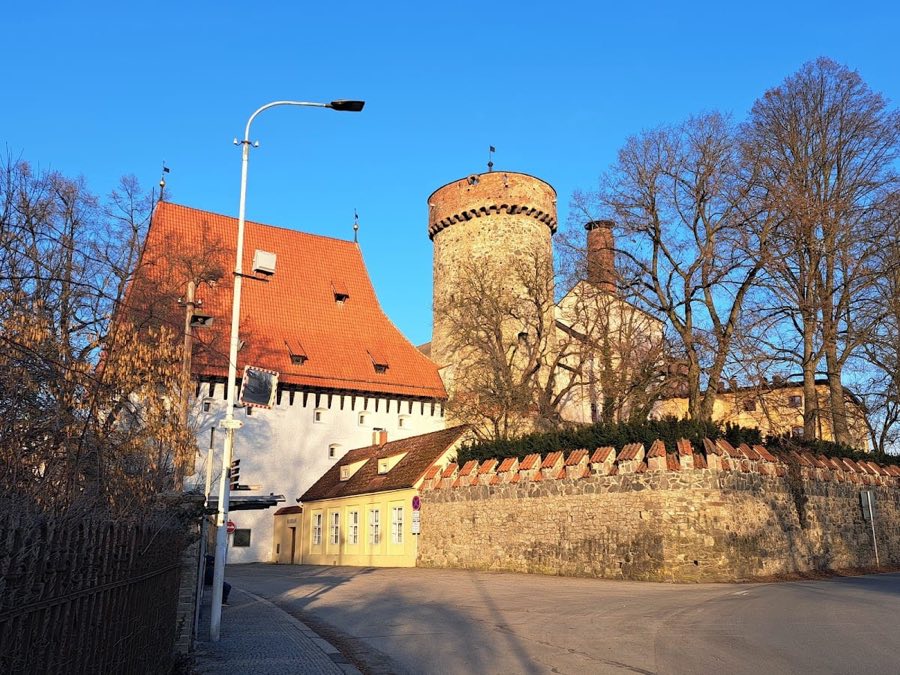
Kotnov Castle in Tábor
Czechia
CastleRestored13th century

No. 59289
Castle · Czechia
No. 59289 · 49.393 N, 14.562 E
Quick summary
Příběnice Castle is a castle in Czechia with origins associated with the 13th century.
See all castles in CzechiaPříběnice is a Gothic castle located in the municipality of Malšice in the modern Czech Republic. It was established in the first half of the 13th century by the noble Vítkovci family, notably linked to Vítek III and later his sons Vítek V and Vok I of Rožmberk. From its foundation, the castle served as the administrative center of the Příběnice lordship and was closely connected to the Rožmberk family’s territorial and political influence.
During the early 15th century, Příběnice gained strategic importance amid the Hussite Wars, a series of conflicts rooted in religious and social dissent. Oldřich II of Rožmberk, a leading noble of the time, utilized the castle as a fortress against the radical Hussite faction known as the Taborites. The castle also functioned as a prison where captured Hussite preachers were detained. An earlier significant event occurred in 1394 when King Wenceslaus IV was temporarily held at Příběnice by Jindřich III of Rožmberk, a leader of the opposing Pan’s Union faction.
In November 1420, the Taborites captured the castle following an uprising of prisoners led by Václav Koranda. This takeover resulted in the loss of the castle and its valuable treasures, which had been stored by both secular and church authorities. Thereafter, Příběnice remained under Taborite control, serving as a stronghold and prison for high-profile captives, including noblemen and clergy, until 1437.
The return of Příběnice to Oldřich II came as part of a peace treaty in 1437. Following its recovery, Oldřich II ordered the demolition of the castle along with the nearby fortress of Příběničky and the adjacent village, likely to prevent their future use as military bases. Despite the destruction, the Příběnice estate remained under Rožmberk ownership and was administratively merged with the Choustník estate. By 1667, historical records described Příběnice as a ruined and overgrown site.
Příběnice castle is situated on a rocky promontory surrounded on multiple sides by a loop of the Lužnice River, at approximately 410 meters above sea level. The stronghold was primarily constructed from stone, carefully adapted to the uneven rocky terrain. Its layout included a central complex divided into four main sections, with a large palace complex encompassing a narrow inner courtyard. Access to this courtyard was granted through a passage located within the northern palace wing.
Defensive elements played a significant role in the castle’s design. A wide moat and an imposing embankment fortified the northeast approach. On this side, archaeologists identified a parkán, an outer defensive wall, which featured two rectangular bastions situated along the steep slope. A stone bridge once connected Příběnice to the smaller castle of Příběničky on the opposite bank of the river; remnants of this bridge were discovered during excavations in 2009.
One distinctive feature was the octagonal bergfried, a type of tall stone keep used for defense and observation. This tower stood on the southwestern side above the moat and still survives in partial form. Adjacent to it, a rectangular tower measuring roughly 12 by 8 meters was located on the northeast side, contributing to the castle’s fortified core.
The castle featured a chapel built sometime in the first half of the 14th century; however, its precise location remains undetermined. The route leading up to the castle passed through a fortified latrán, an outer courtyard or suburb area, situated to the southwest. This latrán contained remains of houses, fortifications, and a mill, suggesting it functioned as both a protective barrier and a small settlement supporting the castle.
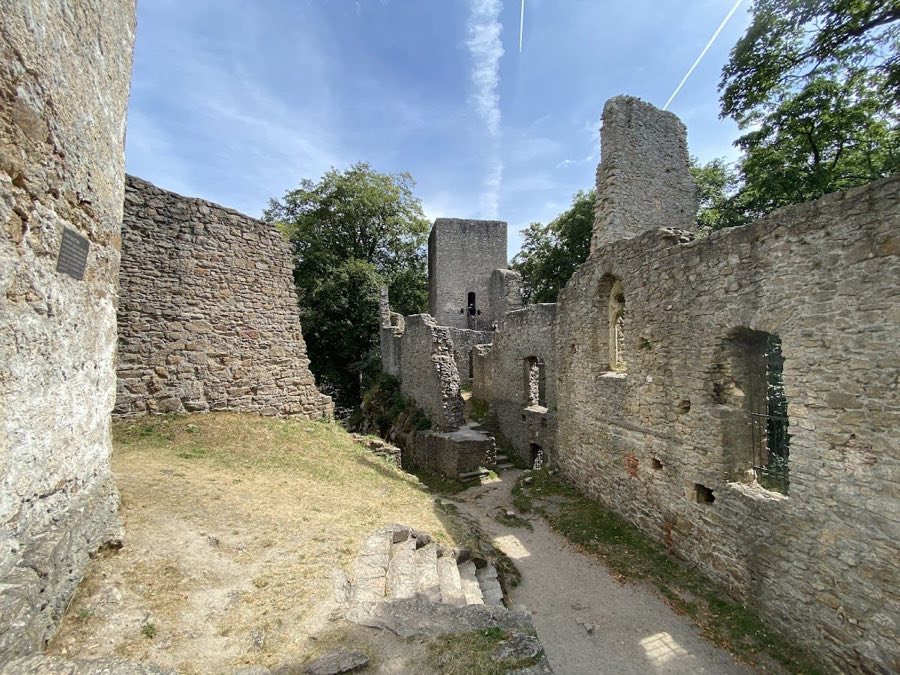
Archaeological research has revealed that the palace wings were supported by buttresses that may have carried a gallery, overlooking the courtyards within the complex. Several courtyards existed, though some contained buildings whose function remains unclear. Today, the site consists of ruins covered by forest growth, with surviving fragments of walls, towers, moats, and the overall layout still visible. These remains provide insight into the castle’s original form and strategic position within the surrounding landscape.
No. 27843
No. 77003
No. 86375
No. 35851
Comments
Comments for Příběnice Castle will require a verified account before posting.
We'll send a verification link before your first comment is published.