No. 94062
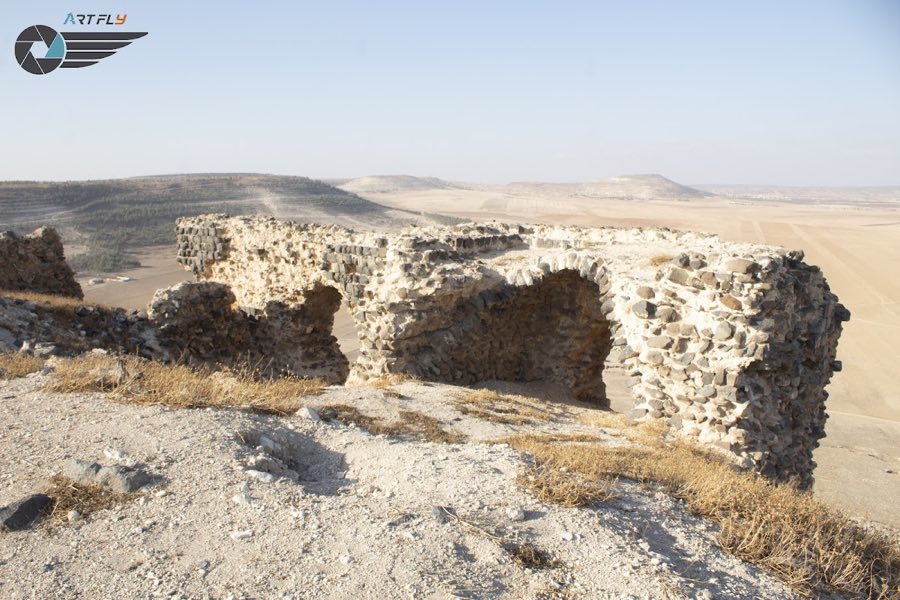
Qal'at Ja'bar
Syria
CastleRestored7th century
No. 78175
No. 78175 · 36.555 N, 38.262 E
Quick summary
Qal'at Najm is a castle in Syria with origins associated with the 12th century.
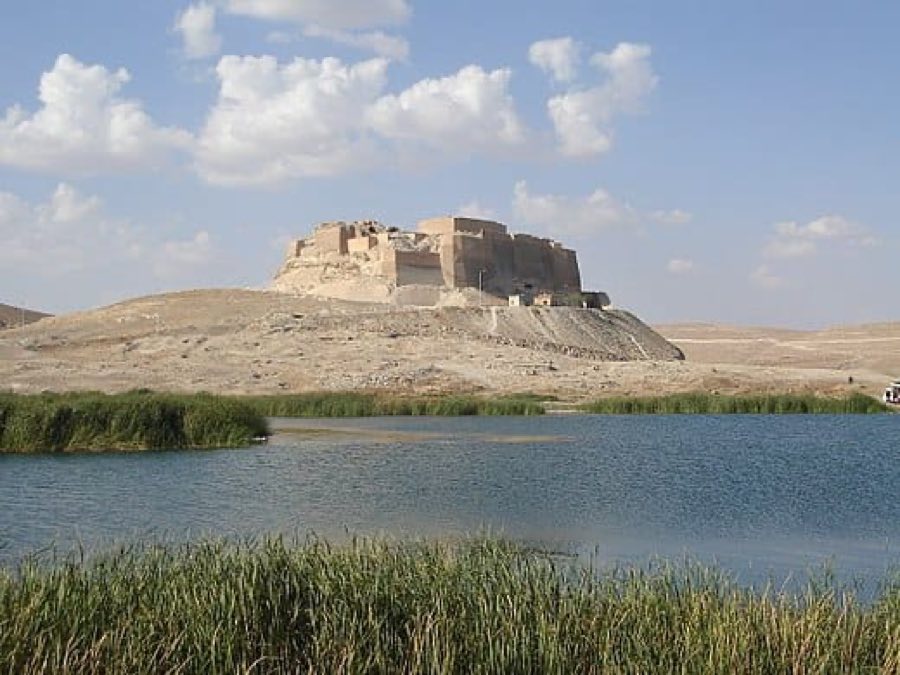
See all castles in SyriaQal’at Najm is a fortress situated near the town of Manbij in northern Syria. It stands on the right bank of the Euphrates River and likely occupies the site of an earlier Roman settlement, which some scholars suggest might have been called Caeciliana, although this identification remains uncertain.
The castle’s earliest recorded name in Arabic sources was Jisr Manbij, referring to its association with a bridge over the Euphrates, which some traditions attribute to Caliph Uthman from the early Islamic period. Over time, the name Qal’at Najm, meaning “Castle of the Star,” became commonly used in historical texts during the 12th century. Following the Umayyad conquest of the region, control of the site passed through several hands. The Hamdanids, a dynasty of Muslim rulers from northern Syria and Iraq, held it initially, followed by the Mirdasid dynasty, and later it came under the authority of the Banu Numayr, a nomadic Arab tribe. The Banu Numayr maintained possession of Qal’at Najm and the nearby Qal’at Ja’bar at least until the early 12th century.
In the 12th century, the Zengid dynasty, under the leadership of Nur ad-Din Zangi, who ruled Aleppo and was the son of Zengi, took control of the castle and undertook restoration efforts. Later, in 1202, Az-Zahir Ghazi, the Ayyubid governor of Aleppo, expanded his domain by conquering Manbij and the fortresses of Qal’at Najm and Qal’at Ja’bar during a military campaign in the Jezirah region. He also refortified Qal’at Najm, as indicated by inscriptions from his reign found at the site.
Several centuries later, in 1820, the castle suffered damage during a siege by Ottoman forces. This event followed an episode when an Arab leader, involved in local resistance, sought refuge within the fortress. The castle remained a strategic position through various conflicts until the modern era. In recent times, on June 1, 2016, amid the Syrian Civil War, forces known as the Syrian Democratic Forces captured Qal’at Najm from the Islamic State group (ISIS), marking the latest chapter in its long history of military significance.
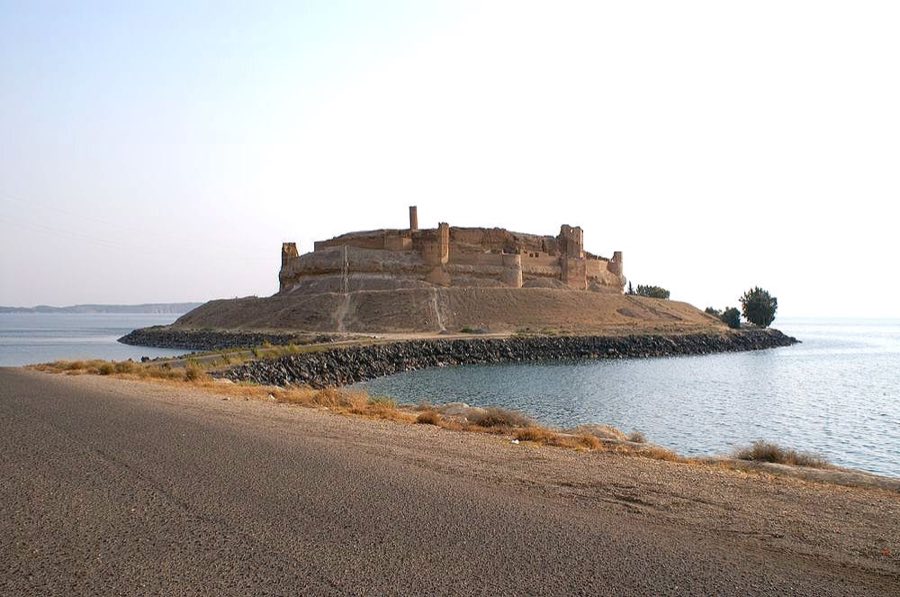
Qal’at Najm is built as a truncated cone-shaped fortress positioned atop a mound. Its defensive walls rise from a carefully constructed ashlar glacis, a sloping stone facing designed to strengthen the base, examples of which are still visible today. This design links it architecturally to the great citadels of Aleppo, Hama, and Homs, sharing a similar form aimed at maximizing defense.
The main entrance is accessed by a ramp that leads to a large gate featuring a complex layout of four angles or turns before entry, a defensive arrangement intended to hinder attackers. This gate structure closely resembles the entrance of the Aleppo Citadel, reflecting common military architectural ideas of the period. Along the fortress walls are polygonal towers that provided vantage points and defensive positions.
Within the castle, several notable features remain. There are underground chambers and secret passages that would have helped defenders move discreetly or withdraw safely during siege. A central donjon, or keep, stands as a last line of defense. Additionally, the remains of a palace complex highlight the site’s dual military and residential function.
One prominent building inside the castle is a palace-bath complex. This structure is arranged with four wings surrounding a central courtyard adorned with a fountain, indicating an emphasis on sophisticated domestic life and water management. The courtyard would have offered light and air to the surrounding rooms.
The castle also contains a mosque distinguished by a rare architectural element: an exterior double arcade that overlooks the Euphrates River. This feature, where two rows of arches face outward, is exceptional and known elsewhere only in a mosque at the Alhambra palace in Spain.
At least three or potentially four inscriptions dating back to the period of Az-Zahir Ghazi have been found at Qal’at Najm. These provide direct evidence of the Ayyubid ruler’s involvement in the castle’s maintenance and fortification.
Strategically, the fortress occupies a location where two islands in the Euphrates allowed the construction of a pontoon bridge. This floating bridge carried a significant trade route that connected Aleppo to Harran, highlighting the site’s importance in regional commerce and transportation in addition to military control.
Historically, a settlement existed at the foot of Qal’at Najm, mentioned in textual sources, but this town has since vanished, leaving the castle as the primary remaining structure testifying to the area’s past habitation and activity.
No. 94062
No. 11216
No. 38048
No. 82561
Comments
Comments for Qal'at Najm will require a verified account before posting.
We'll send a verification link before your first comment is published.