No. 60961
Ludza Castle
Latvia
CastleRuin14th century
No. 54130
Castle · Latvia
No. 54130 · 56.502 N, 27.335 E
Quick summary
Rēzekne Castle is a castle in Latvia with origins associated with the 20th century.
See all castles in LatviaRēzekne Castle stands in the city of Rēzekne, Latvia, on a site originally settled by the Latgalian people. From the 9th to 12th centuries, this hill by the Rēzekne (Räisaku) River hosted a wooden fortification serving as a trading post connecting Russia and Scandinavia. Known as Lotigolu in the Novgorod Chronicle, this early settlement was an important center for Latgalian merchants and craftsmen.
The stone fortress was established in 1285 by a knight of the Livonian Order named Wilhelm von Schauerburg. It became one of the first stone castles constructed by the crusading military order within Livonia and served as the residence of the Räisaku vogt, a key local commander with influence in choosing the head of the Order. Over the following centuries, Rēzekne Castle was a prominent administrative and military stronghold, enduring multiple sieges and reconstructions. Its strategic importance is highlighted by involvement in numerous conflicts, including defense against Lithuanian and Russian attacks.
During the Livonian War from 1558 to 1561, the castle came under severe strain and was occupied by the forces of Ivan the Terrible between 1577 and 1579. Afterward, control of the fortress shifted to the Polish–Lithuanian Commonwealth as part of the Duchy of Livonia from 1561 until 1773. Throughout this era, Rēzekne Castle faced damage during recurring warfare, including the Polish-Swedish conflicts and the Northern Wars. Swedish troops destroyed the castle in 1656, but it was partly restored four years later to serve as a fortification of the Inflanty Voivodeship.
By the early 1700s, its military role diminished, and the fortress fell into decay. The local population was officially permitted to repurpose stones from the ruined walls for construction in 1712. The region entered the Russian Empire following the First Partition of Poland in 1772. Archaeological investigations in the late 20th century uncovered remnants of the original Latgalian trading activities, while in the early 21st century, a reconstruction model was created near the ruin to illustrate the castle’s historic form.
Rēzekne Castle was set atop a 15-meter-high hill positioned within a curve of the Rēzekne River, which was altered to create a moat by straightening the watercourse and isolating the site as a river island. The fortress was composed of two main parts: the central stronghold called the main castle (or pealinnus) and an outer bailey known as eeslinnus. The main castle held a three-winged residential building rising three stories high, which accommodated the vogt and included a chapel. This complex was enclosed by a defensive curtain wall featuring a square tower at the gate to provide additional security.
A defining element of the fortress was a large circular bergfried, a type of tall, solid tower common in medieval castles, situated on the western side. This structure offered extensive views and a strong defensive position. A smaller round tower also guarded the bridge gate, believed to have been added later in the castle’s history, reinforcing access points. The outer bailey had an approximately circular shape, surrounded by a high curtain wall that followed the natural slope of the riverbank. Inside this space were arrangements for economic activities, soldiers’ lodgings, and servants’ quarters.
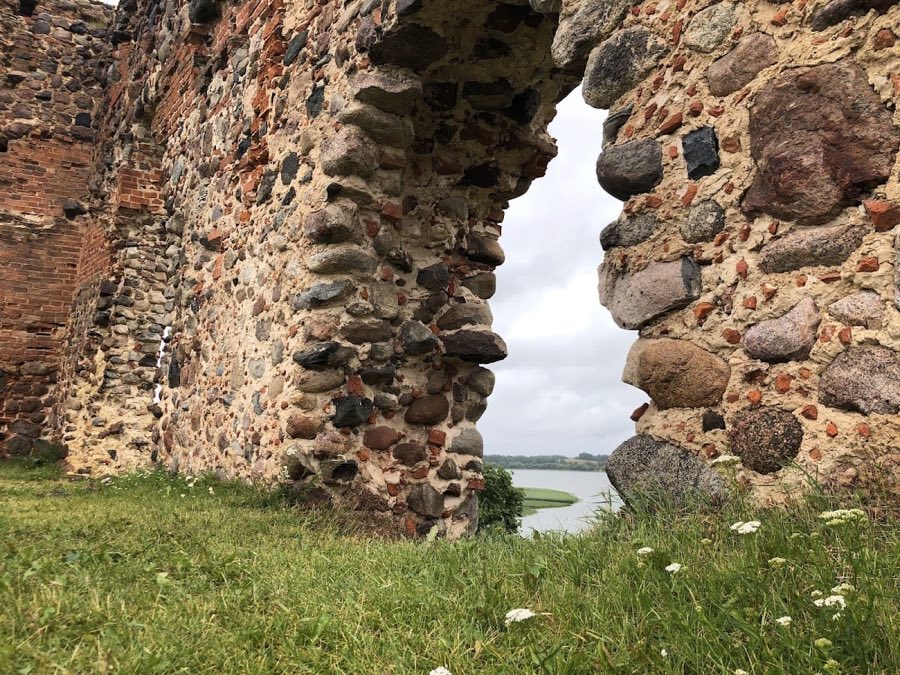
The walls combined fieldstones with brick sections, built using the Schalenmauer technique, which involved constructing sturdy outer faces of carefully selected stones with a core filled by rubble and brick fragments. Foundations consisted mostly of shaped fieldstones for stability. Within the central courtyard, a well provided water. Although the main castle was positioned slightly higher than the outer bailey, no additional moat separated these two areas.
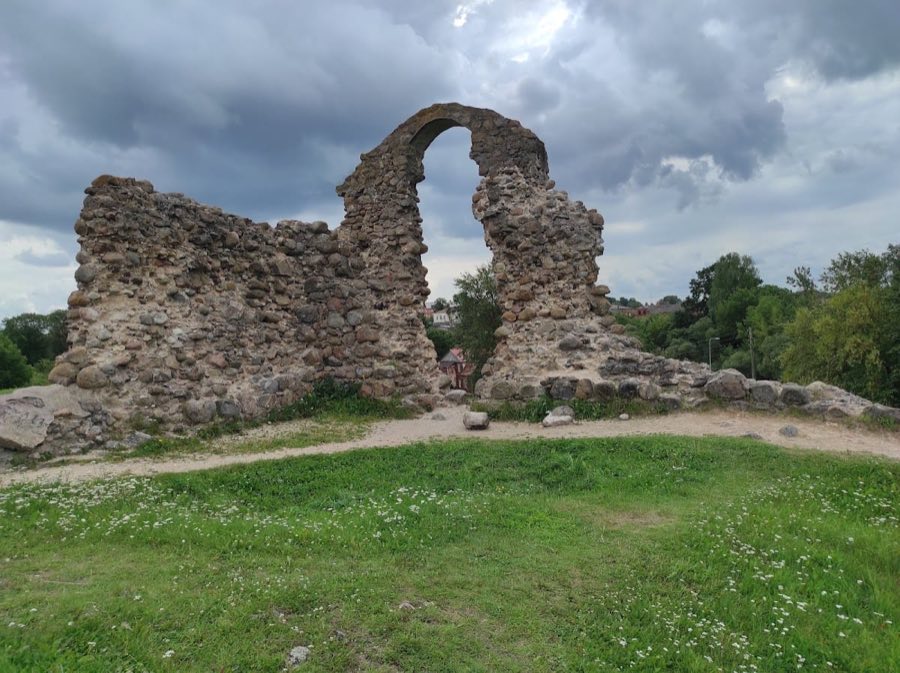
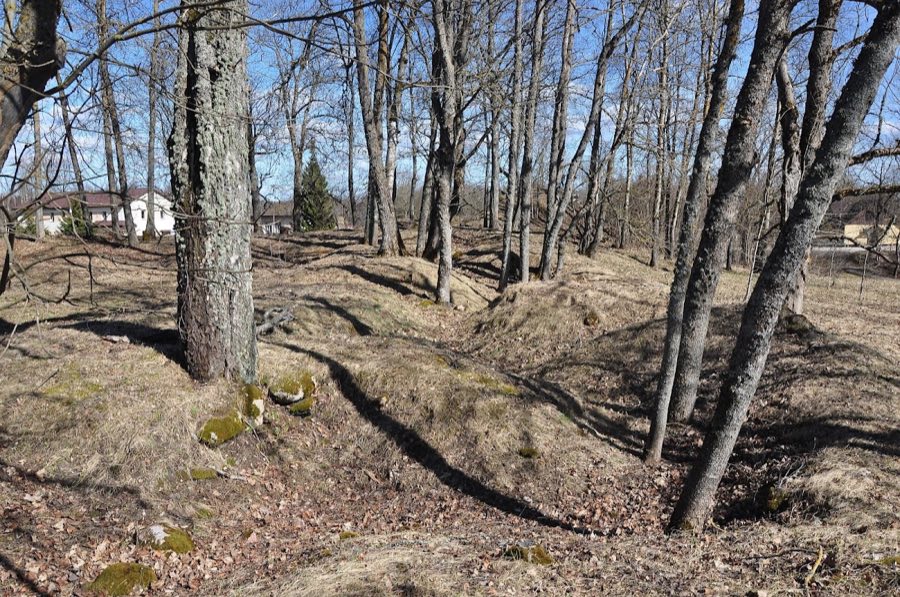
Today, only parts of the higher walls and foundations survive, partly covered by vegetation and debris. The hill itself has been cleared of trees, allowing clear views over the surrounding area. These remains preserve the outline of the strategic design and construction methods that underpinned the castle’s defense and use during its centuries of operation.
No. 60961

No. 49904
No. 11749
No. 12953
Comments
Comments for Rēzekne Castle will require a verified account before posting.
We'll send a verification link before your first comment is published.