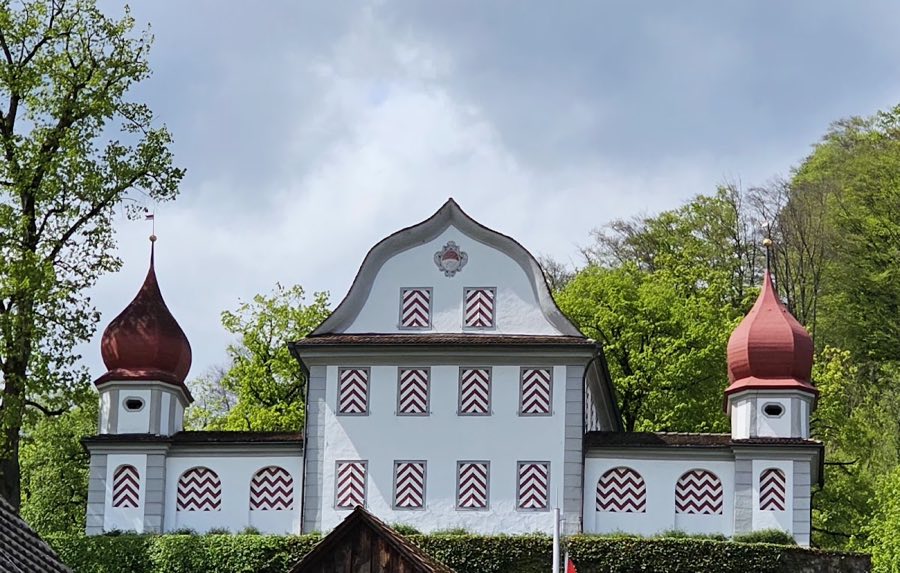
No. 11787
Landenberg
Switzerland
CastleRuin11th century
No. 46454
Castle · Switzerland
No. 46454 · 46.964 N, 8.336 E
For rent
Rotzberg Castle is marked for bookable castle accommodation. Nightly pricing, sleeps count, stay rules, and amenities are displayed only when public operator data is available.
Rental type: Hotel / bookable stay, Short-stay rental
Short-term availability: Bookable accommodation signal
Quick summary
Rotzberg Castle is a castle in Switzerland with origins associated with the 12th century.
See all castles in SwitzerlandRotzberg Castle ruin stands in Ennetmoos, Switzerland; the identity of its original builders is not known.
The hill has a long record of human use. Prehistoric pottery was recovered beneath the site, and medieval finds dated to the 10th through 12th centuries attest to activity in the early Middle Ages. In 1150 the Freiherr von Rotenburg conveyed large tracts around Stans and Ennetmoos to Murbach‑Lucerne Monastery, and it has been proposed that he may have established a fortified seat on those lands to manage them. A 1197 document records the place-name Rozziberg as owing dues to Engelberg Abbey; because fortresses were normally exempt from such levies, this entry has been taken by some to imply the fortification post‑dates that year.
The enclosing wall of the site is usually dated to the 12th century, and the internal timber buildings were probably replaced by masonry between about 1210 and 1230. The White Book of Sarnen, compiled around 1470, lists Rotzberg among the castles said to have been destroyed during the Burgenbruch uprising against Habsburg reeves near 1308. Aegidius Tschudi gives a dramatic version placing the capture on New Year’s Day 1308 and describes entry aided by a rope and a serving maid. Archaeological investigation has not produced evidence of a violent destruction. The stronghold was likely abandoned by the end of the 1200s, with some proposals suggesting abandonment as early as 1239.
After the medieval period the hilltop saw varied uses. During the 17th and 18th centuries the summit served as a hermitage. On occasions of military threat it functioned as a lookout, notably during the 1798 French invasion and the 1847 Sonderbund War. In the 19th century a guest house was erected within the old courtyard, with reported construction dates of 1864 and 1872. Plans in the early 20th century to develop a hotel, including a proposed funicular, were not carried out. In 1910 the Swiss federal government bought the property for CHF 18,000 and had conservation work completed before declaring it a protected heritage site. The location is entered in the federal inventory as KGS‑Nr. 4178, a category B object under monument protection. Trial excavations were undertaken in 1988. In 2010 the federal authorities carried out repairs and cleaning of the ruins, and in 2015 they announced an intention to transfer responsibility for the site to the Canton of Nidwalden.
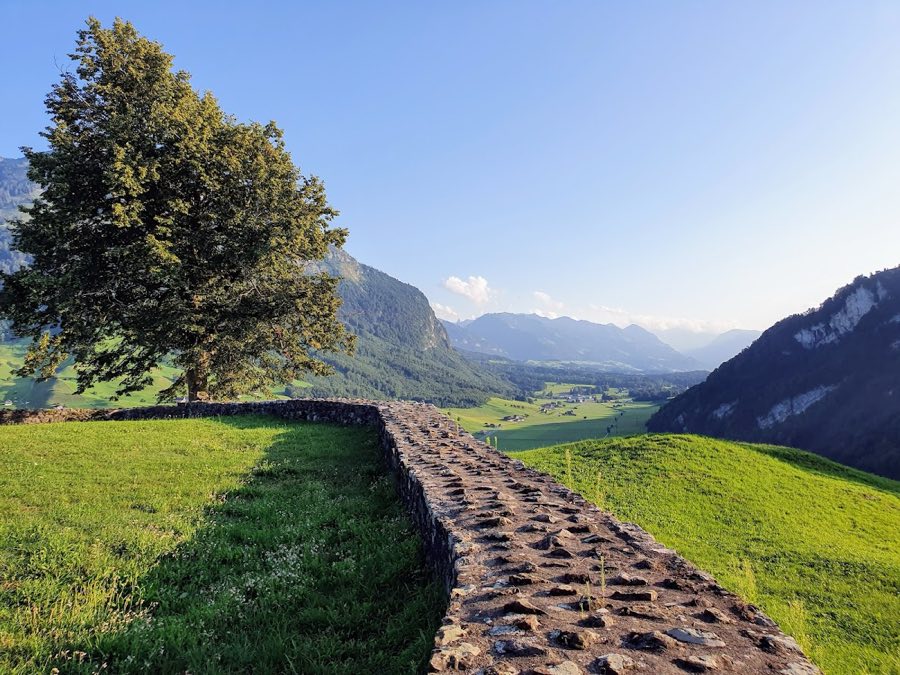
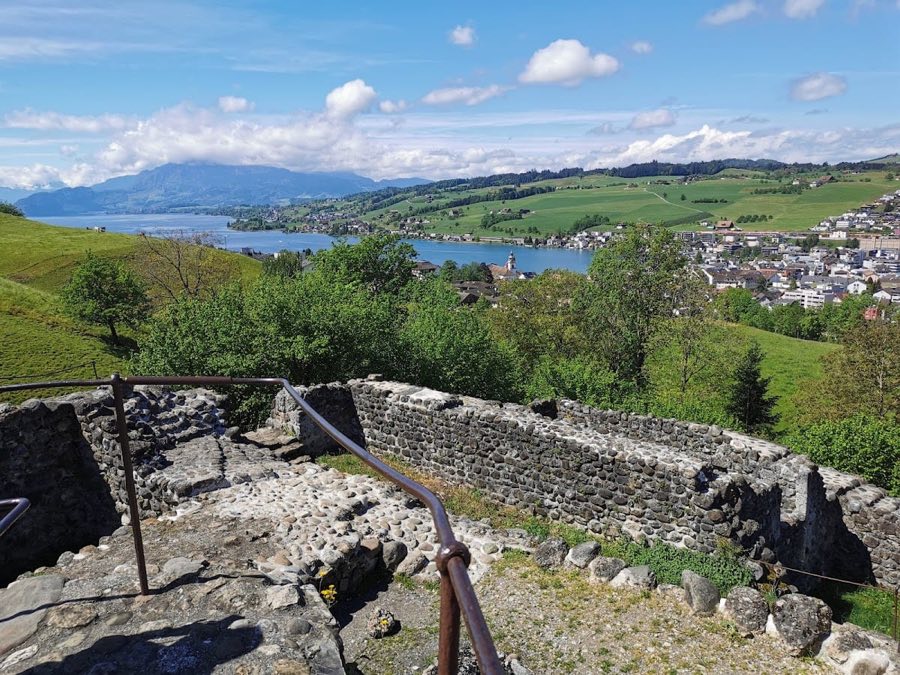
The ruin occupies a spur on the Rotzberg ridge at about 672 metres above sea level, positioned west of Stans and above a side arm of Lake Lucerne. The plan centers on a broad, roughly pentagonal defensive enclosure that covers about one thousand square metres. The main enclosure was formed in the 12th century from finely worked masonry laid with close joints, producing a durable outer wall that survives in places today.
The wall is thickest on the western side, where it reaches roughly 1.6 metres, and measures about 1.1 metres on the other sides. The western face was strengthened by an external ditch some six metres across, while the remaining sides relied on steep natural slopes for protection. These elements together created a compact defensive position suited to the ridge top.
Within the circuit there were timber structures in the earlier phase that were probably replaced by stone buildings between about 1210 and 1230; those later internal works are attested by archaeological evidence. The 19th‑century guest house stands in the center of the former courtyard as a later phase of reuse. The surviving masonry is fragmentary but conserved; the exterior wall remains are visible in situ and underwent cleaning and repair in the 2010s. Trial excavation in 1988 provided further archaeological confirmation of the sequence of use recorded at the site.
No. 11787
No. 36202
No. 96168
No. 55305
Comments
Comments for Rotzberg Castle will require a verified account before posting.
We'll send a verification link before your first comment is published.