No. 26234
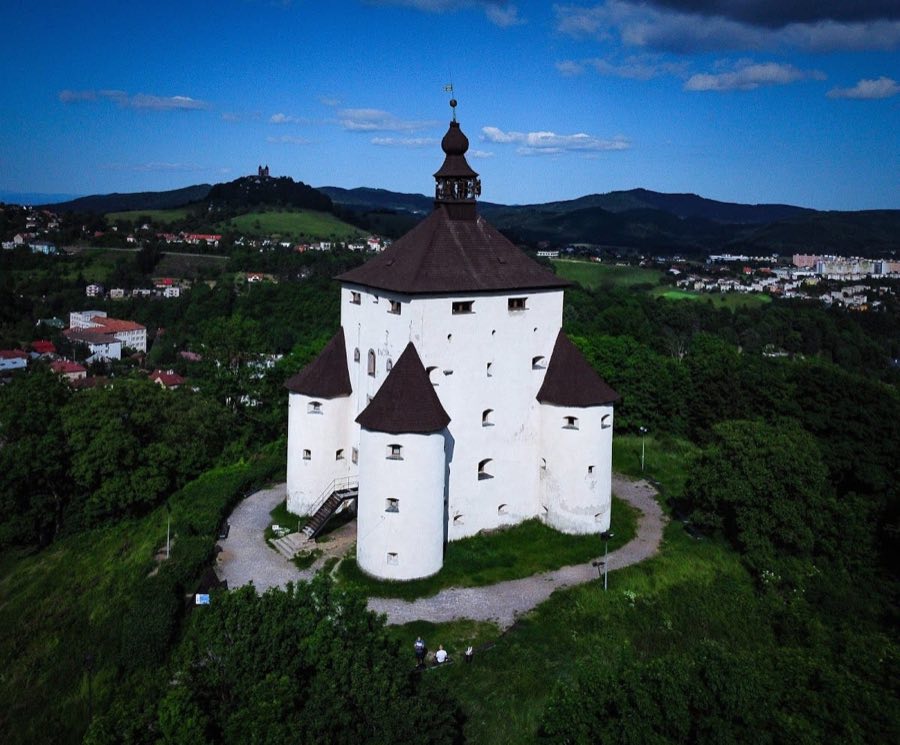
Nový zámok
Slovakia
CastleRestored16th century

No. 62593
No. 62593 · 48.579 N, 18.900 E
Quick summary
Šášov Castle is a castle in Slovakia with origins associated with the 17th century.
See all castles in SlovakiaŠášov Castle stands near the village of Šášovské Podhradie within the municipality of Žiar nad Hronom, Slovakia. It was constructed by medieval Hungarian Kingdom authorities to control important trade routes and protect the strategically significant mining region around Banská Štiavnica.
The first recorded mention of Šášov Castle dates back to 1253, when it was part of the royal estate and linked to Vincent and Peter de Vancha, brothers related to Archbishop Štefan of Esztergom. Its location was chosen to guard the convergence of routes leading from Banská Štiavnica to Kremnica and Turiec valleys, overseeing the Hron river valley and collecting tolls from passing merchants. Along with Revište Castle, situated roughly 15 kilometers south on the opposite bank of the Hron, Šášov formed a defensive network securing access to the valuable mining centers.
In 1320, the castle passed into the possession of the chamber count of Banská Štiavnica, who established it as the focal point of the Šášov estate. Throughout the late Middle Ages and into the Renaissance, ownership shifted multiple times. King Sigismund granted it to the noble brothers Frank and Simon Szécsényi in 1387. Later, in 1424, it was transferred to Queen Barbara, followed by a period under the control of Ján Jiskra in 1447. Queen Beatrix bestowed the castle on the Dóci family in 1490, who maintained the property until their family line ended in 1647.
The mid-17th century saw new ownership under Gašpar Lipai in 1650. During the Tököli uprising of 1677, rebel forces captured and ransacked Šášov Castle. After this event, the castle ceased to serve as a military stronghold and was administered by the royal treasury. In 1708, imperial troops led by General Sigbert Heister recaptured the castle and ordered it set ablaze, leading to its gradual ruin.
Efforts to preserve Šášov Castle began in the early 21st century when the Association for the Rescue of Šášov Castle was founded in 2003. Later, a leasing agreement along with funding from Slovakia’s Ministry of Culture, secured in 2013, facilitated conservation and stabilization work on the historic ruins.
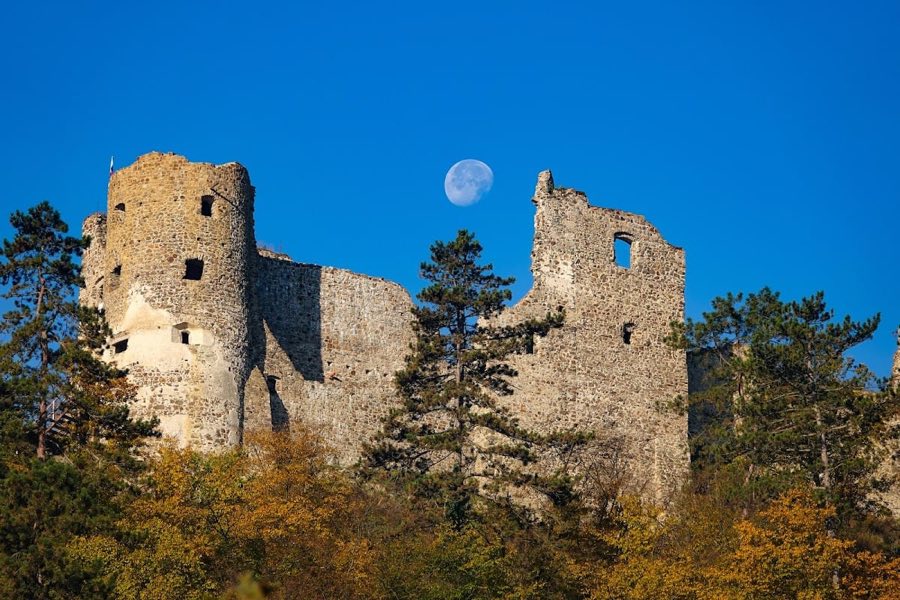
Šášov Castle is situated atop a steep cliff on the left bank of the Hron River, elevated approximately 340 meters above sea level. The castle’s layout follows a roughly elongated form with a distinct division between its upper and outer sections. The core of the fortress was a Gothic palace at the highest point, serving as the main residential and administrative building. This palace was located at one end of a long, narrow inner courtyard and was later reinforced by the addition of a triangular tower, which enhanced its defensive capabilities.
Descending from the palace, the upper castle extended into a courtyard ringed by a large round bastion. This bastion protected the main entrance and marked a significant element of the castle’s fortifications. Before this bastion lay the fortified outer courtyard, which contained residential buildings arranged along its perimeter. A round guard tower stood at the far end of this outer courtyard, providing an additional vantage point for surveillance and defense.
During the Renaissance, Šášov Castle underwent modernization of its defenses, including the construction of multiple bastions and fortified walls designed to withstand contemporary siege tactics. The remains visible today focus on the elongated inner castle area crowned by a circular bastion. The approach to the castle was controlled by a fortified outer bailey that featured a small bastion, the outlines of which have mostly eroded and blended into the surrounding terrain.
Above the main castle complex, archaeological traces reveal a small fortress situated on the ridge, likely serving as an advanced defensive point. In the area where the castle connects to the mountain massif, foundations and remnants of additional buildings have been identified, indicating the wider extent of the fortified settlement.
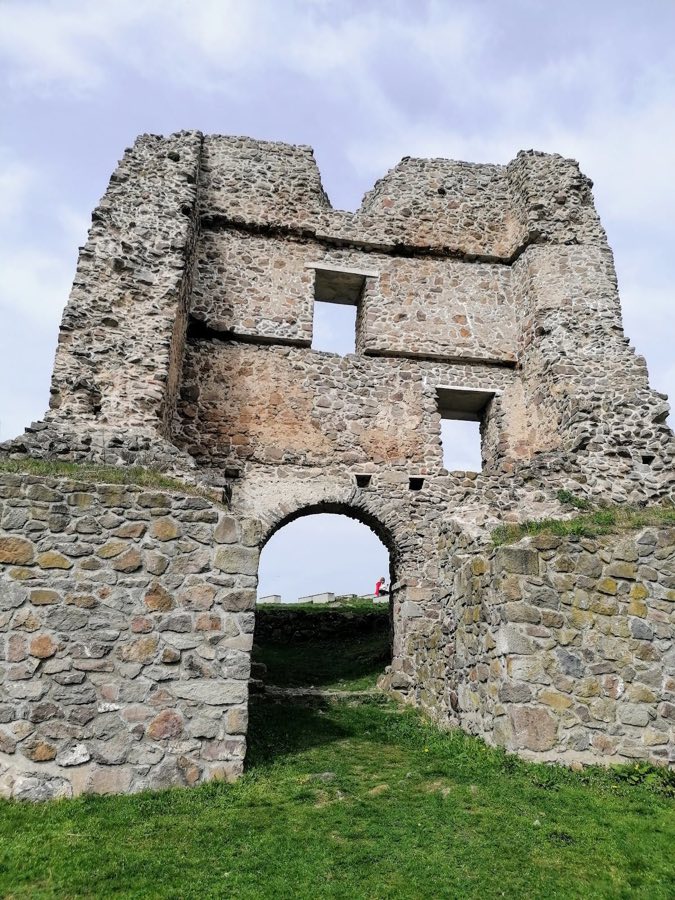
While the ruins contain rich architectural details reflecting Gothic and Renaissance influences, they remain in a deteriorated state. The structural remains, such as towers and bastions, stand as enduring markers of the site’s historical significance and defensive purpose over several centuries.
No. 26234
No. 47141
No. 82482
No. 37972
Comments
Comments for Šášov Castle will require a verified account before posting.
We'll send a verification link before your first comment is published.