No. 53516
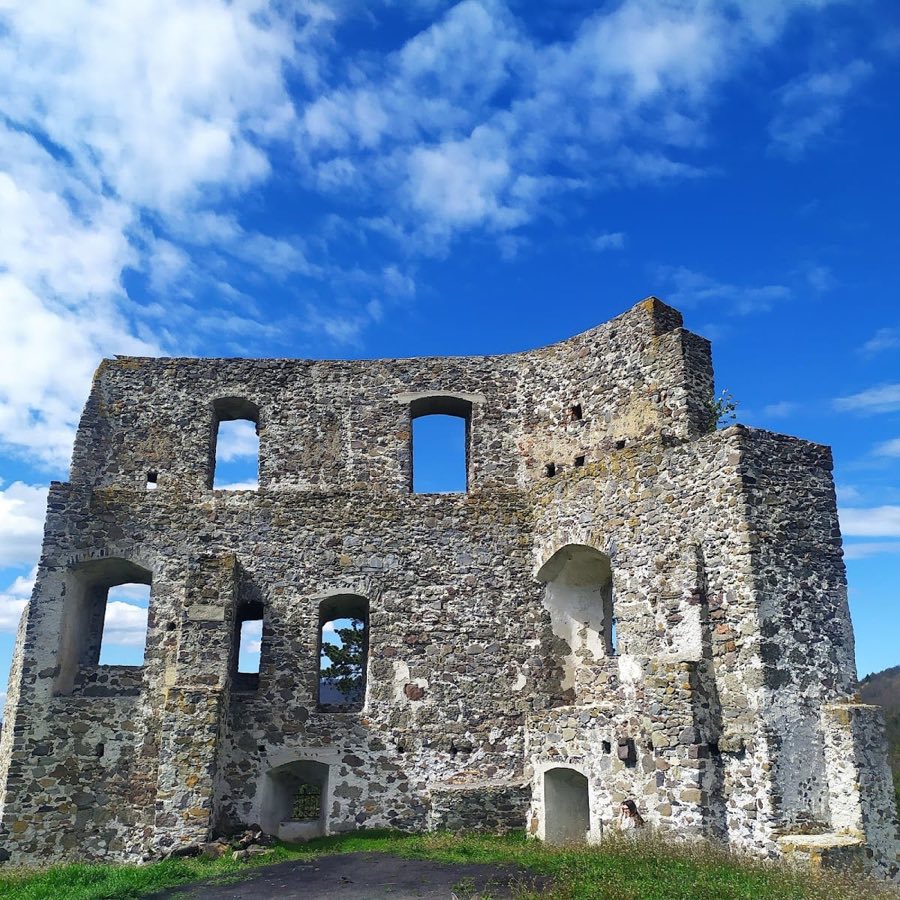
Dobrá Niva Castle
Slovakia
CastleRuin13th century
No. 37972
Castle · Slovakia
No. 37972 · 48.555 N, 19.108 E
Quick summary
Pustý hrad is a castle in Slovakia with origins associated with the 12th century.
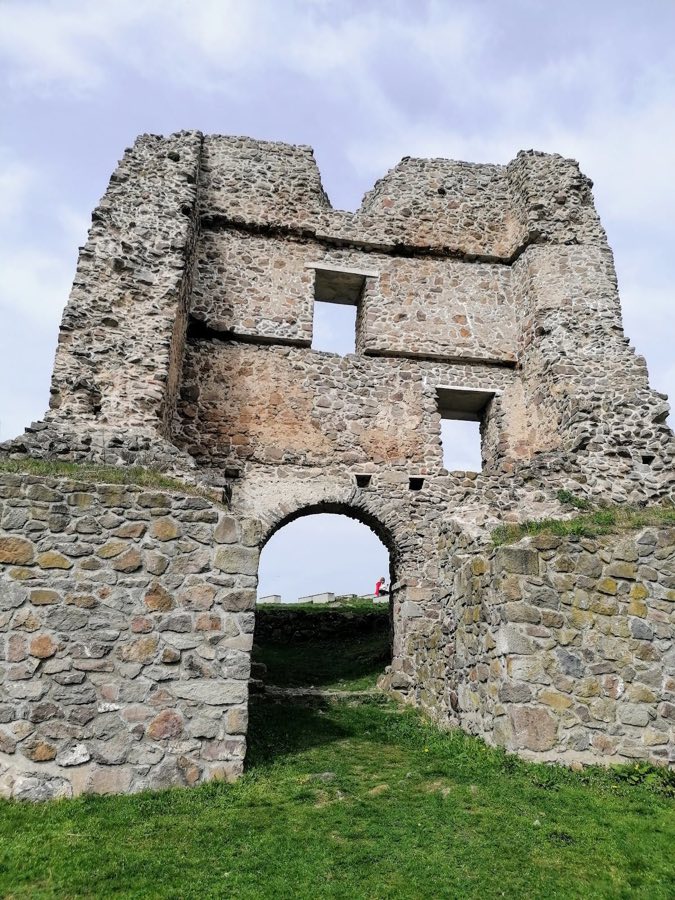
See all castles in SlovakiaPustý hrad is a castle complex situated near the city of Zvolen in Slovakia, overlooking the meeting point of the Hron and Slatina rivers. The site originated as a fortified location utilized by various prehistoric cultures before medieval construction began.
Archaeological investigations have shown that the hilltop was first fortified during prehistoric times, with ramparts and defensive structures built by communities belonging to cultures such as the Lusatian, Kyjatice, Baden, and the La Tène period, spanning from the Late Bronze Age into the early Iron Age. These findings indicate that the site held strategic importance long before the medieval era.
The earliest recorded medieval presence on the site is a 12th-century stone tower, marking the royal comital castle at the highest point of the Upper Castle. The castle is mentioned by name in an early 13th-century chronicle known as the Gesta Hungarorum. Following the devastation caused by the Mongol invasion of 1241–1242, King Béla IV commissioned new fortifications to strengthen royal defenses. A master mason named Bertold oversaw this rebuilding work and was rewarded in 1255 with land for his contributions to several castles, including this one.
During this mid-13th-century phase, the layout of Pustý hrad expanded to include extensive protective walls encompassing both the Upper Castle, covering 3.5 hectares, and the Lower Castle, covering 0.65 hectares. A notable 206-meter-long defensive wall linked the Lower Castle to the surrounding terrain, creating a formidable barrier. One of the most striking features built in this period was the Lower Castle’s donjon, a massive residential tower measuring 20 by 20 meters, recognized as one of the largest of its kind in Central Europe.
From the late 13th century into the early 14th century, Gothic architectural elements were introduced. Notable additions included a four-story tower positioned above the main gate of the Upper Castle and a strengthened bastion with a transverse wall constructed near one of the residential towers. Towards the northern tip of the Upper Castle lies Dončov hrad, or Donč’s Castle, erected in the late 13th century by the Balašovci family, specifically the local governors Demeter and Donč. This section functioned as a semi-independent stronghold with its own palace, courtyard terraces, cistern, and distinct fortifications.
In the first part of the 15th century, forces loyal to the military leader Ján Jiskra used the terraced areas of Dončov hrad to create single-story living quarters. However, ongoing conflicts in the region culminated in the castle’s destruction and burning in 1451 during skirmishes between Ján Huňady and Ján Jiskra z Brandýsa. After this event, the castle gradually fell into ruin and was abandoned as a military center.
Despite its decline, the site saw one final phase of construction in the late 16th century when a watchtower, called a vartovka, was built amidst increasing Ottoman threats in the area. In modern times, archaeological work was revitalized after 2009 under the guidance of the Slovak Academy of Sciences, revealing further details of the castle’s layered history.
Throughout its history, Pustý hrad served not only as a defensive bastion but also as a key administrative center for the extensive holdings surrounding Zvolen. During the reigns of the Árpád and early Anjou dynasties, it was also favored as a royal hunting residence, underscoring its multifaceted role in medieval Slovak territory.
The remains of Pustý hrad spread over an area of roughly 7.6 hectares, making it one of the largest medieval castle ruins in Central Europe. The complex encompasses two main sections: the Upper Castle (Horný hrad), positioned atop the highest point at 571 meters above sea level, and the Lower Castle (Dolný hrad), connected by a linking area nearly 400 meters long. The Lower Castle is partially enclosed by a 206-meter defensive wall nestled in the pass below it.
At the Upper Castle, the oldest surviving element is the 12th-century royal tower, constructed of stone masonry. Nearby stands tower no. 2 and a Gothic four-story tower erected over the main gate during the late 13th and early 14th centuries. Additionally, there is a defensive bastion with a transverse curtain wall adjacent to one of the residential towers, enhancing the castle’s fortifications. The northern tip of the Upper Castle hosts Dončov hrad, a separate fortification complex built by the Balašovci family. This subsection features its own defensive walls, a palace structure, a fore-palace building, an underground stone cistern designed to collect and store water, and terraced courtyards carved into the hillside. During the 15th century, these terraces were adapted by Jiskra’s troops to include ground-floor housing.
The Lower Castle’s most impressive surviving feature is the donjon, a large square tower measuring approximately 20 by 20 meters. Its substantial size places it among the largest medieval residential towers in Central Europe. The Lower Castle also preserves its main gate, both constructed using durable stone masonry techniques. These structures remain some of the best-preserved parts of the entire ruin.
Across the site, archaeological excavations have uncovered numerous artifacts linked to the various phases of occupation. These include pottery fragments from multiple prehistoric cultures, evidence of bronze age tools and weapons, iron weapon parts, spurs, and horseshoes, indicating the presence of mounted warriors. Defensive elements such as dry moats are still visible in places, and stone-built cisterns highlight the importance of water management within the castle.
Today, visitors can observe the partially preserved towers, gate structures, defensive bastions, and the Dončov hrad complex atop the hill. These remnants exhibit a variety of construction phases revealing how the castle evolved from its medieval origins through later adaptations responding to military needs. The site’s extensive earthworks and masonry testify to its long-standing role as a fortified center in Slovak history.
No. 53516
No. 49302

No. 62593
No. 26234
Comments
Comments for Pustý hrad will require a verified account before posting.
We'll send a verification link before your first comment is published.