No. 29083
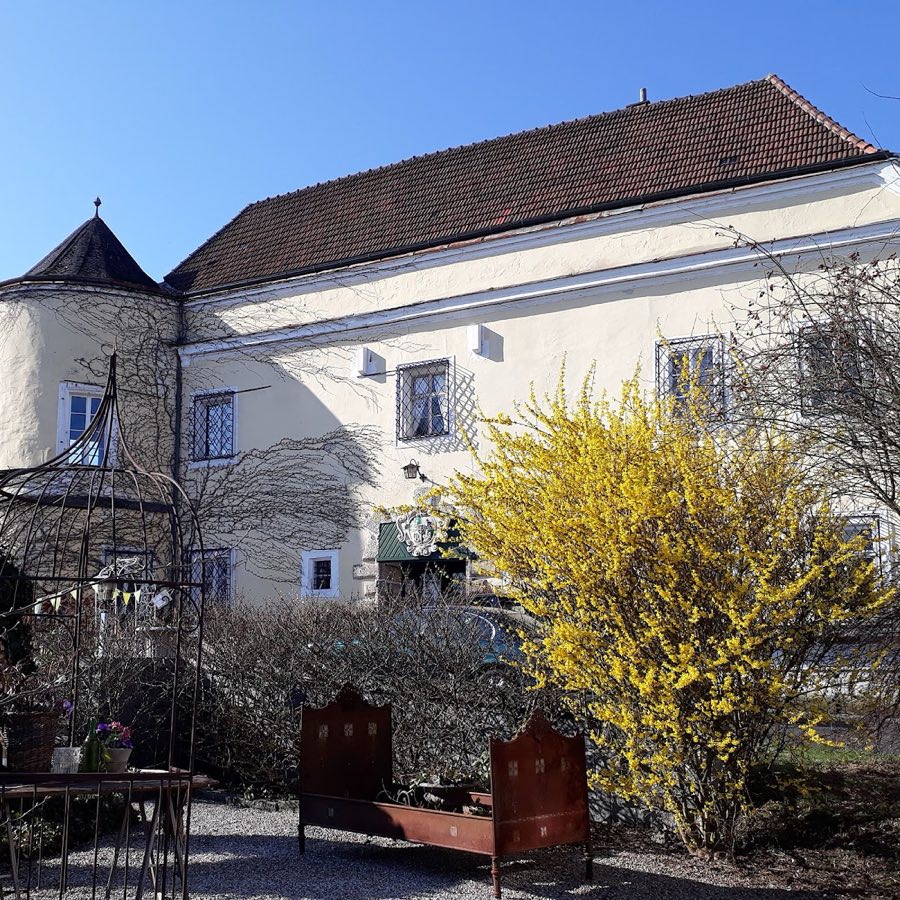
Schloss Mühlgrub, Pfarrkirchen bei Bad Hall
Pfarrkirchen bei Bad Hall, Austria
CastleRestored13th century
No. 77837
Castle · Austria
No. 77837 · 48.075 N, 14.181 E
Quick summary
Schloss Achleiten is a castle in Austria with origins associated with the 12th century.
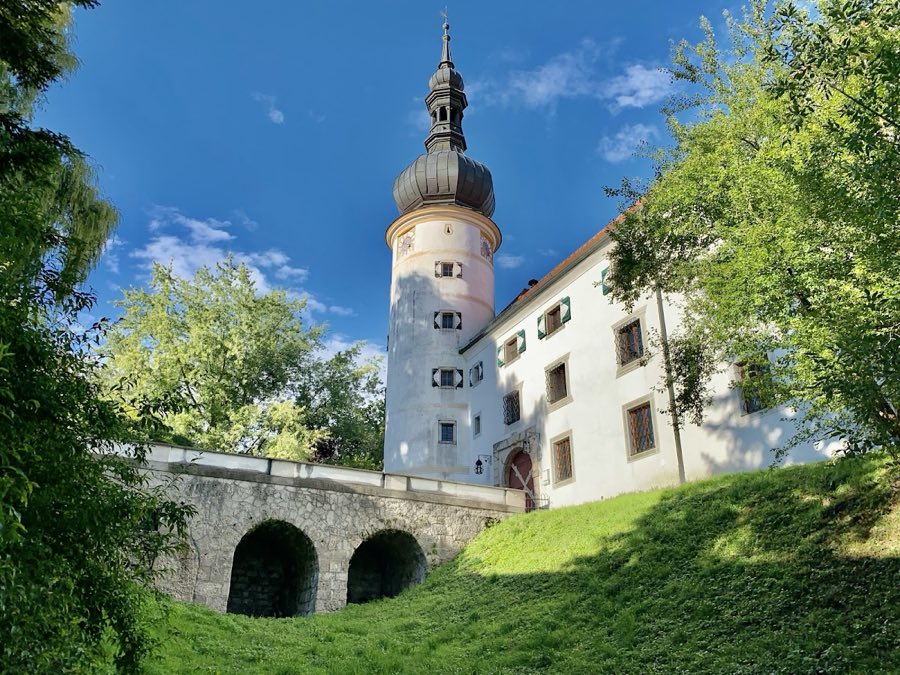
See all castles in AustriaSchloss Achleiten in Rohr im Kremstal, Austria is a medieval fortress that developed into a country residence and palace during the early modern period, built and used by regional lords and by monastic authorities from the High Middle Ages onward. Its origins lie in the 12th–13th centuries, a time when local noble families and nearby religious institutions shaped control of land and fortifications. The site mattered because of its military position above the Krems valley, where together with the now-vanished Veste Rohr it could halt passage through the Kremstal when required.
The place-name and local leadership appear in records from the late 12th century. Bernhard von Achleiten is the first named local lord in 1189; his sons Walchun, Hartwig and Otto acted as donors at a church dedication, and Berthold von Achleiten became abbot of Kremsmünster in 1219. Other members of the family appear in documents through the 13th and 14th centuries. Around the year 1200 the holding was placed as a fief under the monastery of Kremsmünster after earlier belonging to the domain of Tegernsee and passing through the provostry of Berchtesgaden.
By 1303 the fortress had passed from clerical control into the hands of the territorial prince and entered the Wallseer system of feudal tenure. Ownership then changed several times in the later medieval period, with recorded transfers in 1375 and 1377, and the Sinzendorf family retained Achleiten until 1602. In that year Appolonia von Sinzendorff married Erhard von Grienthal and received the fortress, by then converted into a castle-like residence, as part of her dowry. Members of the Grienthal and Kastner families held the property in the years that followed.
In 1692 Count Ernst (Johann Ernst) von Thun bought Achleiten and legally tied it to the nearby Hehenberg as a fideicommissum (an entailed estate preserved for heirs). That entailed arrangement ended in 1815, and the castle was sold separately. In 1816 Franz Iglseder briefly held the property and transferred it the same year to Franz Planck von Planckburg. Ownership passed in 1880 to Ludwig Ritter von Boschan and in the 20th century the Teufenstein family were owners.
The castle chapel was badly damaged by fire and demolished in 1643; later a Maria Presentation chapel was erected on the site formerly occupied by the Leonard chapel and this later chapel contains an altarpiece by the painter Kremser Schmidt. The present appearance of the building is associated with early modern remodelling: one account gives the present form to the 18th century, while another records that much of the visible fabric dates to the 17th century, with medieval masonry surviving in places. In 1982 the Max-Theurer family purchased and carried out restoration work. Olympic dressage champion Elisabeth Max-Theurer uses the house as her principal residence and maintains a stud there. She also initiated construction of a riding complex at Achleiten between 1989 and 1991, and since 1992 an international dressage competition (CDI ****) has taken place at the site each June. The former on-site dairy produced Achleitner Schlosskäse; production has since moved to Scharnstein. The Republic of Austria lists the castle as a protected monument under inventory number 15250.
Schloss Achleiten sits on a wooded spur of a glacial moraine above the left bank of the Krems and presents as a three-storey residential block that faces down the valley. The plan is irregular, a form that reflects building on older defensive foundations. A substantial residential wing occupies the main position with a right-side annex whose roofline joins the main roof; the annex is probably the cut-down remnant of a formerly taller tower. A service wing wraps around three sides of a large inner courtyard, and across the moat from the main house stands a broad, two-storey agricultural building.
Defensive features of the medieval fortress survive. A double belt of moats remains as the defensive layout, and a round tower beside the gate secures the fortified outer courtyard. The tower, deriving from an older keep, preserves a ring of key-shaped slits on its uppermost storey and is capped by an onion-shaped dome with a lantern and a smaller secondary onion topped by a weather vane. The moats are crossed today by stone bridges that replace original wooden drawbridges; pulley holes above the gateways still show how the former drawbridge mechanism operated.
The inner courtyard and entrance retain noteworthy fittings from later centuries. Each floor of the main residential block contains a vaulted hall carried on stone columns, and the courtyard is lined by an arcaded walk supported by nine columns. A stone fountain made by Johann Baptist Spatz bears Archbishop Ernst von Thun’s coat of arms and the date 1692. A garden pavilion nearby has a mirror vault and stucco ornamentation that also display the Thun arms; these emblems recur on and within the building. Above the approach where the former drawbridge stood are carved coats of arms for Steyr-Garsten and for Archbishop Ernst von Thun, and an entrance vestibule contains a coat of arms transferred from Veste Rohr dated 1577.
Later fittings and surface work remain visible alongside older fabric. A carved wooden gate is dated 1660, and two decorative panels with heraldry sit on the parapet of the later stone bridge. A broad entrance is set between stone pillars. Medieval masonry endures most clearly in the tower and in the foundations, while many older elements stand together with the alterations and restorations made in the 17th, 18th and later periods. The Maria Presentation chapel rebuilt on the site of the earlier Leonard chapel houses an altarpiece by Kremser Schmidt and forms one of the recorded internal monuments.
No. 29083
No. 49319
No. 36084
No. 97359
Comments
Comments for Schloss Achleiten will require a verified account before posting.
We'll send a verification link before your first comment is published.