No. 36084
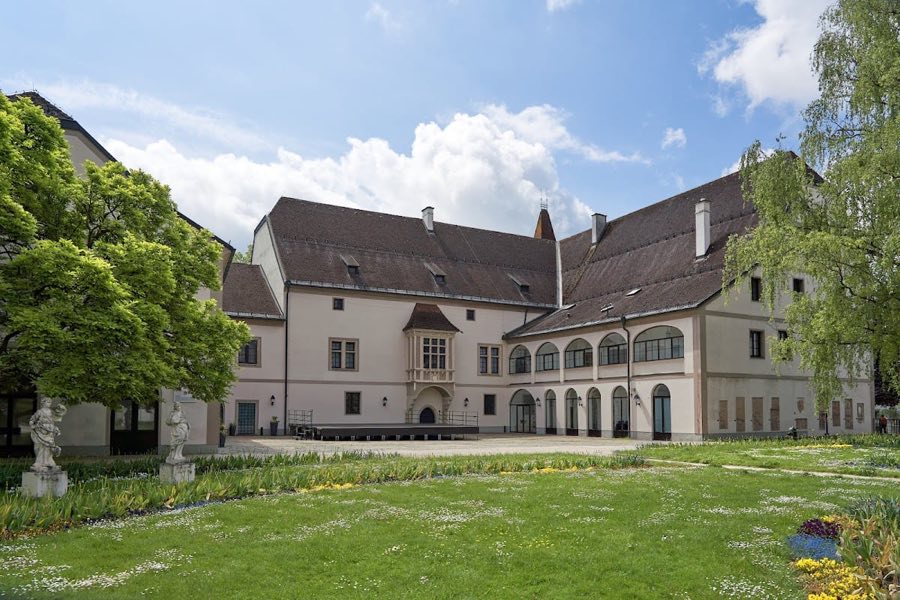
Burg Wels
Austria
CastleIntact9th century
No. 97359
Castle · Austria
No. 97359 · 48.236 N, 14.123 E
Quick summary
Wasserschloss Freiling is a castle in Austria with origins associated with the 12th century.
See all castles in AustriaWasserschloss Freiling stands in the municipality of Freiling, Austria, and was established by medieval local lords identified as the Herren von Perg and Machland.
The site first appears in a written record of 1170 under the name Vrilingen, described as a water castle. Over the medieval and early modern centuries the estate was held as a fief connected to the Mondsee monastery and for a long time remained under the control of the Schifer family in that feudal relationship. The castle suffered violent damage during rural unrest when, in the night of 17 September 1626, peasants set fire to the building during the Upper Austrian peasant uprisings.
In 1669 Georg Freiherr von Schifer sold the estate. That same year it passed via Georg Ludwig Graf Sinzendorf into the possession of Graf Georg Kauthen, under whose care the castle was rebuilt and enhanced. A granite statue of the Immaculate Virgin dated 1710 and bearing the initials J.C.V.K. commemorates Johan Constantin von Kauth and reflects that period of renewal and Catholic devotion at the site.
The property passed by inheritance to Franz Wenzel Freiherr von Rumerskirch in 1768. In 1860 Georg Riedl became the owner. Two years later the building was leased to a Linz asylum known as the Prunner-Stift, and forty patients were moved into the castle. On 17 September 1862 a major fire began in the hunting lodge located east of the castle and the main building was destroyed in that blaze.
Reconstruction in the later nineteenth century proceeded slowly and concentrated on parts that had survived the 1862 destruction. By 1868 a separate villa was erected between three ponds. Eduard Verdan bought the property in 1869. For a short period the site accommodated agricultural-school activities until those functions moved away in 1876. Ownership then passed to Alfred Prieser and, from 1899, to Major Josef Peller.
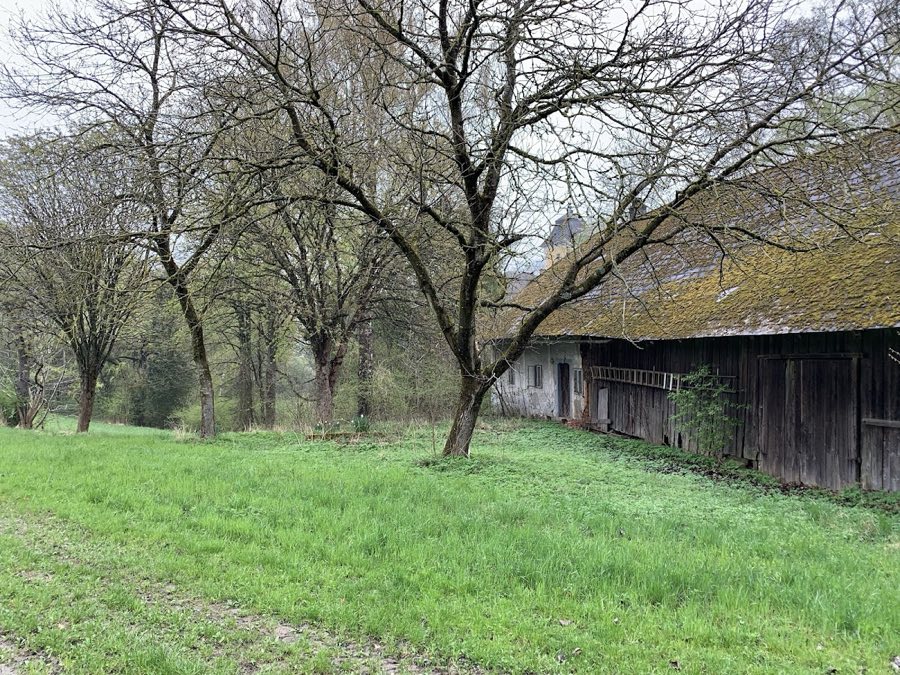
In the twentieth century the grounds served as a troop training area prior to the Second World War. Around 1960 Walter Peller assembled a noted amateur collection of flies at Freiling, a collection first cited in 1959 and donated in 1969 to the Natural History Museum of the Benedictine Abbey at Admont. Since the late twentieth century the estate has been in private hands; it is not open to the public except for the courtyard of the economic buildings, and part of those outbuildings is used by the local volunteer fire brigade.
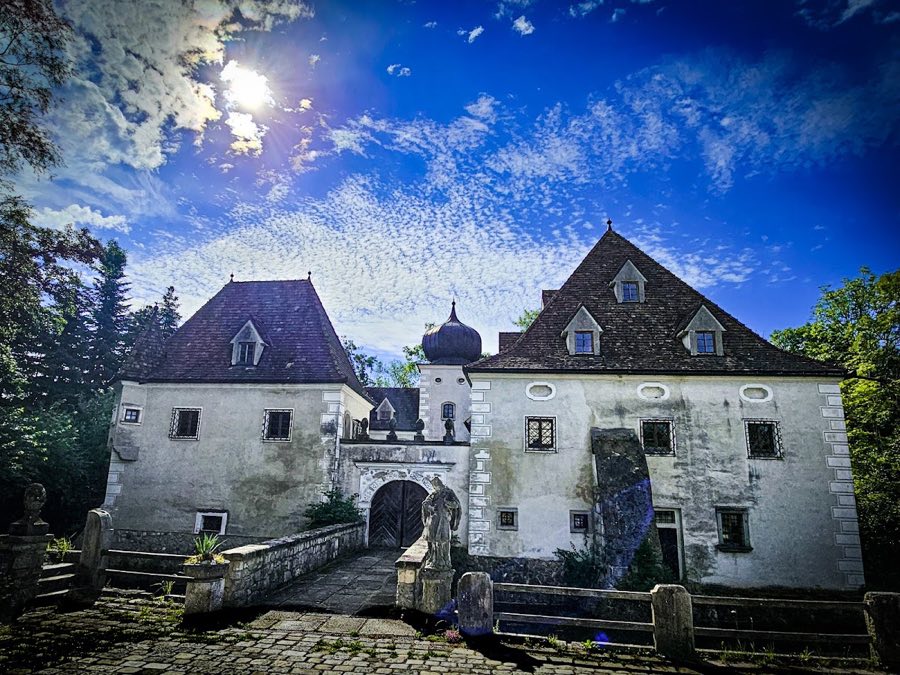
Wasserschloss Freiling occupies an island within a pond and was built as a water castle connected to the shore by wooden bridges. The surrounding water ditch remains in part and still supports ornamental waterlilies and an artificial watercourse that once fed the castle’s formal gardens. The placement on an island and the former use of timber footbridges reflect its medieval origin as a moated estate first recorded in the twelfth century.
The original plan was a four-winged enclosure whose corners were occupied by round towers with steep conical roofs. The principal approach survived in earlier descriptions as a Gothic gate measuring roughly two metres by three metres, while a smaller bridge linked a rear entrance to the shore. Outside the moat lay the domestic and service complex, gardens, and woodland that supported the estate’s economy. Much of the front and side wings were lost in the nineteenth-century conflagration and later removed, leaving the northern rear wing as the main surviving residential range.
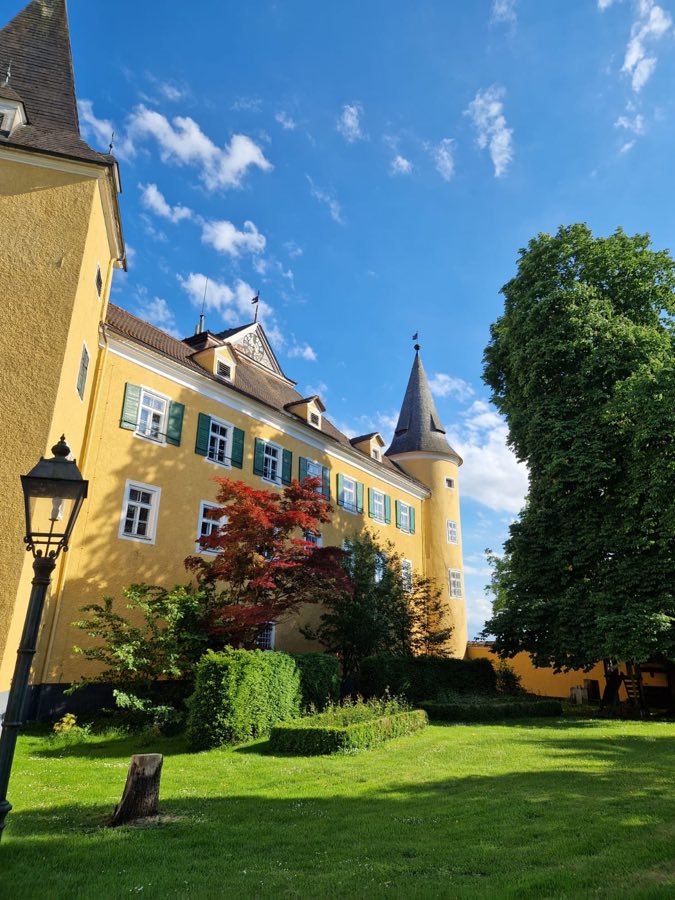
A tall defensive tower remains but was shortened during nineteenth-century repairs; it rises to five storeys and carries a simple, broken mansard-hip roof. The original narrow defensive slits in the tower walls were later filled in. At the top level corbels continue to be visible and support a balcony set behind a basket-arched iron grille, while the opening on the fourth storey was transformed into an oculus that now contains a clock. These adaptations show how elements of the medieval defensive fabric were altered when the building was converted to more domestic uses.
Traces of the vanished towers can be seen as structural projections into the pond and as a partial tower stump at the right-hand side of the present residential wing. The ground level of a former corner tower was repurposed as a viewing platform fitted with an iron railing. These features survive in situ and record the footprint of the original four-sided arrangement even where the upper portions no longer stand.
The estate retains several garden ornaments and later additions. A granite Immaculata statue dated 1710 and inscribed with the initials J.C.V.K. commemorates Johan Constantin von Kauth and remains in the grounds. A late-nineteenth-century cast-metal putto holding a goose stands in a small fountain basin, and an octagonal iron garden pavilion from the same period survives as an open decorative structure. These features sit within a large landscaped park that today functions largely as garden, with a small area under cultivation.
Ancillary buildings suffered damage in the 1862 fire; the hunting lodge east of the castle burned in that event and a former servants’ house north of the moat was also destroyed. The southern entrance portal survives and provides access into the courtyard of partly renovated economic buildings; this portal bears the inscription Landgut Frejling. The estate’s plantings include mature red oaks, plane trees, smoke bush, boxwood, and coastal firs, all contributing to the present park setting. Part of the economic tract remains in active use by the local volunteer fire brigade, while the primary residential and defensive fabric that can be inspected today consists of the rear wing, the shortened tower, and the scattered garden features described above.
No. 36084
No. 49319
No. 90387
No. 71739
Comments
Comments for Wasserschloss Freiling will require a verified account before posting.
We'll send a verification link before your first comment is published.